



Indian Folding Coffee Table
An indian folding coffee table brings intricate woodwork and folding convenience into a modern room.
Indian Folding Coffee Table
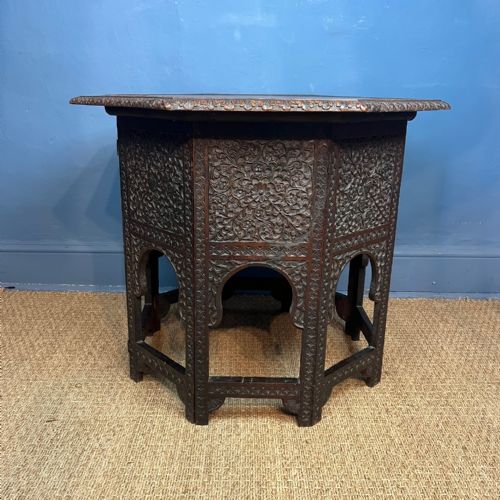
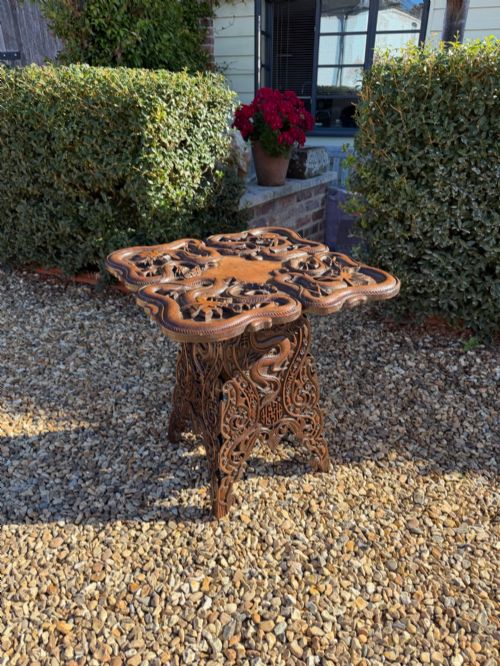
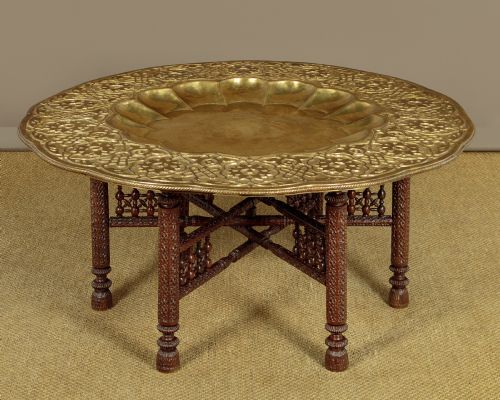
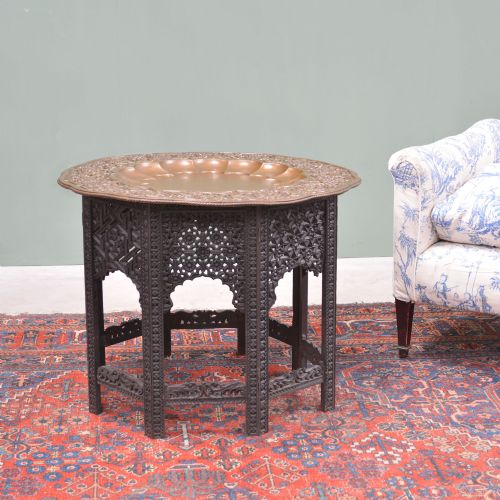
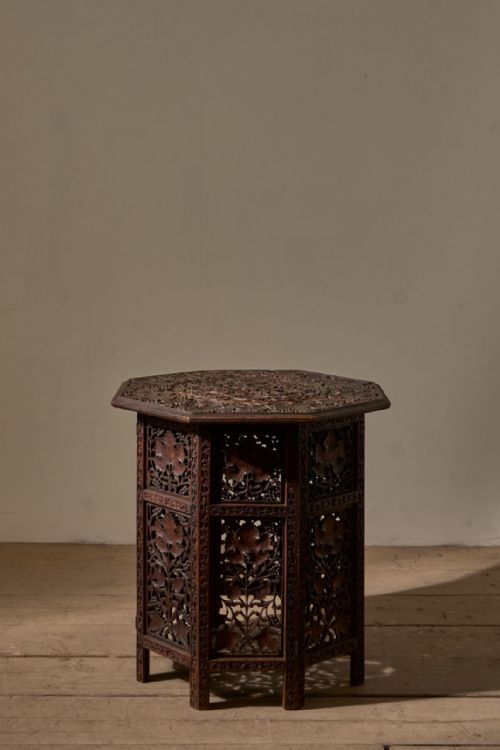
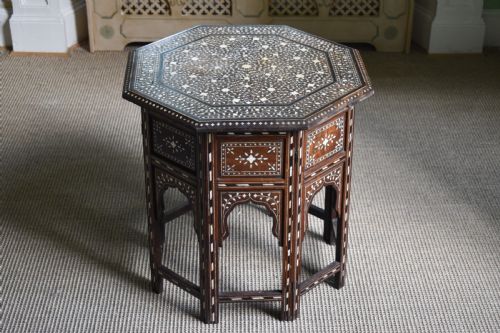
An indian folding coffee table encompasses carved occasional pieces, campaign tea tables, and octagonal tray top designs originating from the nineteenth and early twentieth centuries. These tables combine portability with dense surface decoration, often associated with the Anglo-Indian, Persian, and Syrian or Moorish Revival styles.
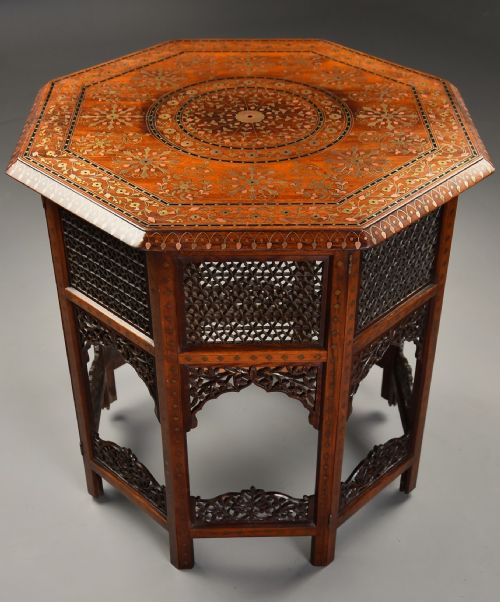
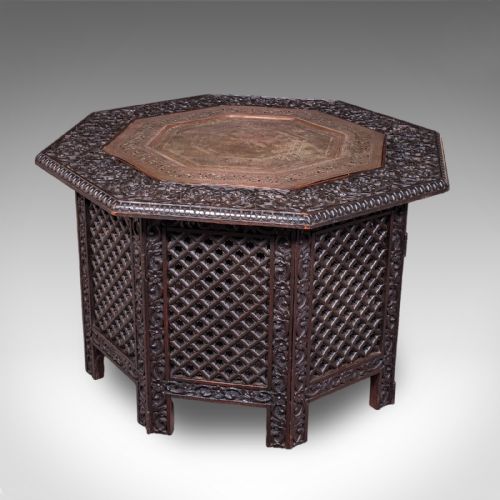
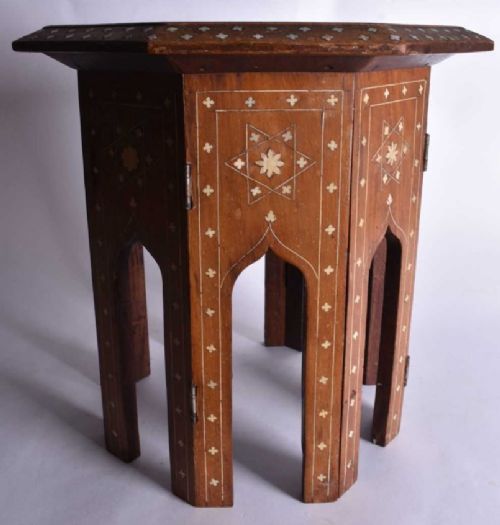
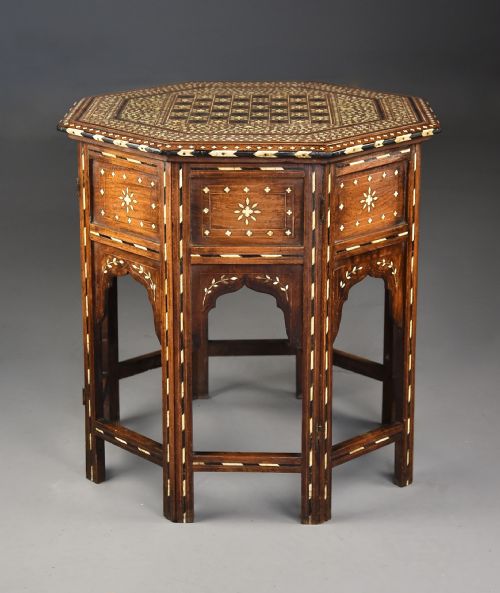
The version most commonly encountered on this page is the octagonal folding table, frequently featuring either an inset metal tray top or elaborate geometric marquetry. These items served colonial households and domestic parlours alike, prized for their ability to collapse flat when not in use.
Makers utilised various regional aesthetics, ranging from the intricate floral carving of Hoshiarpur to the rich grain of padauk and walnut. Each piece reflects the cross-cultural design exchanges of the period, merging traditional Eastern forms with British interior requirements.
Materials and construction methods
Makers constructed these pieces from dense timbers such as teak, rosewood, walnut, and hardwood, often employing folding lattice bases that interlock without metal hinges. The woodwork supports either a solid carved surface or a removable metal tray.
Surface decoration relies heavily on contrasting inlays, utilising brass, copper, bone, and mother-of-pearl to create geometric and foliate patterns. Carvers worked with deep relief, cutting intricate leaf and vine motifs directly into the timber.
Indian Folding Coffee Table Retail Price Guide 2026
Typical asking prices for indian folding coffee table among the pieces listed under this phrase on Sellingantiques today, from the lower quarter to the upper quarter. They describe what is for sale here now, not the wider market.
Some folding tables arrive complete with their original brass tea service, ready for an impromptu Victorian gathering.
Factors separating quality tiers
The distinction between standard and superior pieces lies in the precision and density of the carving and inlay work. Fewer gaps in the bone, brass, or mother-of-pearl marquetry indicate superior workshop execution.
Structural integrity of the folding mechanism and the selection of timber grain define the higher end of the range. Tables utilising heavier hardwoods like padauk or rosewood with intact, crisp joinery demonstrate finer craftsmanship than softer, plainer alternatives.
The Indian Folding Coffee Table Glossary
- Anglo-Indian
- A design style produced during the British period in India, blending local craftsmanship with European furniture forms. These items often feature dense carving and folding frames.
- Hoshiarpur
- A North Indian centre renowned for intricate woodwork, particularly tables decorated with intricate bone or brass inlay work. Pieces from this region display exceptional geometric precision.
- Campaign table
- Portable furniture designed to be easily packed and transported by military officers or colonial travellers. They typically utilise clever folding or dismantling mechanisms.
- Tray top
- A removable upper surface designed with raised edges to hold tea services securely. In these tables, the tray rests upon a collapsible folding base.
- Marquetry
- The art of applying pieces of veneer, bone, or metal to a structure to form decorative patterns. On these tables, it creates contrasting floral and geometric designs.
Indian Folding Coffee Table: Frequently Asked Questions
How do I fold these tables?
The folding mechanism relies on a hinged or interlocking lattice wooden base that collapses flat once the top is removed or pivoted.
Lift the tray or pivot the top section carefully to release the tension on the wooden supports before folding the legs inward.
Were these tables made for export?
Many of these pieces were produced specifically for the British colonial market and European domestic interiors during the Victorian and Edwardian eras.
They bridged traditional Eastern forms with the practical desire for portable, decorative occasional furniture in British homes.
How do I care for the inlay?
Keep the wood and metal inlays clean by dusting with a dry, soft cloth and avoiding excessive moisture or harsh cleaning products.
Applying a suitable wax occasionally helps preserve the finish of the hardwood without harming the delicate brass or bone details.
How do I date these pieces?
Dating relies on stylistic clues, construction methods, and the specific mix of materials characteristic of the nineteenth and early twentieth centuries.
Victorian examples often show heavier colonial influence, while pieces from the nineteen-twenties and thirties reflect simpler transitional folding designs.