



Impressionist Watercolour Landscape Painting
Impressionist watercolour landscape painting brings together light and atmosphere on paper, capturing scenes from British and European coastal villages, rural fields, and bustling towns.
Impressionist Watercolour Landscape Painting
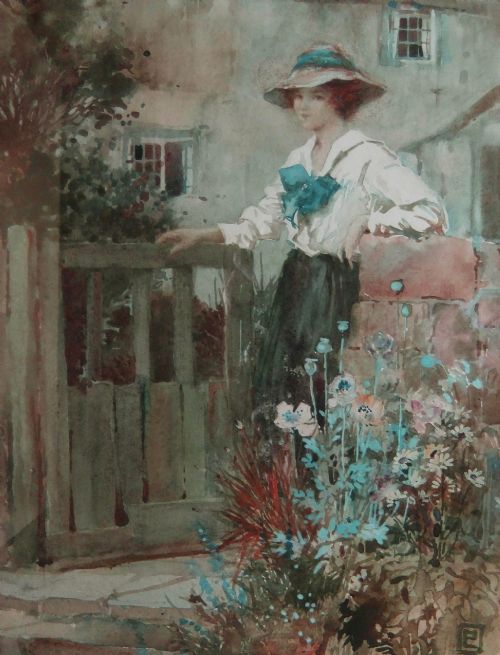
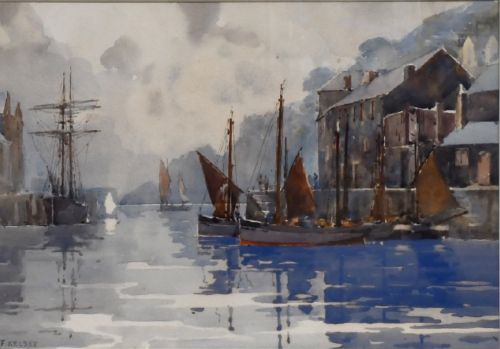
Impressionist watercolour landscape painting comprises works on paper executed across the nineteenth and twentieth centuries, spanning periods from late Victorian through to the middle decades of the twentieth century. These pieces record rural vistas, coastal harbours, and domestic gardens observed through fluid brushwork and loose washes.
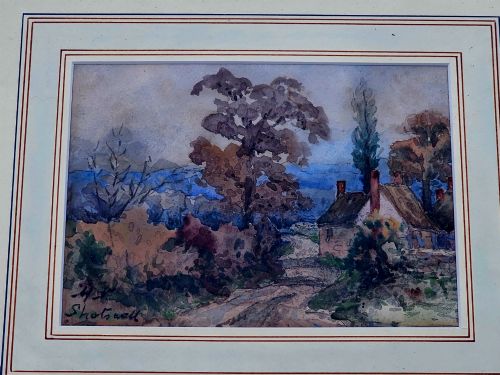
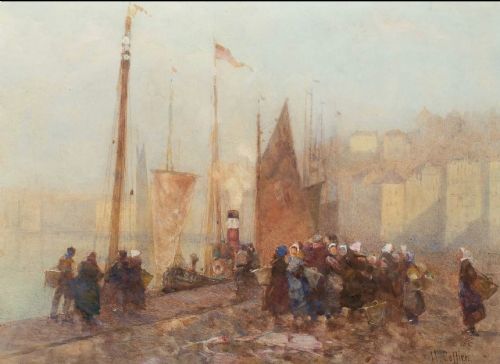
The versions most commonly met here originate from British and continental European artists working in Edwardian and early twentieth-century styles. Such pieces typically present subjects like Cornish fishing ports, Yorkshire dales, and sunlit continental canals captured in transit.
Makers represented in this group include established painters whose watercolours translate light and atmosphere onto paper support. Their works frequently employ framing under glass with gilt or wood surrounds to protect the fragile pigment.
Materials and technique
These works rely primarily upon watercolour pigment applied to paper supports, occasionally supplemented with gouache or mixed media for added opacity. The technique prioritises transparent washes that permit the white ground of the paper to illuminate the composition.
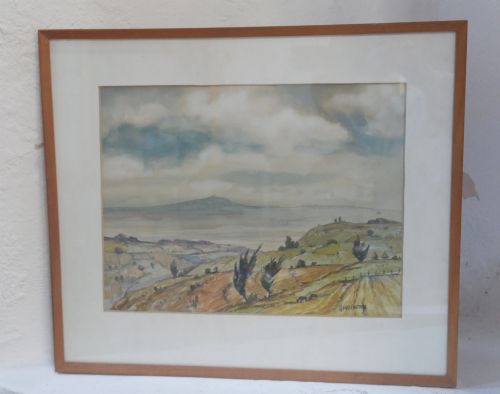
Surviving examples are customarily preserved beneath glass within wood or gilt wood frames. This mounting protects the water-soluble pigments from atmospheric moisture and handling damage.
Listings feature works executed on paper using watercolour pigment, spanning periods from the 19th century through to the 1960s.
Factors of quality
Quality rests upon the handling of light and the surety of the brushwork across the paper surface. Stronger examples display confident, unhesitating washes that define atmosphere without heavy reliance on preliminary pencil lines.
Condition plays a central role, distinguishing works retaining their original pigment vibrancy from those affected by fading or paper acidification. The integration between the work and its period framing further separates standard decorative watercolours from distinguished fine art examples.
William Banks Fortescue·Hector Caffieri·Henry de Waroquier·Percy Lancaster·Frank Kelsey·Edgar Woollatt·Gaston Cornil·William Lee Hankey·Fred Lawson·Arthur Reginald Smith·Edward Seago·George Graham·Arthur Tucker·Charles James Lauder·Ernest Pile Bucknall·Rowland Henry Hill·John Atkinson·Florence Hess·James Watson·Owen Bowen·Jules Evarist van Biesbroeck·Henri Joseph Harpinies·Lilian Stannard·Frederick William Hattersley·Sidney James Beer
The Impressionist Watercolour Landscape Painting Glossary
- Watercolour pigment
- Finely ground colour particles suspended in a water-soluble binder, used on paper to create translucent layers of tone. This medium allows light to reflect through the paint surface from the paper beneath.
- Gouache
- An opaque water-soluble paint often combined with transparent watercolour in these landscapes to introduce solid highlights and dense areas of tone. It provides greater opacity than standard watercolour pigment.
- Works on paper
- A collective designation for drawings, watercolours, and mixed media creations executed on a paper support. Such pieces require protection behind glass to prevent environmental degradation.
- Gilt wood
- Timber framing finished with a thin layer of gold leaf or metallic gilt paint, frequently utilised to house framed watercolours from the Victorian and Edwardian periods. The gold finish complements the tonal palette of the painting within.
Impressionist Watercolour Landscape Painting: Frequently Asked Questions
What is an impressionist watercolour landscape?
An impressionist watercolour landscape is a painting on paper that prioritises atmospheric effects and natural light over rigid topographical accuracy. Artists utilise loose washes and rapid brushstrokes to record transitory moments in rural or coastal environments.
These pieces typically date from the late nineteenth century through to the mid-twentieth century. They reflect the wider European shift towards capturing the immediate visual experience of nature.
How should I display watercolour paintings?
Watercolour paintings require careful placement away from direct sunlight to prevent the pigments from fading over time. They must remain framed behind glass to protect the paper and water-soluble media from atmospheric moisture and dust.
Stable indoor humidity levels help preserve both the paper support and any wooden or gilt framing. Regular inspection ensures the backing board remains sealed against environmental pollutants.
How do I identify Edwardian watercolours?
Edwardian watercolours often display a bright, optimistic palette and focus on pastoral scenes, cottage gardens, or coastal harbours. The handling tends to balance controlled draughtsmanship with looser impressionistic washes characteristic of the early twentieth century.
Signatures, dates, and framing styles frequently offer clues to the exact period of execution. Many surviving works retain period gilt wood frames typical of the era between the Victorian age and the First World War.
What subjects appear in these paintings?
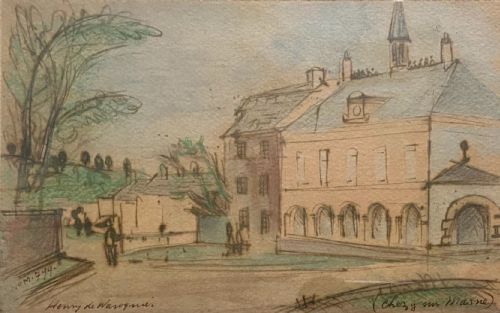
Common subjects include rural farmyards, coastal fishing villages, rolling countryside, and European street scenes. Artists frequently documented working life in places like Cornwall, Yorkshire, and continental ports.
Coastal views often feature low tides, harbour walls, and shipping boats under wide skies. Inland scenes capture wooded paths, quiet rivers, and agricultural workers harvesting crops.