
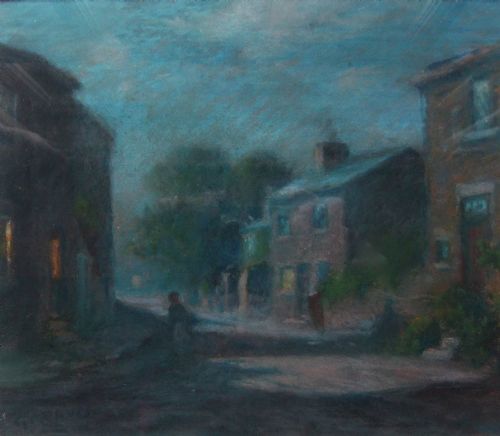


Impressionist Village Scene
Impressionist village scene paintings capture rustic life through spirited brushwork, offering timeless charm for collectors seeking atmospheric rural landscapes.
Impressionist Village Scene
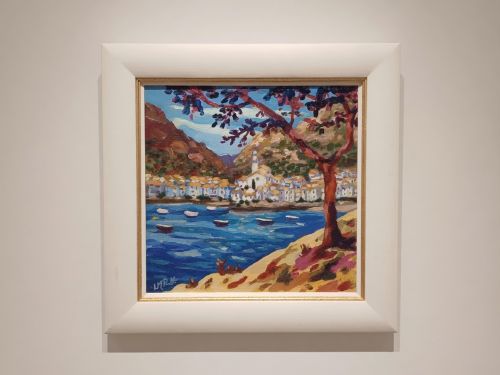
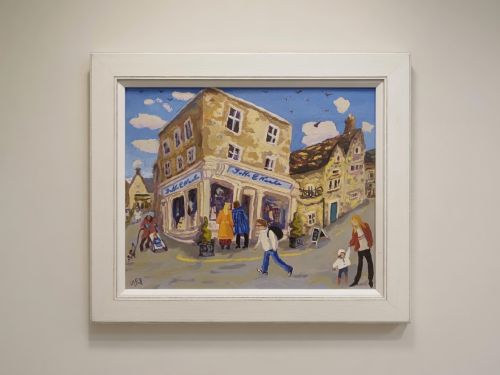
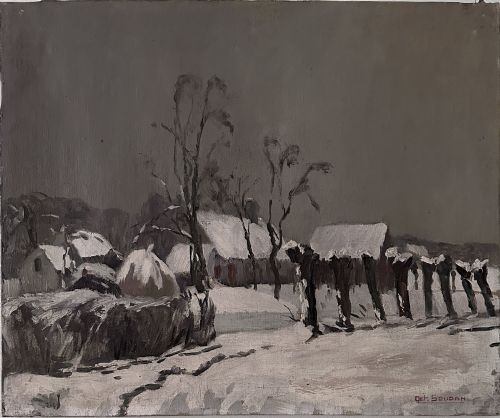
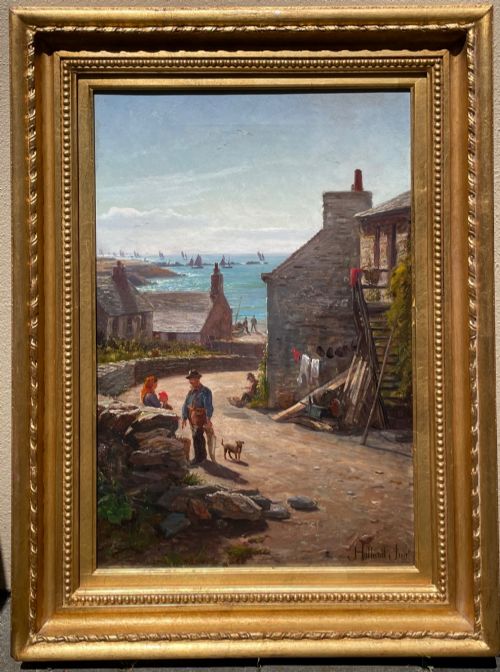
An impressionist village scene captures rural settlements, cottages, and country life through loose brushwork and an emphasis on natural light. These works span from the Victorian era through the mid-twentieth century, recording agricultural communities and quiet provincial streets.
The most common examples encountered on this page utilise oil paint on canvas or watercolour on paper. They range from British and French regional works to Dutch and African village compositions.
Makers represented include named artists such as Lucy Pratt, William Greaves, Gaston Cornil, and Maurice Asselin. Their subjects vary from autumn harvests and winter snow to market mornings and coastal fishing villages.
Materials and Techniques
Artists apply oil paint or watercolour onto canvas, paper, wood, or board to build luminous surfaces. The handling relies on visible brushstrokes and layered pigments rather than tight academic finish.
Framing often involves gilded wood to complement the palette of the canvas or paper beneath. Gouache and pastel also appear alongside oil and watercolour to capture varied textural qualities.
Regional styles include British Impressionism, French Impressionism, the Newlyn School, and Post-Impressionism.
Judging Quality
Quality rests upon the confidence of the brushwork and the artist's ability to render light and atmosphere convincingly. Stronger pieces demonstrate a purposeful handling of colour that gives depth to winter scenes or autumn foliage.
Condition of the canvas or paper and the integrity of the original pigments dictate the visual impact. Works that retain their vibrant tonality without excessive fading or clumsy restoration stand apart from weaker decorative copies.
Lucy Pratt·John Holland·William Greaves·Gaston Cornil·Arthur Tucker·James Watson·Joseph W. Milliken·Henry Sykes·William Lee Hankey·Robert McGregor·Herbert Royle·Maurice Asselin·A. Michaelis·Martin Lamotte·Christiaan Pieter Snyders·Maurice Vaumousse
The Impressionist Village Scene Glossary
- Impressionism
- A nineteenth-century painting style focusing on light, loose brushwork, and everyday subjects. It prioritises the overall visual effect over meticulous detail.
- Post-Impressionism
- An art movement extending impressionism while rejecting its limitations, favouring more symbolic use of form and colour. Artists often emphasised bold outlines and expressive hues.
- Watercolour
- A paint consisting of water-soluble pigments used with water on paper. It allows for translucent washes and delicate atmospheric effects.
- Gouache
- An opaque water-based paint that includes a white pigment binder. It creates heavier, solid colour areas compared to transparent watercolour.
- Newlyn School
- An art colony based in Cornwall focusing on plein air painting of coastal and rural life. Practitioners depicted local fisherfolk and village settings with realistic light.
Impressionist Village Scene: Frequently Asked Questions
What periods do these paintings cover?
The works span from the Victorian period through the early twentieth century up to the nineteen-sixties. Many date from the interwar decades and the early nineteen-hundreds.
This broad timeline encompasses various regional schools across Britain, France, and beyond.
How should I care for a watercolour?
Watercolour paintings require protection from direct sunlight to prevent fading of the pigments on paper. Displaying them behind conservation glass helps maintain their condition.
Keep them away from damp environments to protect the paper support.
What is the Newlyn School?
The Newlyn School refers to an artist community in Cornwall that painted everyday rural and coastal scenes outdoors. Their works capture local village life and maritime subjects with naturalistic light.
Painters associated with this group valued direct observation of their surroundings.
Are these works signed by the artists?
Many pieces feature visible signatures or attribution to known painters from British, French, and international schools. Documentation often links specific canvases to established regional artists.
Unsigned works are attributed based on style, period characteristics, and technique.