



Impressionist Village Artwork
Impressionist village artwork captures rural community life through loose brushwork and natural light, offering collectors a window into historical pastoral settings.
Impressionist Village Artwork
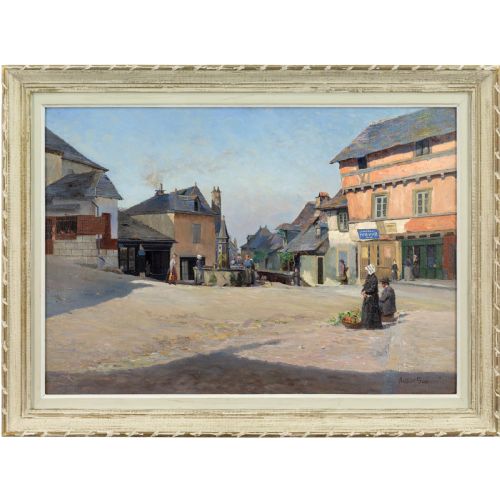
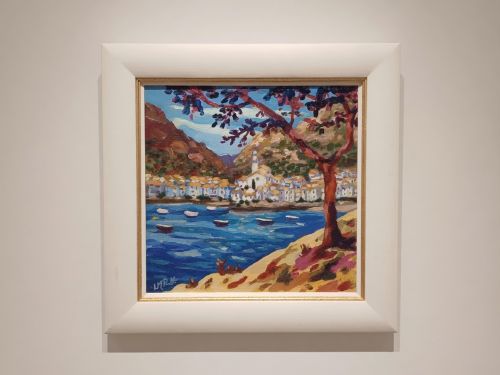
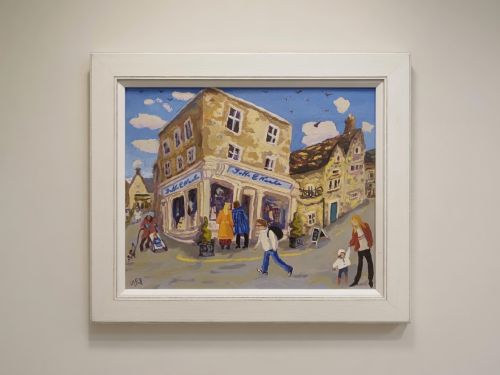
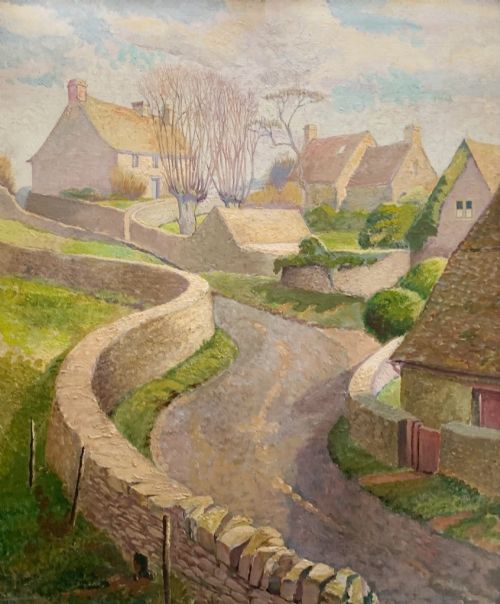
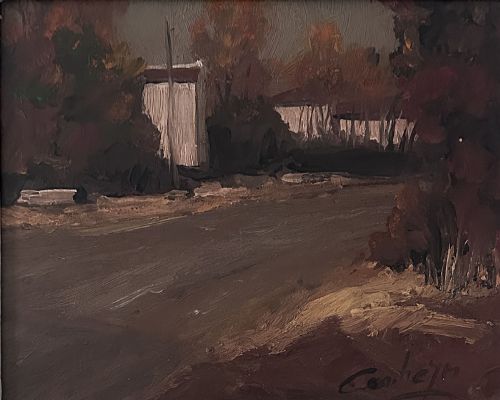
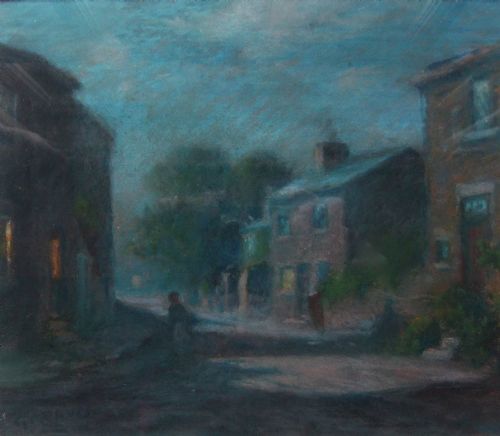
Impressionist village artwork encompasses paintings and watercolours depicting rural settlements, street scenes, and country houses rendered in a free, painterly manner. These works frequently record specific locations across Britain, France, and beyond, spanning periods from the Victorian era through the mid-twentieth century.
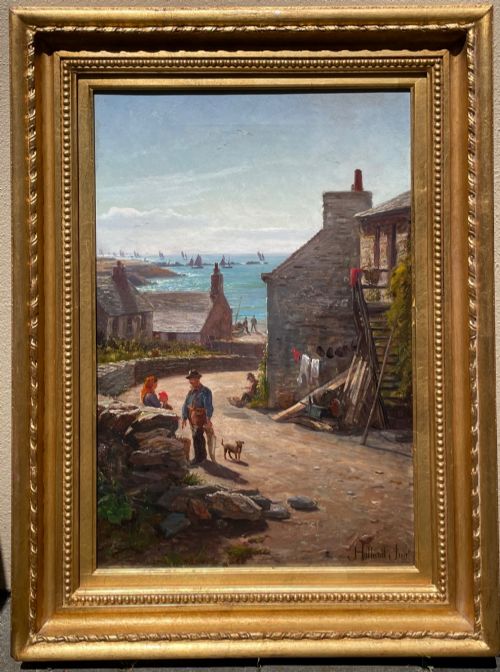
The most common formats on this page are oil paintings on canvas or panel and works on paper using watercolour, gouache, or pastel. Regional British groups such as the Staithes and Newlyn schools sit alongside continental European examples to form a diverse selection of rural subjects.
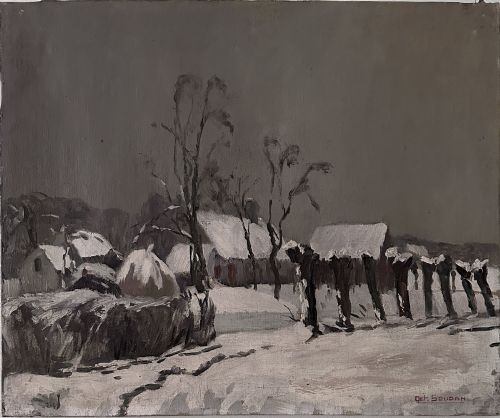
Compositions range from quiet winter lanes and market mornings to coastal fishing villages and sunlit squares. Collectors encounter both named artists associated with specific regional schools and anonymous or continental hands working within the broader impressionist tradition.
Materials and methods
Artists working in impressionist village artwork typically relied on oil paint applied to canvas, panel, or gesso grounds, building texture with visible brushstrokes. Watercolours and pastels on paper offered a more direct medium for capturing fleeting effects of light and weather in village settings.
Supports varied according to the period and region, with twentieth-century painters frequently using prepared canvas boards alongside traditional stretched linen. Framing often includes period wooden mouldings that complement the palette of the painting contained within.
Look closely and you might spot children fishing at dusk or horses hauling winter fuel through snowy European village lanes.
Factors influencing quality
The strength of an impressionist village artwork lies in the confidence of its handling and the accuracy of its tonal relationships. Superior pieces demonstrate a deft command of light and atmosphere, whereas weaker examples rely on mechanical repetition without genuine observation.
Condition and originality also play significant roles in evaluation, particularly the preservation of the pigment surface and the retention of suitable period framing. Works that maintain their original canvas tension and unrestored paint layers hold greater appeal for discerning collectors.
Arthur Gué·Lucy Pratt·Paul-Élie Gernez·John Holland·William Greaves·Gaston Cornil·George Turland Goosey·Mario Pinetti·Arthur Tucker·James Watson·Joseph W. Milliken·Frederick Mayor·V. Zirakian·Ruth Prowse·Henry Sykes·William Lee Hankey·Robert McGregor·Kershaw Schofield·Herbert Royle·Maurice Asselin·Jeffrey Pratt·A. Michaelis·Fred Lawson·Henri Therme·Martin Lamotte
The Impressionist Village Artwork Glossary
- Post-Impressionism
- A predominantly French art movement developing roughly from the late nineteenth century that extended impressionist methods while rejecting its limitations. Artists prioritised symbolic content and structural brushwork over naturalistic rendering.
- Gouache
- An opaque water-based medium frequently combined with watercolour on paper to add solid highlights and dense colour passages. It provides a matte finish suited to architectural details in village scenes.
- Gesso
- A traditional chalk or plaster-based sizing applied to wooden panels or canvases to prepare the surface for oil painting. It creates a smooth, absorbent ground that enhances the luminosity of subsequent paint layers.
- Staithes School
- A grouping of northern English painters associated with the Yorkshire fishing port, influenced by French impressionist plein air techniques. Their works focus heavily on local maritime and village life.
- Panel painting
- A technique involving the application of oil paint to a rigid wooden support rather than flexible canvas. This method offers stability and a smooth working surface favoured by many early twentieth-century painters.
Impressionist Village Artwork: Frequently Asked Questions
What defines impressionist village artwork?
These works focus on rural communities, country lanes, and village squares captured through loose brushwork and an emphasis on natural light. They record local life and architecture using techniques developed in the late nineteenth and early twentieth centuries.
Subjects range from snowy northern hamlets to sunlit continental marketplaces, painted primarily in oil or watercolour. The style prioritises the artist's immediate visual impression over strict topographical detail.
How were these village scenes painted?
Artists typically worked either outdoors directly from life or translated quick field sketches into finished studio pieces. Oil paint on canvas or panel allowed for rich, textured application, while watercolours on paper offered speed and transparency.
Regional groups often shared specific methods, such as the heavy impasto used by some oil painters or the fluid washes favoured by watercolourists. The choice of medium frequently reflects the date of execution and the artist's regional training.
Where were these paintings produced?
The collection includes works originating from various parts of Britain, including Yorkshire, the Cotswolds, and coastal fishing ports, alongside continental European locations in France and the Netherlands. Each region developed its own distinct character influenced by local topography and artistic communities.
Artists often travelled to specific colonies or painting grounds, such as Newlyn or St Ives, to capture rural and maritime routines. These locations provided endless subject matter suited to the impressionist palette.
How should I care for an oil painting?
Oil paintings on canvas or panel require stable environmental conditions away from direct sunlight and excessive humidity. Regular dusting with a soft, dry brush keeps the surface clean without risking abrasion to the paint layer.
Avoid using liquid cleaners or placing works near heat sources that could cause the wood or canvas to warp. Professional conservation should be sought if the paint surface exhibits cracking or lifting.