
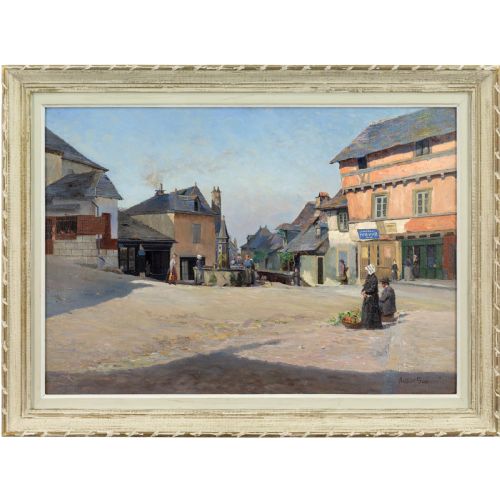
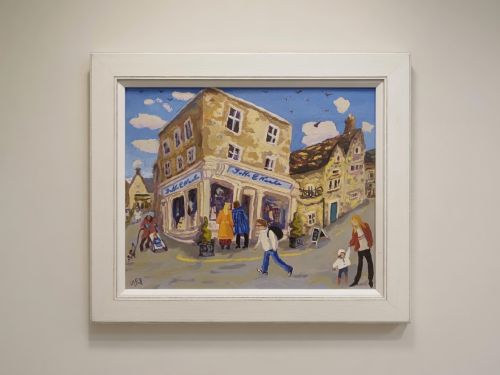
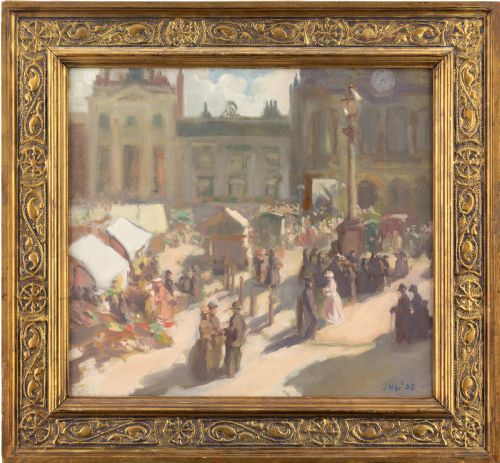


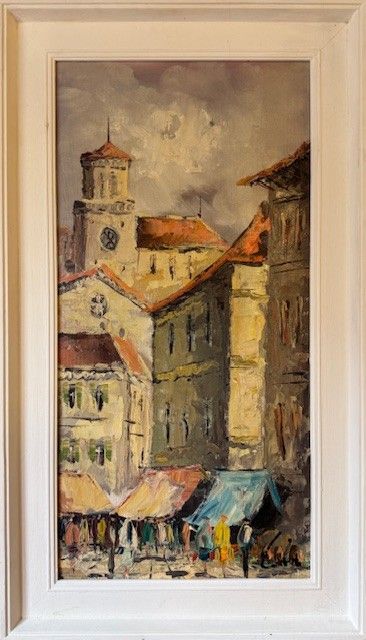


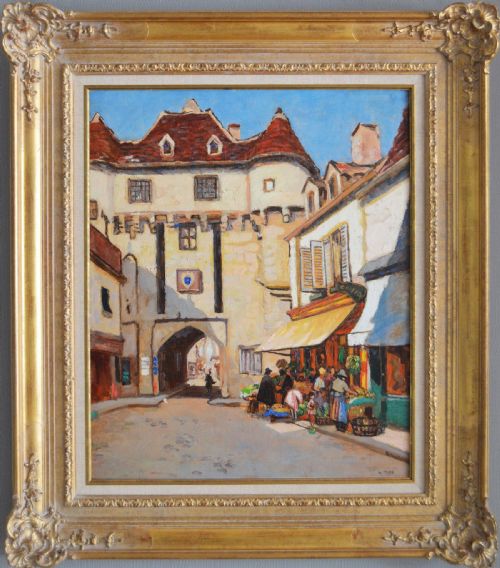
Impressionist Townscape Oil Painting
Impressionist townscape oil painting works capture the shifting light and atmosphere of urban streets and squares through expressive brushwork.
Impressionist Townscape Oil Painting
An impressionist townscape oil painting records city squares, market places and bustling streets using lively, visible brushstrokes. These works focus on capturing the transient effects of light and weather in urban environments rather than rendering every architectural detail with photographic precision.
The selection here encompasses British and European scenes executed across several decades, ranging from nineteenth century street views to mid century modernist interpretations. Common subjects include French market squares, Yorkshire coastal towns and bustling market places rendered in oil on canvas or wood panel.
Buyers will find pieces spanning various movements associated with the aesthetic, including British impressionism, post impressionism and contemporary British works. Each canvas presents a distinct perspective on urban life, framed by the stylistic conventions of its specific period.
How they were made
Artists apply oil paint directly to woven canvas or prepared wooden panels, utilising thick impasto or thin translucent glazes to build up the surface texture. The medium allows for prolonged manipulation of pigment, enabling painters to capture fleeting atmospheric effects.
Works are commonly housed within wooden frames, sometimes featuring gilt ornamentation, which complement the visual weight of the painted surface. Pigments are blended directly on the support or laid down in distinct touches to create optical mixing from a distance.
One canvas captures a quiet interior windowsill looking out, proving that townscapes sometimes begin right behind the artist's own curtains.
What varies in quality
The strength of composition and the surety of the brushwork determine the distinction between ordinary and exceptional examples. Superior works demonstrate a confident command of tone and perspective, where every stroke contributes to the overall atmospheric tension of the street or square.
The handling of light and shadow separates accomplished plein air execution from rigid studio reproduction. Works that successfully convey the specific hum and atmosphere of a particular location without resorting to formulaic detailing command greater artistic interest.
Arthur Gué·Lucy Pratt·John Hodgson Lobley RBA·Paul-Élie Gernez·A. McDonald·John Sanderson Wells·Josephine Haswell Miller ARSA·Donald Wood·Augustus William Enness·Letitia Marion Hamilton
The Impressionist Townscape Oil Painting Glossary
- Impressionism
- A nineteenth century painting style focused on the depiction of light and fleeting moments through small, visible brushstrokes. This approach prioritises atmospheric truth over academic finish.
- Post-Impressionism
- A development following impressionism that retains expressive brushwork while exploring heightened emotion and structural form. Artists working in this mode often emphasise bold outlines and simplified shapes.
- Impasto
- Paint applied thickly to a canvas, standing out in relief from the surface. This technique adds tactile depth and catches the ambient light within the room.
- Panel
- A rigid support for painting, typically made of wood rather than stretched fabric. Panels provide a firm, stable surface for detailed or spirited brushwork.
Impressionist Townscape Oil Painting: Frequently Asked Questions
What is an impressionist townscape oil painting?
An impressionist townscape oil painting is an artwork that depicts urban streets, markets or architectural squares using expressive brushwork and a focus on atmospheric light. These pieces record the everyday life and architecture of specific locations through the subjective lens of the artist.
The medium of oil on canvas or panel allows for rich texture and depth, making each scene feel immediate and alive. Collectors are drawn to the way these works freeze a fleeting moment in a bustling city.
How should I hang these paintings?
Hang your impressionist townscape oil painting at eye level on a wall with stable ambient conditions, away from direct sunlight and excessive moisture. Adequate spacing allows the energetic brushwork and colour relationships to be appreciated from a comfortable distance.
Ensure the wall fixings are appropriate for the weight of both the canvas and its wooden frame. Proper placement in a well lit room enhances the tonal nuances of the painted surface.
How do I identify the period of a townscape?
Examine the stylistic markers, the framing materials and any inscribed signatures or dates on the reverse of the canvas or panel. Twentieth century works often show looser brushwork and modernist compositional choices compared to nineteenth century examples.
Consulting the recorded biographical details of the artist or the specific regional dress and architecture depicted can also help narrow down the date of execution. Comparative study of similar works from the same era provides further context.
What subjects are common in these townscapes?
Common subjects include French market squares, Yorkshire coastal towns, bustling British high streets and quiet architectural courtyards. Artists frequently selected locations that offered interesting interplay between human activity and historical buildings.
These scenes reflect the changing face of urban and rural communities across the nineteenth and twentieth centuries. Each subject provides a window into the daily rhythms of past societies.