






Vintage European Architectural Painting
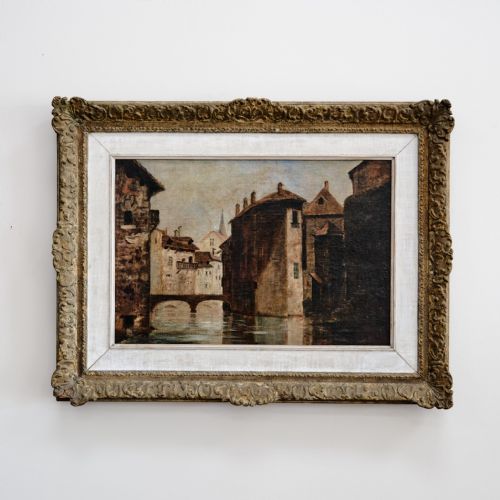
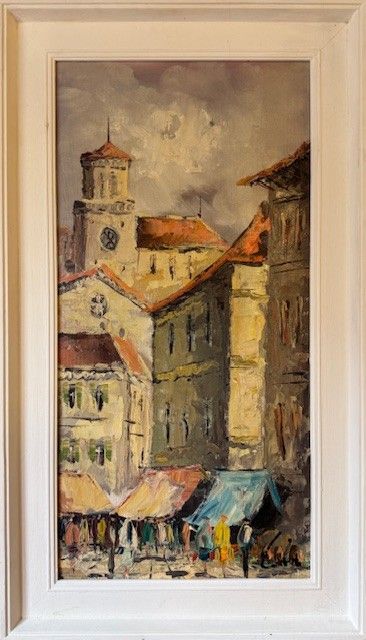
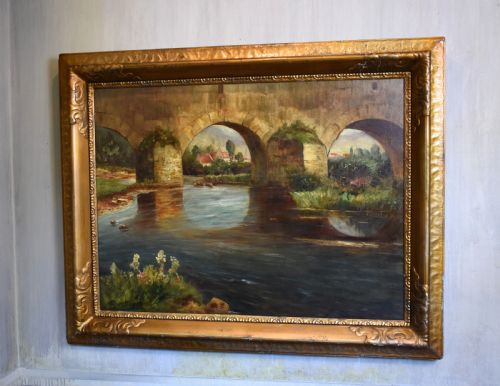
These vintage european architectural painting works capture urban facades, squares and monuments through oils and watercolours spanning multiple decades.
Vintage European Architectural Painting
A vintage european architectural painting depicts cityscapes, market squares, cathedrals and street scenes across various continental locations. The selection on this page centres primarily on works executed in oil and watercolour on canvas, panel or board.
The periods represented stretch from the nineteenth century through the mid-twentieth century. Stylistic approaches range from nineteenth-century French and Flemish traditions to mid-century modern and German expressionist interpretations.
Buyers encounter subjects such as French market squares, Italian cathedrals, riverside views of Paris and canal scenes in Ghent. These pieces bring historical civic settings directly into domestic or commercial interiors.
Factors determining quality
Depth of perspective and spatial handling distinguish accomplished architectural compositions from simpler renderings. Strong brushwork conveys the texture of stone, brick and mortar with greater conviction.
Surface preservation of the original paint layer and support dictates the physical integrity of the piece. The articulation of light and shadow across masonry and thoroughfares defines the visual impact of the work.
Several artists travelled across European borders to paint foreign cathedrals and market squares, often carrying their watercolours in small pocket-sized folios.
L. De Gent·Paul-Élie Gernez·E A Minardo·Hein Hoppmann·Joseph W. Milliken·Job de Vogel·Noel Harry Leaver·Franz Reder-Broili·Christiaan Pieter Snyders·Letitia Marion Hamilton
The Vintage European Architectural Painting Glossary
- Gesso
- A plaster-like mixture applied to canvas or wood to create a smooth, absorbent surface for painting. This preparation seals the support before the artist applies oil pigments.
- Canvas
- A heavy woven fabric stretched across a wooden frame to serve as a painting support. It remains a primary medium for oil works across the nineteenth and twentieth centuries.
- Impressionism
- A nineteenth-century painting style focused on capturing the visual impression of a moment, particularly shifting light. Artists employ visible brushstrokes and unblended colour.
- Expressionism
- A modernist movement where artists distort form and colour to evoke emotional responses rather than depict physical reality. German practitioners applied this approach to urban and industrial scenes.
- Panel
- A flat wooden board used as a rigid support for oil painting instead of woven fabric. Panels provide a completely stable surface that resists flexing.
Vintage European Architectural Painting: Frequently Asked Questions
What subjects appear in these paintings?
The compositions feature European townscapes, cathedrals, bridges, markets and street scenes. Artists recorded specific locations ranging from French riverbanks to Italian plazas and Flemish cities.
Many works document historical urban architecture as it appeared during the nineteenth and twentieth centuries. These visual records capture daily civic life alongside enduring civic monuments.
Which materials support these artworks?
Most works utilise oil paint or watercolour applied to canvas, wood panels or heavy paper. Gesso primers frequently prepare the ground for oil applications.
Many pieces retain their period gilt wood frames which complement the painted imagery. Support structures rely on traditional wooden stretchers and boards.
How do styles differ across periods?
Nineteenth-century works typically employ conventional academic perspective and detailed rendering of masonry and figures. Mid-century pieces introduce impressionist and expressionist interpretations with looser brushwork and bolder palettes.
Later works often emphasise atmospheric light and dynamic spatial arrangements over strict topographical accuracy. Stylistic shifts reflect broader artistic movements from realism to modernism.
How should I care for these paintings?
Display oil and watercolour works away from direct sunlight and excessive humidity fluctuations. Keep painted surfaces free from dust using a soft, dry brush.
Avoid harsh chemical cleaners on both the canvas and any gilt wood frames. Professional conservators should handle any structural repairs to the canvas or panel.