





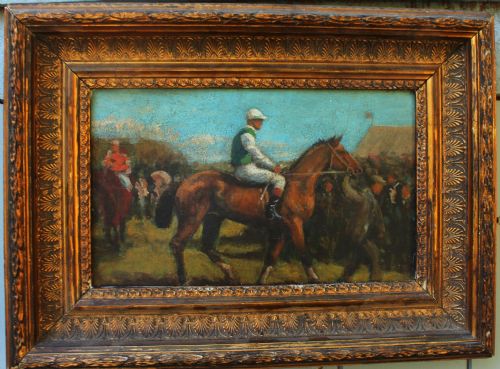


Impressionist Style Painting
Impressionist style painting captures light and atmosphere through loose brushwork, offering buyers a window into historic coastal views, gardens and intimate interiors.
Impressionist Style Painting
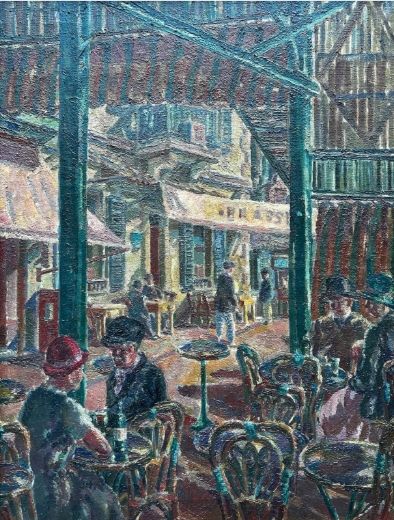
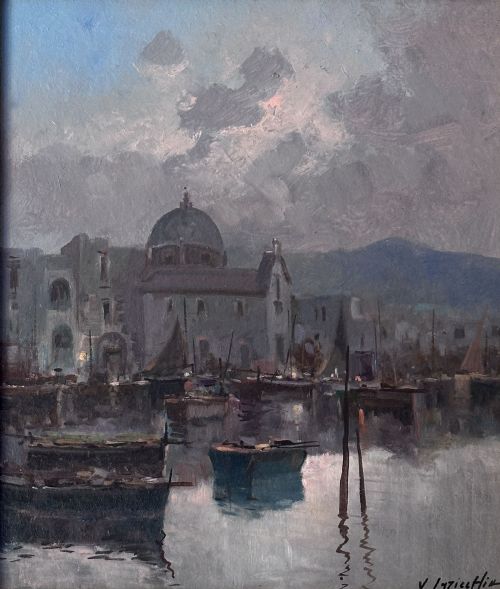
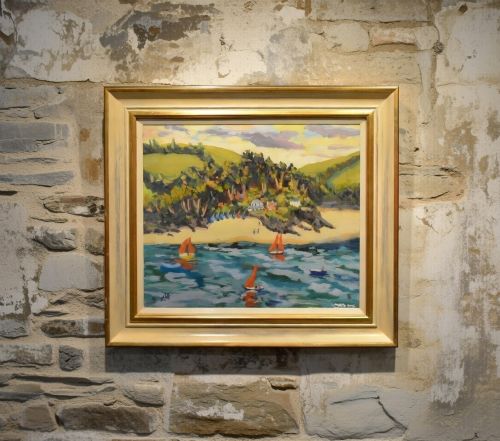
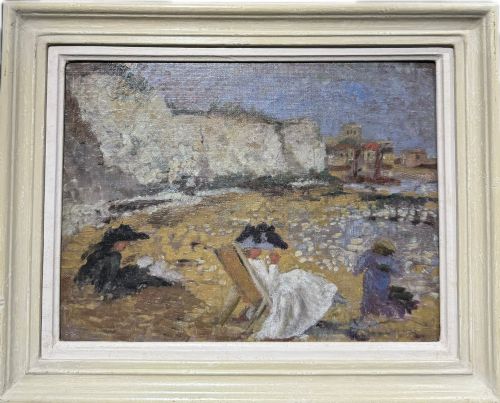
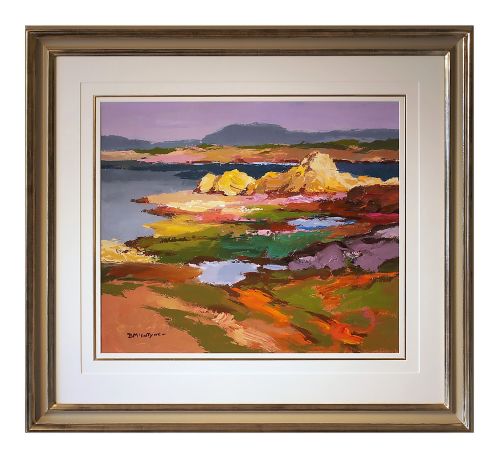
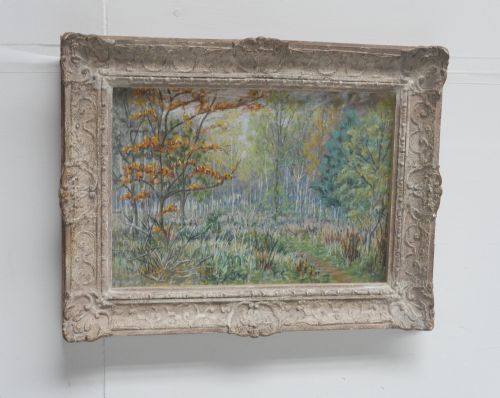
An impressionist style painting brings together subjects ranging from tranquil gardens and water lilies to sunlit Mediterranean landscapes and atmospheric coastal scenes. These works capture fleeting moments of everyday life, whether through a hurried view of a Venetian canal or a quiet interior scene.
The pieces available span from the nineteenth century through the mid-twentieth century, encompassing British Impressionism, Post-Impressionism, and the Barbizon School. Buyers frequently encounter works executed by regional British schools alongside continental European scenes.
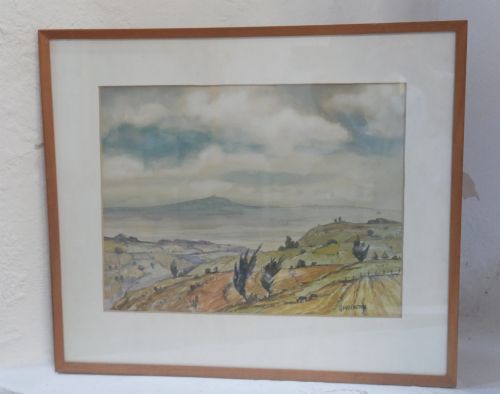
Forms vary from finished canvases to intimate oil studies on board and paper, alongside occasional pastels and mixed media works. The subject matter leans heavily toward natural light, domestic spaces, and rural or maritime vistas.
Materials and Techniques
Artists relied primarily on oil paint applied to stretched canvas, wooden panel, or heavy paper, often building texture with thick impasto or working in rapid, visible strokes. Gesso provided the foundational ground for many panels and canvases, preparing the surface to receive pigment.
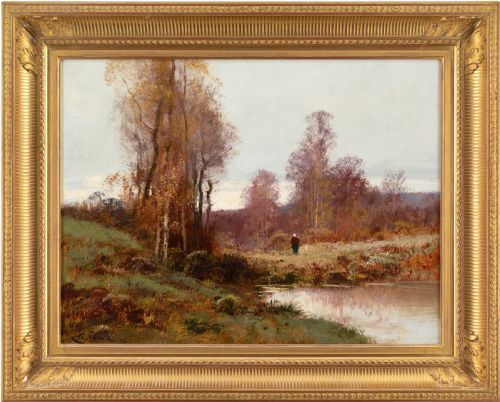
Supporting these works are period surrounds such as heavy gilt or Montparnasse frames, which complement the painterly brushwork. Watercolour and pastel also appear on paper supports, allowing for lighter, more immediate applications of colour.
Impressionist Style Painting Retail Price Guide 2026
Typical asking prices for impressionist style painting among the pieces listed under this phrase on Sellingantiques today, from the lower quarter to the upper quarter. They describe what is for sale here now, not the wider market.
Listings feature canvases, wooden panels, and papers dated from the nineteenth century through the 1960s.
Distinctions in Quality
Quality rests upon the confidence of the brushwork and the artist's ability to render light and atmosphere convincingly across the composition. Stronger examples display a deliberate command of tone and colour harmony, whereas lesser works rely on repetitive or static application.
The integration of the supporting frame also influences the overall integrity of the piece, as period frames tailored to the canvas enhance the visual context of the artwork. Provenance and attribution to documented regional groups further elevate the standing of individual works.
Lucy Pratt·Donald McIntyre·Charles Clair·William JB Jenkins·Helmut Reuter·Paul Schier·Jeffrey Pratt·Edward M. Elliott·Frederick W. Jackson·Ernest Higgins Rigg
The Impressionist Style Painting Glossary
- Impasto
- Paint laid on an area of the surface in very thick layers, usually thick enough that the brush or painting-knife strokes are visible. This technique adds tactile depth and catches light across the canvas.
- Post-Impressionism
- A predominantly French art movement that developed from about 1880 until 1905, extending impressionist rejection of rigid academic standards. Artists focused on abstract qualities and symbolic content rather than pure visual replication.
- Barbizon School
- A group of French painters associated with the village of Barbizon near the Forest of Fontainebleau who advanced the tenets of realism in landscape art. Their work emphasised direct observation of nature and atmospheric weather conditions.
- Pointillism
- A technique of painting in which small, distinct dots of colour are applied in patterns to form an image. Optical mixing occurs when the viewer's eye blends the clustered pigments together.
- Gesso
- A paint mixture consisting of a binder mixed with chalk, gypsum, or pigment, used to prepare a rigid surface such as wood or canvas for painting. It provides a smooth, stable ground for oil applications.
Impressionist Style Painting: Frequently Asked Questions
What subjects do these paintings feature?
The collection focuses primarily on natural landscapes, coastal estuaries, floral still lifes, and quiet domestic interiors. Artists captured the play of light upon water lilies, garden paths, and rural farmyards.
Many works reflect travels through Italy and France alongside scenes from British coastal towns and meadows.
How should I care for an oil painting on canvas?
Keep the artwork away from direct sunlight and fluctuating humidity levels to protect the canvas and underlying gesso. Maintain a stable indoor climate to prevent the paint layer from cracking.
Dust the surface gently with a soft, dry brush without applying pressure to the impasto.
How do I identify a mid-century impressionist work?
Look for looser brush applications and a focus on atmospheric light rather than precise architectural or botanical detail. The materials often include mid-century canvas boards or primed papers alongside traditional stretched linen.
Signatures, artist studio stamps, or framer labels frequently help date the piece to the decades surrounding the mid-twentieth century.
Are original frames important for these pieces?
Period frames, such as heavy gilt mouldings or Montparnasse styles, complement the aesthetic of the era and help preserve the historical context of the artwork. They were selected to enhance the palette and scale of the painting.
While paintings can be reframed, period surrounds often share the age and wear of the canvas they enclose.