

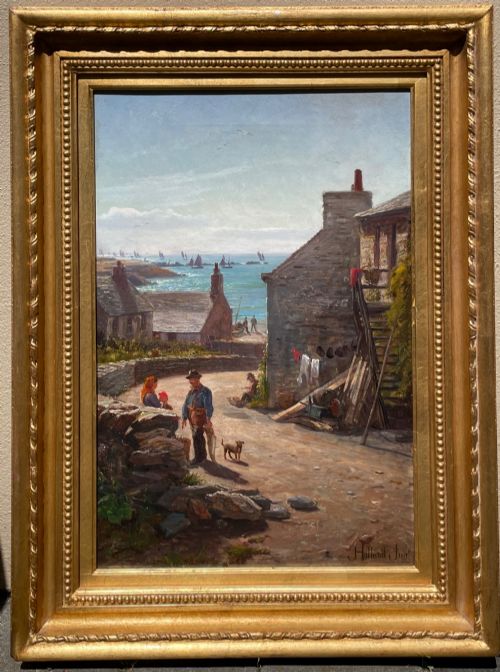


Impressionist Port Scene
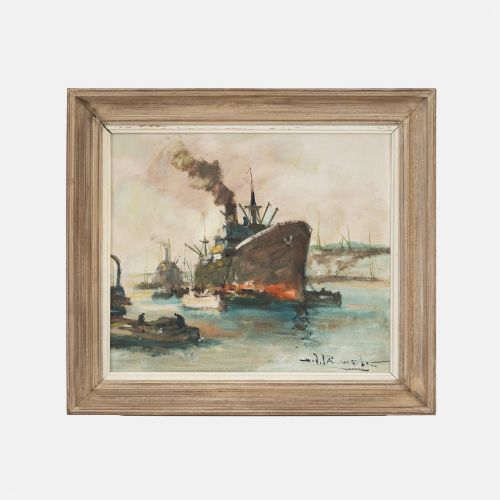
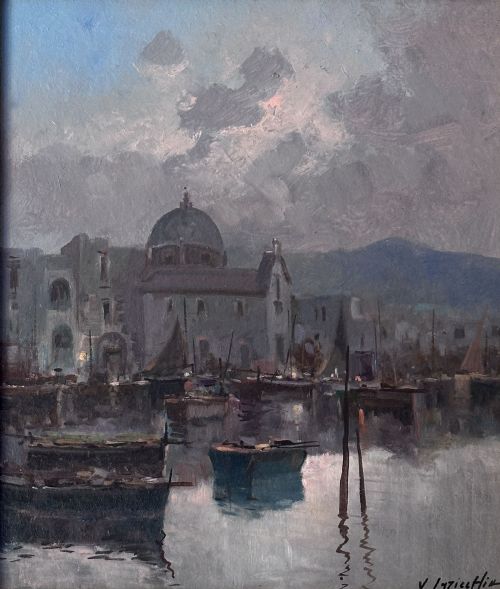
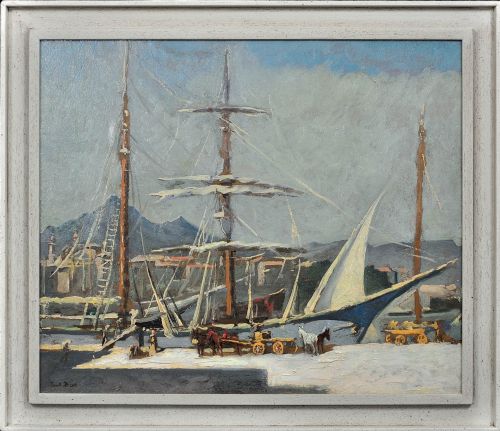
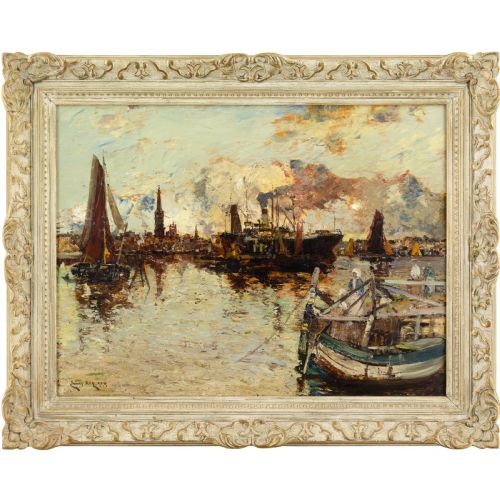
Impressionist port scene paintings capture maritime industry and coastal light through loose brushwork across various 19th and 20th-century schools.
Impressionist Port Scene
An impressionist port scene depicts maritime activity, harbours, docks, and coastal shipping vessels rendered through varied painterly techniques. Buyers exploring this category encounter works ranging from Victorian compositions to mid 20th-century British and French interpretations.
The selections on this page span several decades, featuring Italian ports, Sicilian harbours, Cornish fishing villages, and bustling docks like Southampton. These paintings record bustling maritime commerce and quiet coastal moments alike through the lens of impressionist and post-impressionist vision.
Materials and construction
Artists painted these works primarily using oil paint applied to canvas, wood boards, or traditional stretched canvas supports. The physical application relies on visible, textured brushstrokes designed to capture fleeting effects of light on water and stone.
Many of these paintings retain their original or period frames constructed from wood and giltwood, which frequently complement the coastal palettes and painterly styles of the canvases they enclose.
Impressionist Port Scene Retail Price Guide 2026
Typical asking prices for impressionist port scene among the pieces listed under this phrase on Sellingantiques today, from the lower quarter to the upper quarter. They describe what is for sale here now, not the wider market.
Gyrth Russell managed to capture the heat of a Cornish day so vividly you might reach for a glass of lemonade.
Assessing quality and depth
Quality in these coastal works rests on the artist's command of light, atmosphere, and spatial depth within a busy maritime environment. Stronger examples demonstrate confident handling of water reflections and architectural mass without losing the lively energy characteristic of the movement.
The integration of the frame also influences the overall presence of the piece, as period gilt wood and carved wooden surrounds contribute to the historic context of the painting.
James Kay RSW·Paul Bret·John Holland·Gyrth Russell·Henri Ottman·J.M.Hastings
The Impressionist Port Scene Glossary
- Post-Impressionism
- A predominantly French art movement that developed roughly between 1886 and 1905, extending impressionism while rejecting its limitations. Artists sought greater symbolic and emotional expression through their work.
- Maritime Seascape
- A genre of painting that depicts the sea, ships, or harbour views. These works focus heavily on marine atmospheres, shipping traffic, and coastal architecture.
Impressionist Port Scene: Frequently Asked Questions
What periods do these paintings cover?
The works span from the Victorian era through various decades of the 20th century, including the 1890s, 1900s, 1910s, 1930s, and 1950s.
Each era brings distinct regional approaches, from British coastal views to French Riviera scenes.
Where were these harbour scenes painted?
Locations range widely across European and domestic shores, featuring settings in Italy, Sicily, the Isle of Man, Cornwall, and southern France.
Specific ports include Antwerp, Palermo, Mevagissey, and Southampton docks.
What surfaces support these paintings?
Artists utilised traditional materials such as canvas and wood board as supports for their oil paint compositions.
Many works retain their period wooden or giltwood frames.
How do impressionist and post-impressionist works differ?
Impressionism focuses primarily on the optical effects of light and spontaneous brushwork in recording a fleeting moment.
Post-impressionism builds upon those techniques while pursuing more expressive forms and structured compositions.