

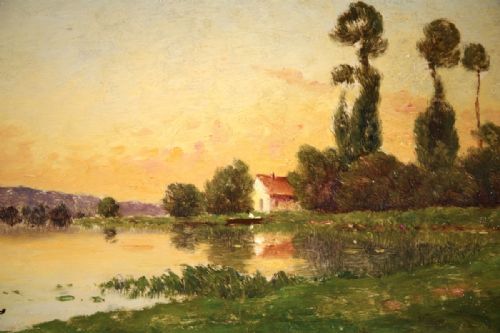


Impressionist Country Scene
An impressionist country scene captures rural life through loose brushwork, bringing the quiet rhythm of fields, riversides, and farmyards into a room.
Impressionist Country Scene
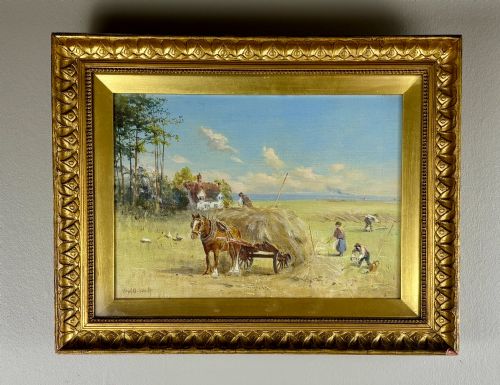
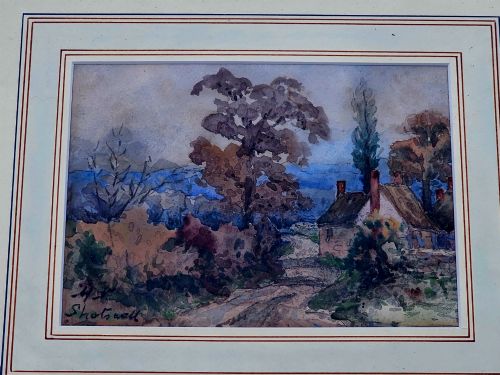
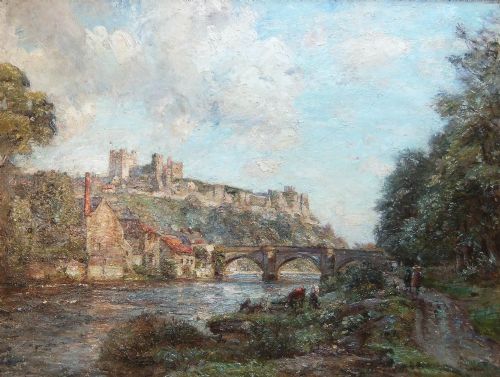
An impressionist country scene takes rural and agricultural subjects as its main focus, depicting farmsteads, river valleys, haymaking, and village life. These works draw the eye to the natural textures of the countryside through energetic brush marks and an attention to changing daylight.
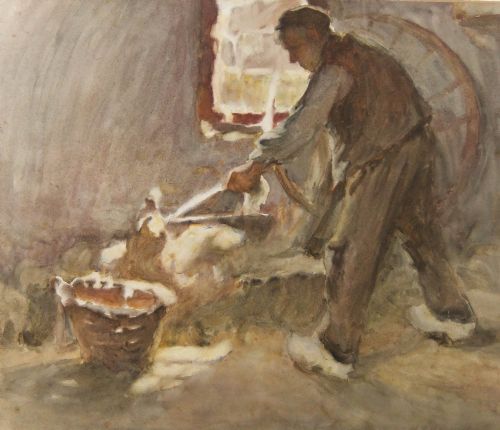
The pieces met on this page span from the Edwardian era through the mid-twentieth century, with a strong representation of British and French regional schools. Most examples present intimate glimpses of rural working life, from blacksmiths to hay harvesters in Yorkshire and beyond.
Makers recorded in the evidence range from notable regional painters to continental artists working in plein air styles. Their output reflects a shared interest in capturing the immediacy of an outdoor moment rather than a rigid topographical record.
How they were made
Painters worked primarily with oil paint and watercolour, applying pigments to canvas, wood panels, paper, or board. Oil formulations allowed for thick impasto applications that built tangible texture onto the surface, while watercolours relied on fluid washes to catch ephemeral light.
Plein air methods encouraged artists to work directly outdoors in front of the subject, recording transient effects of weather and season. Mixed media additions occasionally appear alongside standard paint applications, particularly in mid-century interpretations of garden and floral scenes.
Listings feature canvases, wood panels, and paper supports spanning the Edwardian period through the mid-twentieth century.
What varies in quality
Quality rests upon the confidence of the brushwork and the artist's ability to structure a composition through colour and tone rather than hard line. Stronger examples demonstrate a sure command of light that binds sky, foliage, and figures into a unified atmosphere.
Support materials and framing also differentiate the works, as panels and canvases maintained in their original condition retain the intended vibrancy of the pigment. Softer watercolours depend upon paper integrity and protection from dampness to preserve their subtle gradations.
Henry Silkstone Hopwood·Herbert Royle·Hubert Wellington·Henri Jaques Delpy·Ernest Higgins Rigg·Owen Bowen·Ernest Pile Bucknall·William Greaves·William Grant Murray·Ralph Dorrance·James William Booth·Arthur Winter Shaw·Rowland Henry Hill·Phyllis Morgans·W. Tatton Winter·Peter Jackson·William Miller Frazer·William Hatherell·Frederick William Jackson
The Impressionist Country Scene Glossary
- Impressionism
- A nineteenth and twentieth century painting style focused on capturing the visual impression of a moment, shifting attention toward light and spontaneous brushwork. Artists working in this manner prioritised everyday rural and domestic subjects.
- Plein air
- Painting executed outdoors directly in front of the subject to capture natural light and atmospheric conditions accurately. This method produced many of the immediate landscape studies recorded in the evidence.
- Impasto
- Paint laid thickly on an area of the surface, standing out from it to create physical texture. This technique gives weight and relief to foliage, earth, and water.
- Post-Impressionism
- An artistic movement following Impressionism that extended its use of vivid colours and thick paint while placing greater emphasis on geometric forms or expressive content. French examples in the evidence reflect these developments.
- Watercolour
- A painting method in which the paints are made of pigments suspended in a water-based solution. The technique uses transparent washes on paper to create luminous effects.
Impressionist Country Scene: Frequently Asked Questions
Where should I hang an impressionist country scene?
These works suit well-lit spaces where natural daylight can animate the brushwork and colour harmonies. Living rooms and studies benefit particularly from the calming rural subject matter.
Keep the painting away from direct sunlight and sources of extreme heat to protect the canvas or paper support from warping and fading over time.
How do I identify a post-impressionist landscape?
Post-impressionist works often feature simplified forms and heightened, non-naturalistic colour choices that express the mood of the landscape rather than a strict optical record. Artists in this tradition pushed beyond standard visual observation.
Look for bolder outlines and deliberate colour contrasts that give the countryside scene a distinct psychological presence.
What is the difference between oil and watercolour versions?
Oil paintings on canvas or wood panel offer heavy texture and deep pigment layers that hold up well in traditional gilt or wood frames. Watercolours on paper provide a lighter, more translucent quality that requires glazing for protection.
Both mediums were used extensively to record rural views, though oils generally dominate larger landscape formats.
How do I care for antique painted wood panels?
Wood panels respond to fluctuations in room humidity and temperature, so stable environmental conditions help prevent the wood from splitting or warping. Dust the surface gently with a soft, dry cloth rather than using liquid cleaning products.
Professional framing with a proper backing board also protects the reverse of the panel from dust and moisture.