


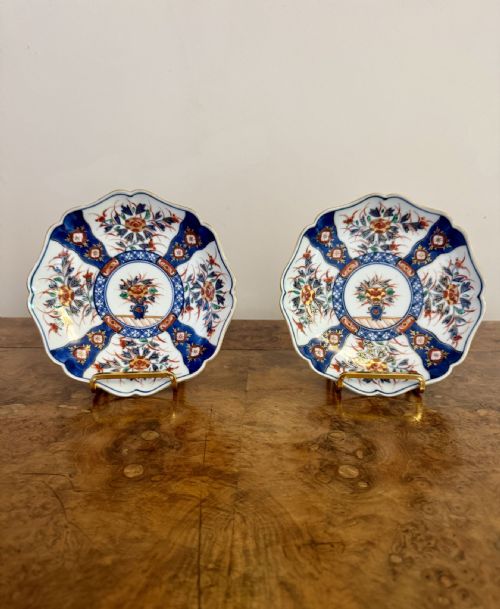
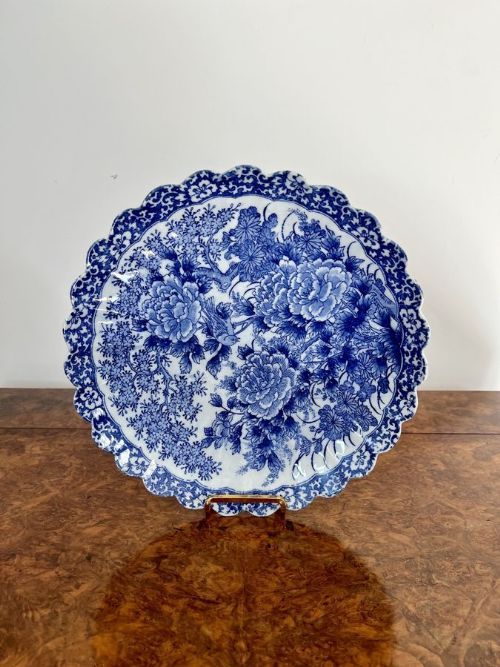


Imari Style Ceramic Dishes
Imari style ceramic dishes bring vibrant palettes of underglaze blue and iron red, enriched with gilding, straight to the table or wall.
Imari Style Ceramic Dishes
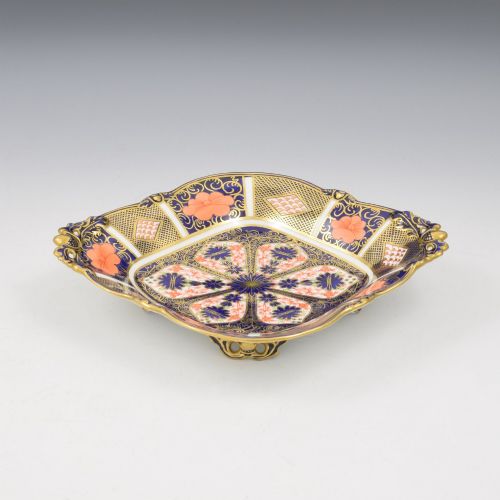
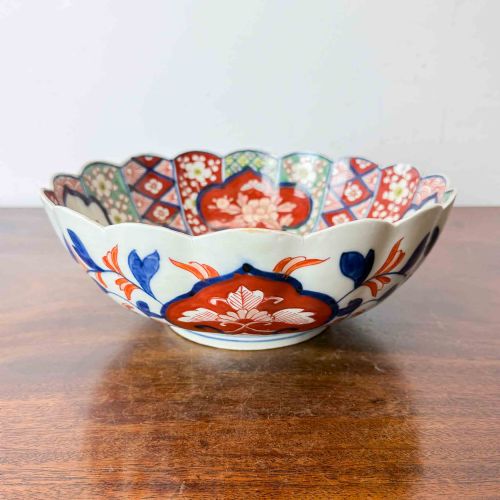
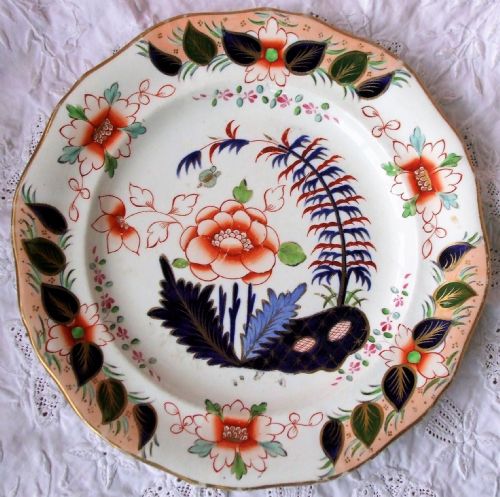
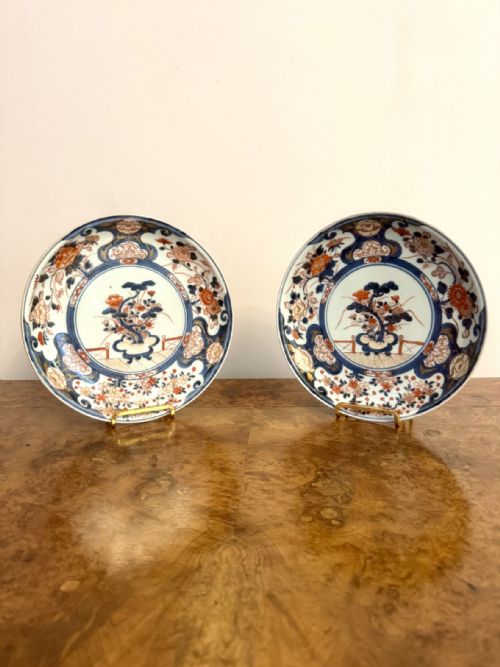
Imari style ceramic dishes encompass both Japanese originals and English adaptations created across the eighteenth, nineteenth, and early twentieth centuries. When searching for imari style ceramic dishes, buyers encounter decorative chargers, serving platters, scalloped plates, and large bowls originating from Japan as well as factories in Staffordshire and Worcester. Japanese examples from the nineteenth century sit alongside English ironstone and porcelain pieces bearing distinct orientalist patterns.
The selection frequently includes English interpretations by makers such as John Davenport, Royal Crown Derby, and Masons alongside imported Japanese wares. Forms range from hexagonal plates and oval serving dishes to deep bowls and tureens produced during the Georgian and Victorian periods. Buyers choose these pieces for their rich ornamentation and historical breadth, spanning multiple decades of cross-cultural ceramic design.
Materials and Technique
These pieces rely on durable substrates such as hard-paste porcelain, stoneware, and ironstone, fired at high temperatures to provide a sturdy base for complex decoration. Potters applied underglaze cobalt blue before the initial glaze firing, followed by enamel pigments in iron red and supplementary colours in subsequent low-temperature firings.
Gilt and gold leaf additions provide the characteristic metallic highlights seen across both Japanese imports and English factory productions. Hand-painted motifs, including floral arrangements, panels, and mythical creatures, demonstrate the skilled brushwork employed by decorators in both East and West.
The listings span multiple ceramic materials, including porcelain, earthenware, ironstone, and stoneware, paired with enamel, glaze, and gold leaf.
Assessing Quality and Execution
The fineness of the potting and the crispness of the hand-painted brushwork distinguish standard utilitarian wares from superior artistic productions. Superior examples exhibit precise underglaze cobalt definition, cleanly aligned enamel colours, and rich, intact gilding that retains its original lustre across the surface.
The complexity of the form and the depth of the palette also indicate the tier of the piece. Scalloped edges, pierced rims, and intricate compartmentalised designs require greater technical skill from the potter and decorator than simple circular plates.
John Davenport of Longport·Royal Crown Derby·Flight Barr and Barr·Chamberlain Worcester·John Ridgway
The Imari Style Ceramic Dishes Glossary
- Imari
- A style of ceramic decoration originating in Japan featuring a distinct palette of underglaze blue, iron red, and gold. English factories subsequently adopted these motifs during the Georgian and Victorian eras.
- Ironstone
- A type of heavy, durable earthenware patented in the nineteenth century by English manufacturers as a robust alternative to porcelain. It frequently served as a base for bold transfer-printed and hand-painted imari designs.
- Charger
- A large decorative plate intended primarily for display on a wall, sideboard, or table centre rather than for daily dining use. These items often showcase the most elaborate painted compositions.
- Underglaze
- A method of decorating pottery where metallic pigments are applied directly to the unfired or biscuit body before the protective glaze layer is applied and fired. This technique protects the blue pigment from wear over centuries of use.
- Kakiemon
- An asymmetric style of Japanese enamel decoration characterised by sparse, refined floral and animal motifs on a milky white porcelain body. It heavily influenced European porcelain factories during the eighteenth century.
Imari Style Ceramic Dishes: Frequently Asked Questions
How do I date an antique imari dish?
Dating relies on identifying factory backstamps, ceramic bodies such as ironstone versus porcelain, and stylistic markers associated with specific manufacturing periods. English pieces often feature impressed or printed factory marks corresponding to nineteenth-century registration years.
Japanese imari pieces from the nineteenth century are typically evaluated through paste characteristics, glaze texture, and the vibrancy of the iron red and gilding rather than marked signatures.
What is the difference between Japanese and English imari?
Japanese imari pieces were produced in Hizen province and exported through the port of Imari, featuring authentic oriental motifs painted on a resonant porcelain body. English imari consists of domestic factories copying or adapting these aesthetic principles using local porcelain, stoneware, or ironstone.
English interpretations often reflect contemporary Georgian or Victorian shapes, such as ashets, tureens, and armorial dessert plates, tailored to European dining habits.
How should I display large chargers safely?
Large chargers require sturdy wall hangers with protective coated springs or dedicated plate stands designed to support the substantial weight of porcelain and ironstone. Placement should avoid direct sunlight to protect the stability of the overglaze enamels.
Ensuring the display furniture is stable prevents accidental knocks in busy household areas.