


Ironstone Serving Dishes
Ironstone serving dishes are heavy earthenware vessels built for the dining table, prized for their robust utility and bold decorative patterns.
Ironstone Serving Dishes
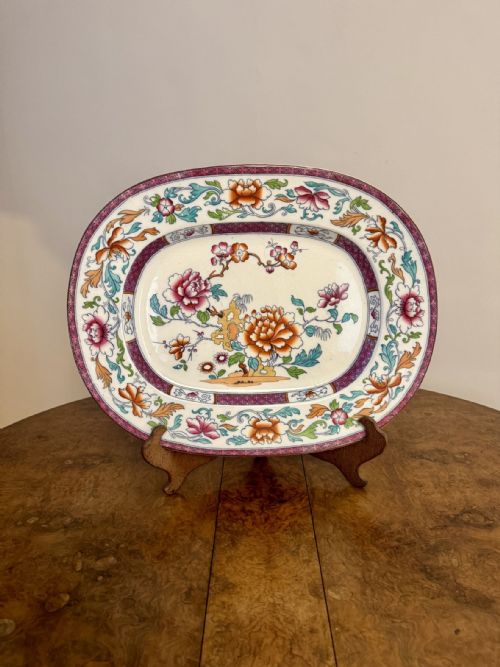
When you search for ironstone serving dishes, you encounter heavy earthenware pieces designed to hold meats, vegetables, and soups for the dining table. The selection spans the nineteenth century, encompassing Georgian, Regency, and Victorian eras.
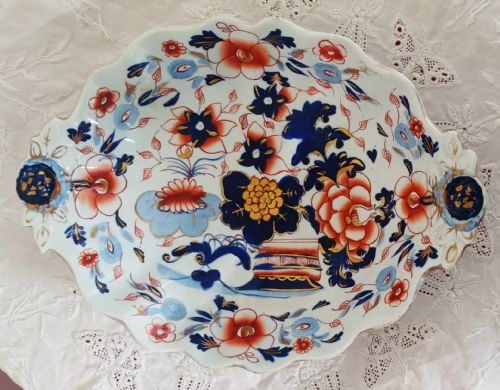
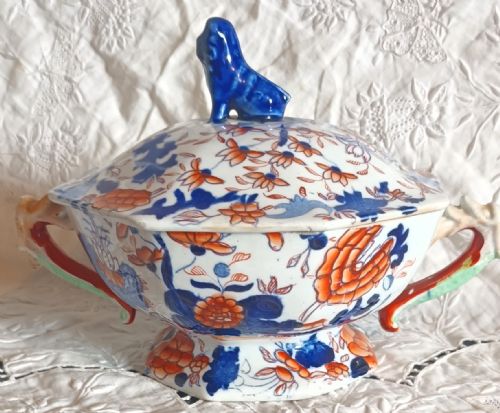
The most common forms on this page are large meat platters, lidded tureens, and fruit comports. These items originate from English potteries, often displaying transfer-printed or hand-painted motifs.
Many examples showcase stylistic influences from East Asia, including Chinoiserie and Imari patterns. A buyer finds both utilitarian meat dishes with drainer inserts and ornamental dessert shapes among the listings.
Materials and Manufacture
Potters constructed these vessels from dense ceramic earthenware known as ironstone or ironstone china, formulated for exceptional durability. This heavy body received glossy glazes that protected the underlying clay and provided a smooth surface for decoration.
Makers applied intricate designs using blue and white transfer printing or hand-applied enamels. Selected pieces incorporated rich details such as gold leaf and gilding to accentuate the painted motifs.
Listings feature nineteenth-century ironstone serving dishes, including meat platters, lidded tureens, and fruit comports in Georgian and Victorian styles.
Distinctions in Quality
Quality in these earthenware vessels rests upon the crispness of the transfer print and the precision of the hand-applied enamel colours. Pieces featuring complex multi-colour palettes like Imari or detailed Chinoiserie scenes demand greater skill from the decorator.
The presence of subsidiary components, such as original matching covers, ladles, or ceramic strainers, elevates the standing of a tureen or platter. Maker identification also plays a part, with documented works from notable potteries holding particular regard.
Mason's Ironstone·Francis Morley·Coalbrookdale·Minton
The Ironstone Serving Dishes Glossary
- Ironstone
- A heavy, durable type of ceramic earthenware patented in the nineteenth century to rival imported porcelain.
- Tureen
- A deep covered bowl designed for serving soups, vegetables, or sauces at the dining table.
- Comport
- A raised footed bowl or dish used for serving fruit or dessert during formal meals.
- Chinoiserie
- A decorative style employing European interpretations of traditional Chinese and East Asian motifs.
- Imari
- A pattern style characterised by rich palettes of cobalt blue, iron red, and gilding, inspired by Japanese export wares.
- Transfer Print
- A technique where an engraved copper plate transfers a design onto paper and then onto the ceramic body before glazing.
Ironstone Serving Dishes: Frequently Asked Questions
What is ironstone china?
Ironstone china is a dense, heavy ceramic earthenware patented in the nineteenth century to provide a durable alternative to porcelain. It offers great strength while retaining a refined appearance for the dining table.
Potters used this robust body for large platters, soup tureens, and vegetable dishes that needed to withstand heavy daily use.
How were tureens used?
Tureens served as the central vessels for holding and insulating soups, sauces, or vegetables at formal dining tables. The tight-fitting covers kept the contents warm until service.
Ladle slots in the lids and internal ceramic strainers helped hosts serve guests efficiently during large meals.
What are Chinoiserie patterns?
Chinoiserie patterns are decorative designs that reflect European stylistic interpretations of Chinese art and architecture. They frequently feature pagodas, exotic landscapes, and figures in traditional settings.
Potters applied these motifs using blue and white transfer printing or vibrant hand-painted enamels.
How do I care for antique ironstone?
Antique ironstone requires gentle hand washing with mild soap and warm water to protect the glaze and any delicate surface gilding. Avoid harsh scourers and automated dishwashers.
Store large platters and tureens securely on flat surfaces to prevent accidental chipping of the heavy earthenware body.
What is an ashset?
An ashset is an alternative historical term for a meat dish or platter used in serving large joints of meat. These pieces often featured channels and wells to collect juices.
They form part of the broader range of nineteenth-century dining room ceramics designed for substantial family meals.