



Imari Lid Jar
These imari lid jar pieces combine vibrant palettes with functional covered forms, originating largely from Japanese Arita kilns and British makers.

Imari Lid Jar
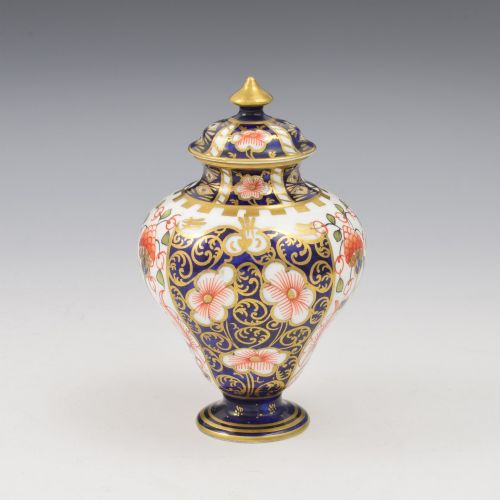
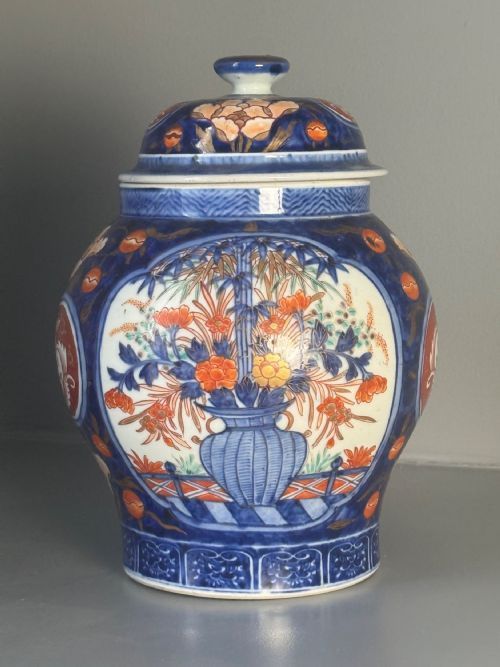
An imari lid jar brings together covered vessels designed for display, storage, and pot pourri, often shaped as baluster vases, ginger jars, and octagonal containers.
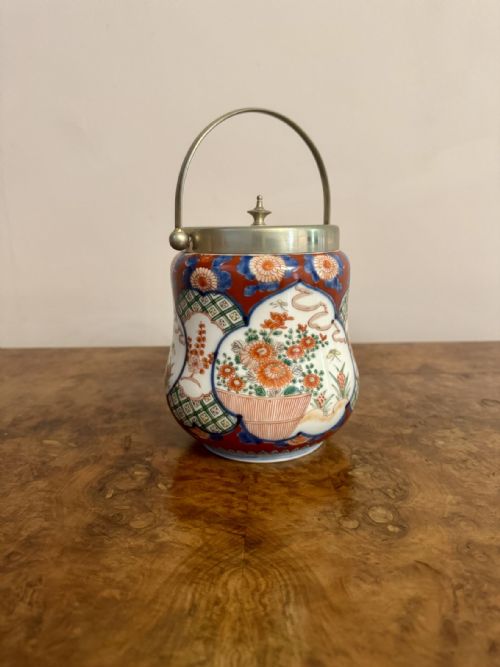
The selection here draws primarily from nineteenth-century Japanese Meiji period exports alongside eighteenth-century Arita pieces and British interpretations by factories such as Royal Crown Derby and Mason's.
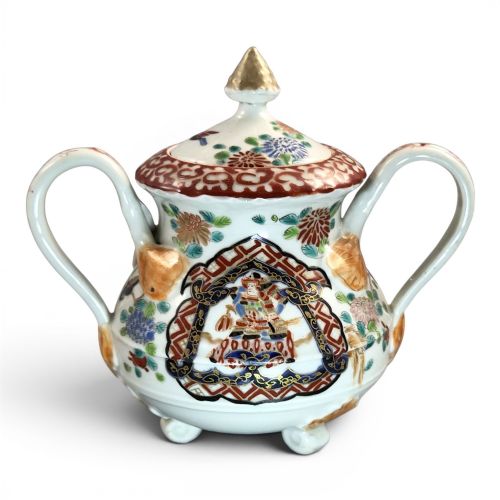
Buyers encounter everything from miniature cabinet specimens to monumental lidded vases standing alongside sugar bowls and biscuit barrels finished with covers.
Materials and Techniques
Potters shaped these objects from porcelain, ceramic, and ironstone before applying underglaze and overglaze pigments.
Makers utilised enamel painting alongside gold leaf, gilt, and gilding to accentuate the panels and surface details.
Lids frequently incorporate finials, including shishi figures, completing the porcelain body fired in traditional kilns.
Several lids come topped with guardian shishi lion dogs, standing watch over the ginger and sugar inside.
Judging Quality
The refinement of the hand painted palette and the crispness of the gilt work set the standard for these objects.
Proportion and scale dictate the visual weight, particularly in larger lidded jars and matched pairs.
The integrity of the matching lid and the precision of the porcelain potting separate standard production from exceptional specimens.
Royal Crown Derby·Fukagawa·Masons
The Imari Lid Jar Glossary
- Imari
- A decorative style originating in Japan, characterised by a palette of cobalt blue, iron red, and gilt. It was widely copied by European porcelain and ironstone factories.
- Baluster
- A vase form with a rounded body that tapers toward the base and swells near the middle. This shape provides stability and visual balance.
- Ginger Jar
- A high-shouldered storage vessel with a short neck and a matching domed lid. Originally intended for spices, it became a decorative staple.
- Koro
- A traditional Japanese incense burner featuring a perforated lid. These pieces often stand on small feet or a dedicated base.
- Shishi
- A mythical lion dog often sculpted as a finial on the lid of a jar. It symbolises protection and guardianship.
Imari Lid Jar: Frequently Asked Questions
What were imari lid jar pieces used for?
These vessels served practical storage roles for ginger, spices, and sugar, while larger examples functioned purely as decorative ornaments in period interiors.
Over time, many transformed into display items placed on mantelpieces, cabinets, and dedicated wooden stands across British and Japanese homes.
How do I identify a Japanese imari piece?
Look for the characteristic palette combining cobalt blue underglaze with iron red and gold leaf overglaze details on porcelain bodies.
Japanese examples often date from the Edo and Meiji periods, sometimes bearing workshop marks on the base.
Are British versions different from Japanese originals?
British makers like Royal Crown Derby and Mason's adapted the Japanese aesthetic onto ironstone and bone china bodies during the Georgian and Victorian eras.
These pieces interpret the traditional palette through European manufacturing techniques and contemporary vessel shapes.
How should I clean my lidded jar?
Dust the porcelain gently with a soft, dry cloth to protect delicate overglaze enamels and applied gilding from unnecessary wear.
Avoid immersing antique pieces in water, particularly those with exposed ironstone edges or fragile gold leaf.