







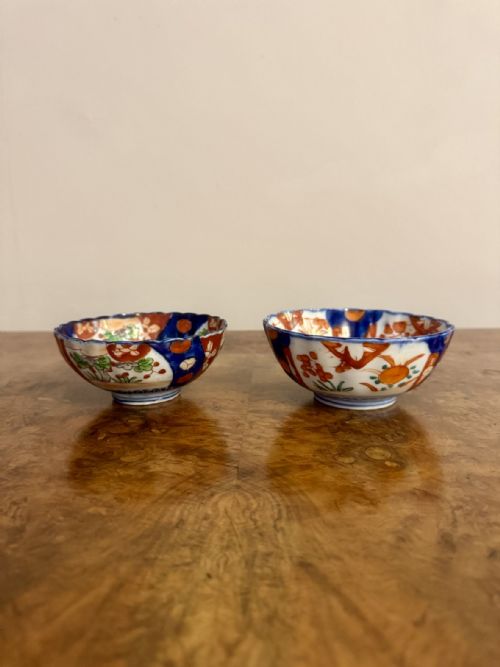
Imari Floral Dish
An imari floral dish brings deep cobalt blue, iron red, and gilt decoration to a table or wall, drawing on centuries of ceramic tradition.
Imari Floral Dish
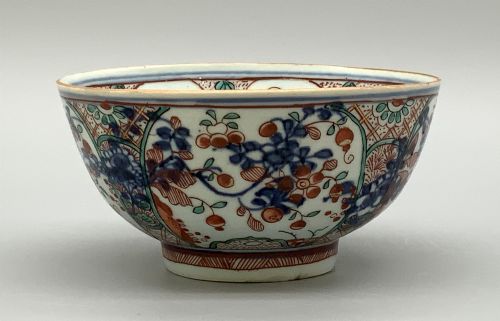
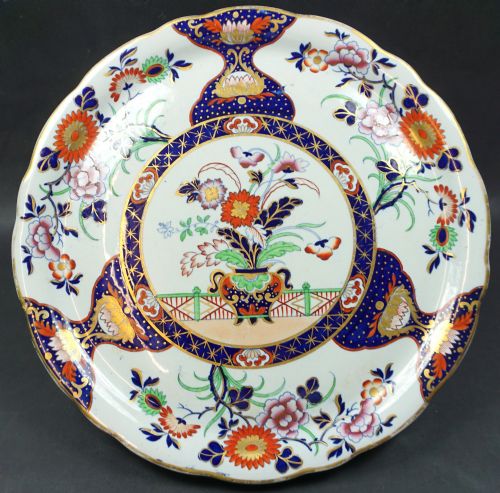
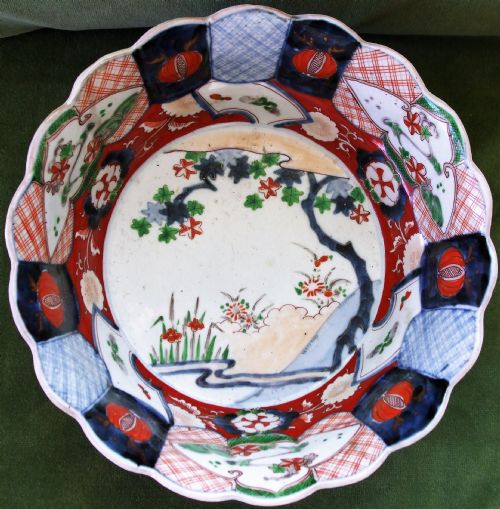
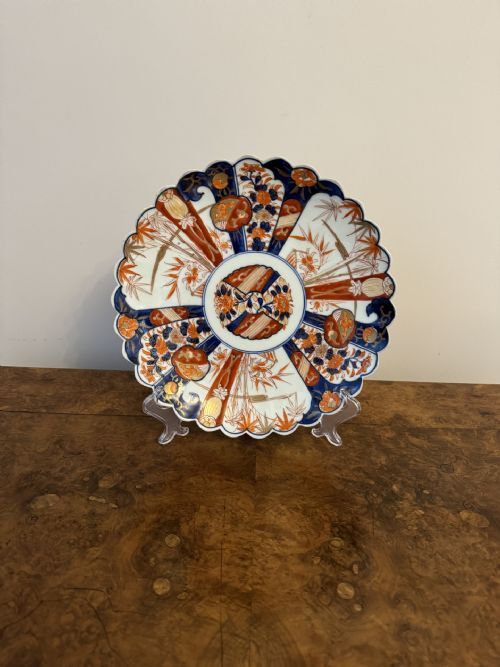
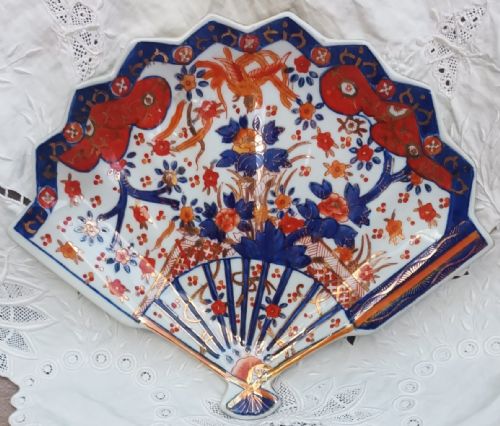
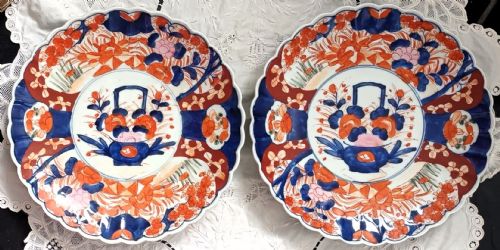
When you search for an imari floral dish, you encounter decorative porcelain and ceramic plates, chargers, and bowls created in Japan, China, and England. The Japanese examples dominate the selection, particularly those from the Meiji period and the nineteenth century, often featuring scalloped edges and hand-painted floral or bird designs.
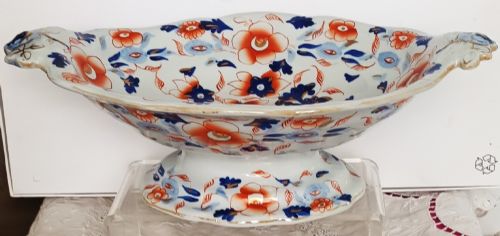
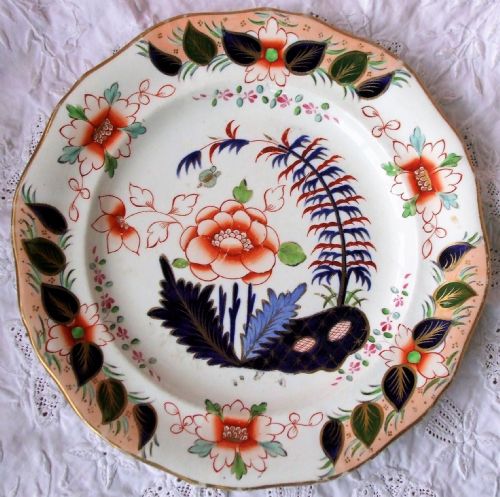
The forms range from small plates and dishes to large wall chargers and pedestal bowls. Alongside East Asian imports, English factories produced ironstone versions in Georgian and Victorian times, adopting the distinctive palette under the name Japan pattern.
How they were made
Potters shaped porcelain and ceramic bodies before applying underglaze blue and overglaze enamel colours. Artisans added gold leaf and gilding to highlight floral motifs and geometric borders upon firing.
The technique combined high-temperature kilns for the cobalt blue with lower-temperature firings for the iron red and enamel additions. This layered method produced the characteristic dense surface pattern seen on Japanese Arita wares and English ironstone pieces.
Some nineteenth-century English ironstone plates were boldly labelled as Japan pattern, proving imitation really is the sincerest form of flattery.
What varies in quality
Quality rests upon the crispness of the hand-painted brushwork and the vibrancy of the enamel and gilt application. Pieces with finely delineated floral and bird designs display greater artisanal skill than mass-produced transfers.
The weight, symmetry, and condition of the porcelain or ceramic body also separate standard domestic wares from exceptional display chargers and scalloped plates.
Hicks & Meigh·John Davenport of Longport
The Imari Floral Dish Glossary
- Imari
- A style of ceramic decoration originating in Japan, characterised by a palette of underglaze blue, iron red, and gold. It was widely exported and later copied by European potteries.
- Charger
- A large decorative plate or dish used primarily for display on a wall or sideboard rather than for serving food.
- Comport
- A footed dish or bowl elevated on a pedestal, often used for serving fruit or sweets in formal table settings.
- Ironstone
- A heavy, durable type of ceramic developed in nineteenth-century England as a robust alternative to porcelain.
- Meiji Period
- An era in Japanese history spanning from 1868 to 1912, noted for a surge in decorative arts exported to Western markets.
Imari Floral Dish: Frequently Asked Questions
How do I hang an imari charger?
Display chargers require a secure wall bracket designed for heavy ceramics, gripping the rim without causing stress to the body.
Ensure the wall fixing engages firmly with solid masonry or a stud rather than relying on plaster alone.
Can I use these dishes for food?
Most antique imari floral dishes and chargers served decorative purposes or historical dining functions, but overglaze enamels and gilt can wear with heavy modern use.
Gentle hand washing preserves the delicate red enamels and gold leaf better than mechanical dishwashing.
How do I tell Japanese from English imari?
Japanese pieces generally employ true translucent porcelain with hand-painted underglaze blue and iron red, frequently featuring scalloped rims.
English variants like ironstone present a heavier, opaque ceramic body often stamped with maker marks on the underside.
What periods do these pieces span?
The selection includes eighteenth-century Chinese export items, nineteenth-century Japanese Meiji examples, and Victorian English adaptations.
Dating relies on stylistic details, paste composition, and occasional backstamps or period specific motifs.