
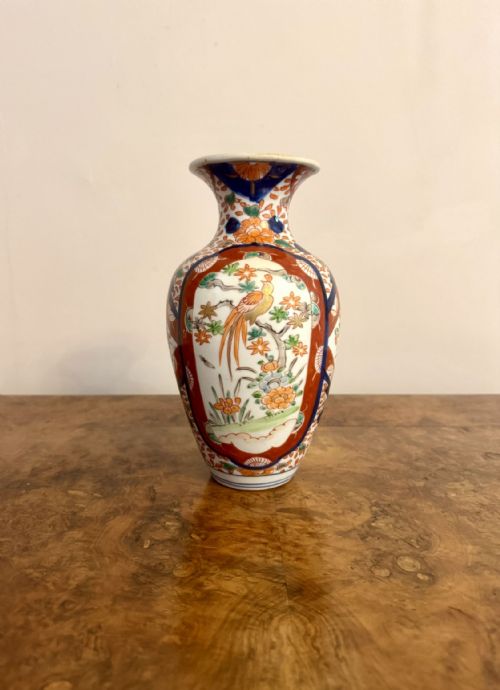


Imari Floral Ceramic Vases
These imari floral ceramic vases bring together rich iron-red and cobalt blue glazing across centuries of Japanese and British production.
Imari Floral Ceramic Vases
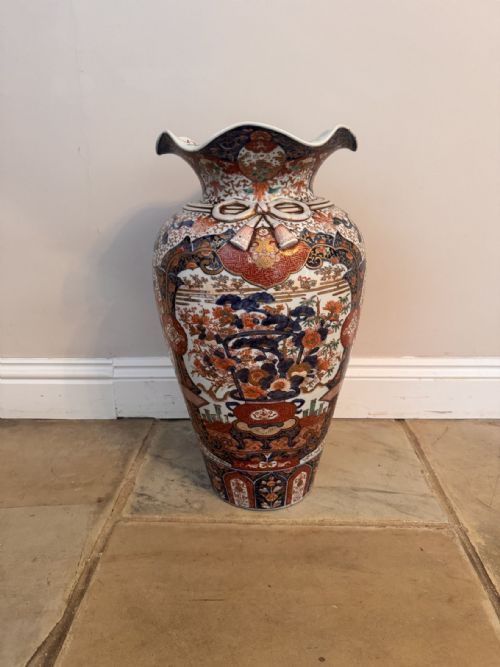
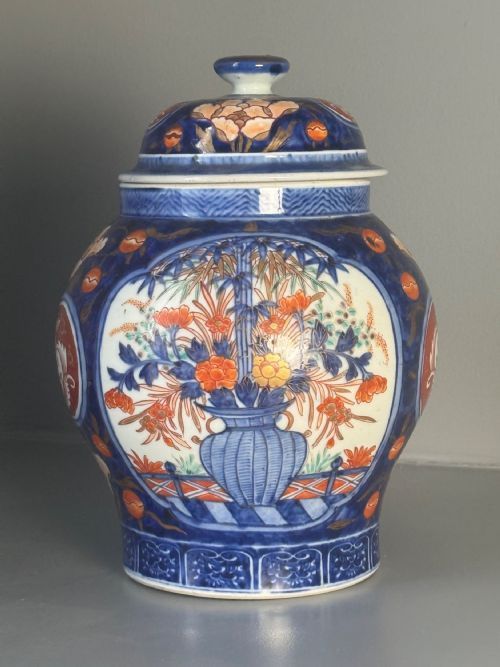
Imari floral ceramic vases encompass various forms such as ginger jars, lidded vessels, double gourdes, and floor-standing pieces originating primarily from Japan alongside Victorian and Edwardian British interpretations. Buyers encounter standard single vessels alongside matched pairs and larger garniture sets intended for display on mantelpieces or pedestals.
The objects date from the seventeenth century through to the early twentieth century, spanning the Meiji period and the Victorian and Edwardian eras. Japanese examples frequently originate from Arita, while European variations adopt the distinctive palette on ironstone and porcelain bodies.
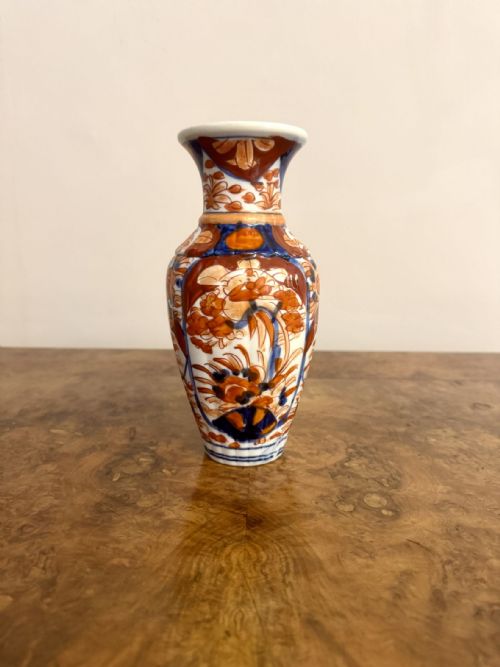
Common utilitarian and decorative formats include slender neck shapes, bottle-shaped profiles, and fluted bodies. These pieces serve as decorative focal points, often utilising covers or standing as paired sets.
Materials and construction
The foundation bodies rely on ceramic, porcelain, and ironstone, shaped into vases, urns, and jars. Potters formed these vessels by hand or wheel before applying initial structural glazes.
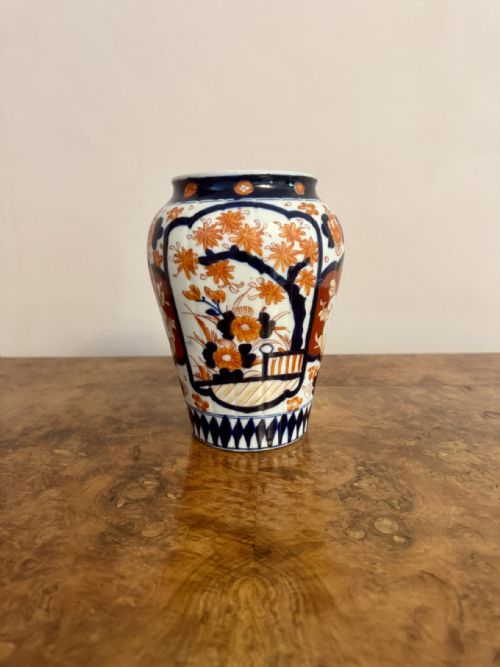
Decoration employs cobalt blue underglaze combined with overglaze enamel colours, frequently accented with gold leaf and gilding. Artisans painted floral motifs and patterns directly onto the ceramic surface before firing.
Listings feature pieces spanning from the seventeenth century to the Edwardian era, utilising porcelain, ironstone, enamel, and gold leaf.
Assessing quality
Quality rests upon the precision of the hand-painted floral details and the richness of the enamel and gilt application. Finer examples display crisp underglaze cobalt lines paired with carefully restrained gilding that remains intact across the ceramic surface.
Proportion and scale distinguish superior vessels, particularly in matched pairs and multi-piece garniture sets where symmetry and balanced form matter greatly. The clarity of the porcelain body and the depth of the glaze further separate standard production from exceptional work.
Royal Crown Derby
The Imari Floral Ceramic Vases Glossary
- Imari palette
- A decorative colour scheme characterised by underglaze blue, iron-red, and supplementary gold pigments. This style originated in Japan before influencing European ceramic production.
- Garniture set
- A matched group of three or more vases or jars designed to be displayed together on a mantelpiece or shelf. These sets typically feature a central larger vessel flanked by smaller matching pieces.
- Ginger jar
- A ceramic vessel with a broad body and a domed lid, originally utilised for storing spices. These jars frequently appear decorated with floral panels.
- Double gourde
- A vessel shaped like two stacked spheres, creating a figure-eight silhouette. This form requires skilled throwing to maintain balance.
- Ironstone
- A heavy, durable type of earthenware developed in Britain as a robust alternative to porcelain. It accepts transfer printing and enamel decoration readily.
Imari Floral Ceramic Vases: Frequently Asked Questions
What is an imari vase?
An imari vase is a ceramic vessel decorated in a distinctive palette of cobalt blue, iron-red, and gold. The style originated in Japan and was later adopted by European potteries.
These pieces range from small bud vases to large floor-standing examples and ginger jars, created primarily for ornamental display.
How do I date an imari vase?
Dating relies on examining the ceramic body, the style of the hand-painted decoration, and any associated period markers. Pieces span from seventeenth-century Japanese Arita production to nineteenth-century Meiji examples and Edwardian British interpretations.
Earlier Japanese pieces often feature heavier porcelain bodies and looser cobalt painting, while later Victorian and Edwardian versions display crisper enamel work.
What is a garniture set?
A garniture set is a matching group of vases or jars designed to be displayed together as a decorative unit. These typically comprise three or more pieces arranged symmetrically on a mantelpiece or cabinet.
Such sets include lidded jars and shaped vases sharing identical floral motifs and palette designs.
Were these vases used for flowers?
Many of these vessels functioned primarily as decorative display items rather than utilitarian flower holders. Lidded vases and ginger jars were designed to stand empty or hold dry aromatics.
Open-necked variations could accommodate stems, though their ornamental value often took precedence.
How do I care for antique imari ceramics?
Care involves dusting gently with a soft, dry cloth to protect the delicate overglaze enamels and gold leaf highlights. Avoid using liquid cleaners or submersing antique pieces in water.
Placement should be away from direct sunlight and areas subject to sudden temperature changes to preserve the glaze.