







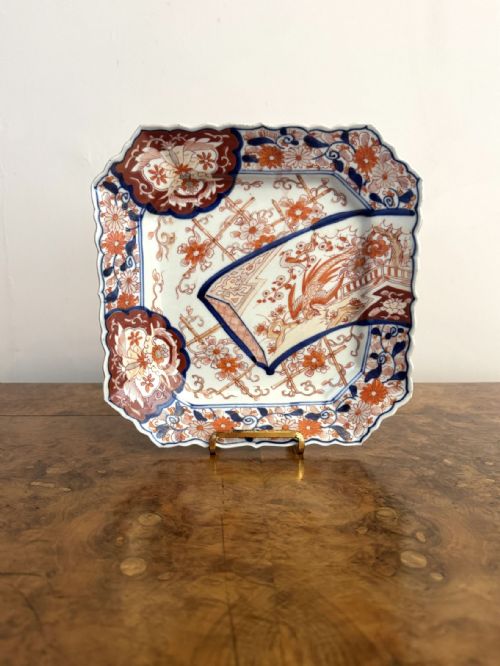
Imari Charger Dish
An imari charger dish brings bold cobalt underglaze, iron red, and gilt to a wall or table from centuries of Japanese and Chinese export production.
Imari Charger Dish
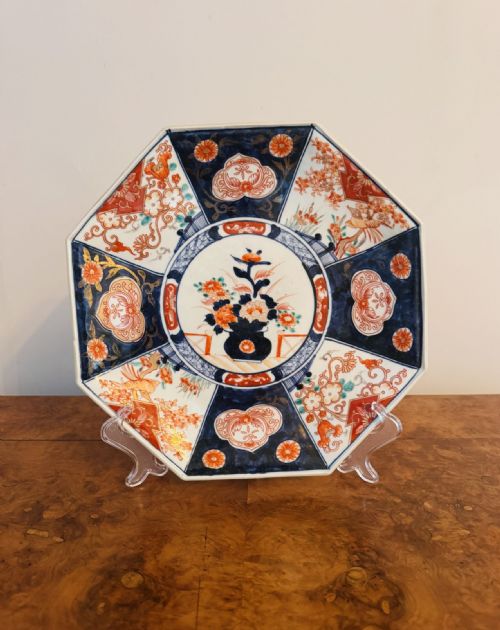
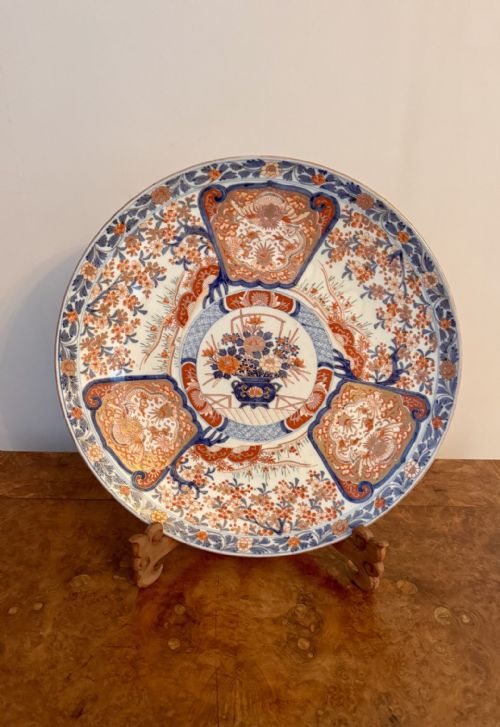
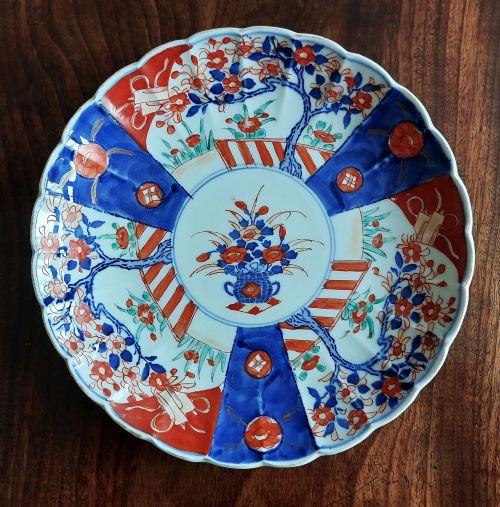
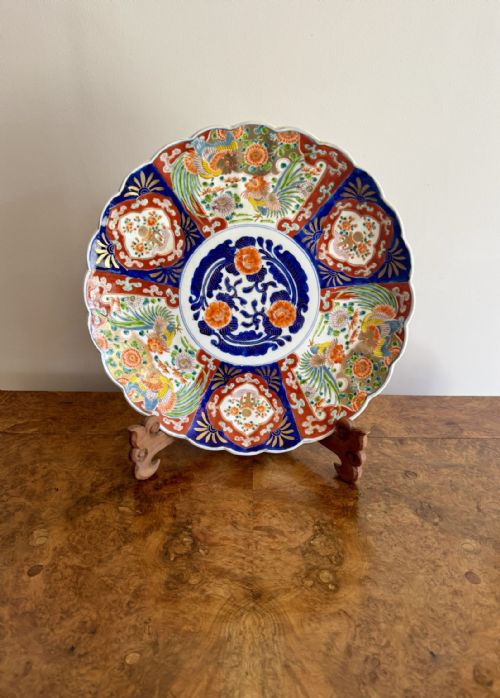
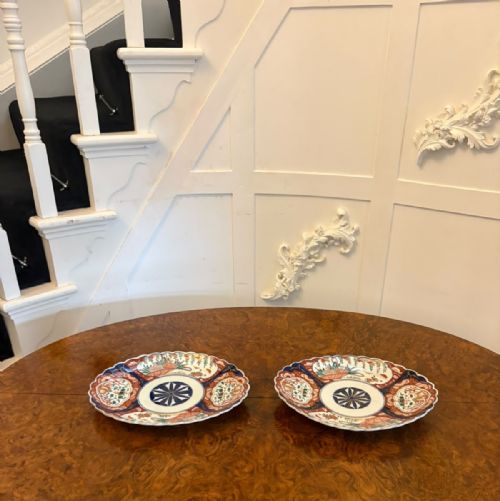
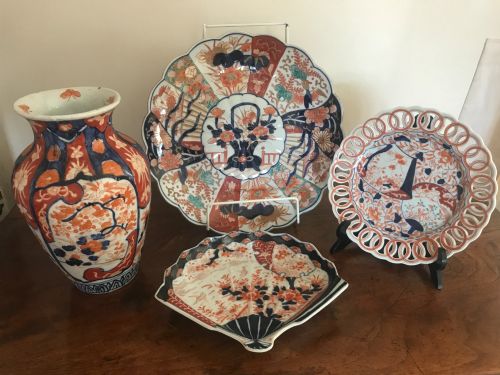
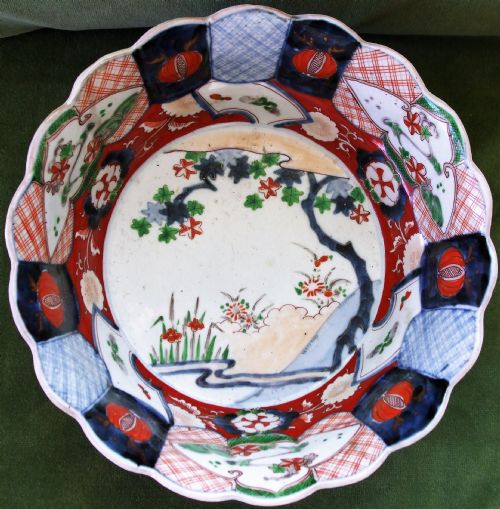
When you search for an imari charger dish, you encounter large decorative plates and shallow bowls originating primarily from Japanese Meiji and Edo periods, alongside 18th-century Chinese export pieces. These ceramics span from the 18th century through the early 20th century, encompassing traditional scalloped edges, hexagonal forms, and circular chargers decorated with floral and bird motifs.
The pieces most frequently met on this page are late 19th-century Japanese examples produced during the Meiji period, often featuring rich blue and white designs enriched with enamel and gold leaf. Alongside these are English ironstone interpretations from makers such as John Davenport, demonstrating the enduring global reach of the palette.
How They Were Made
Potters shaped porcelain and ceramic bodies by hand or on a wheel, applying cobalt underglaze beneath a clear glaze before a high-temperature firing. Artisans then added secondary enamel colours and gold leaf or gilding, followed by a lower-temperature fixation firing to fuse the metallic and painted details.
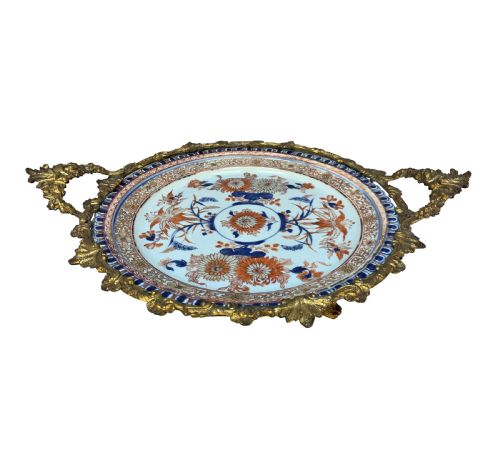
Certain pieces incorporate French or English ormolu mounts fitted to the fired porcelain body to elevate the object into formal display furniture. The combination of cobalt underglaze with iron red and gold creates the characteristic dense visual texture recorded across the archive.
Listings span from the 18th century to the early 20th century, uniting Japanese Meiji and Edo periods with Qing Dynasty export porcelain and English ironstone.
What Varies in Quality
The standard of an imari charger dish rests upon the crispness of the hand-painted floral and bird motifs and the density of the cobalt underglaze. Superior examples display precise brushwork and well-preserved gold leaf without rubbing across the central reserves.
Form and modelling also distinguish the work, with scalloped, hexagonal, or square-shaped plates requiring greater technical control during the drying and firing stages than simple circular dishes. The presence of documented workshop output, such as pieces by Samson or John Davenport, marks a distinct tier of production.
John Davenport of Longport·Samson
The Imari Charger Dish Glossary
- Cobalt Underglaze
- A blue pigment applied to the ceramic body before glazing and firing, producing a deep indigo tone that withstands high kiln temperatures.
- Meiji Period
- The era in Japanese history spanning from 1868 to 1912, associated with expansive ceramic production for both domestic and export markets.
- Ormolu Mounts
- Gilt-bronze decorative mountings fitted around or onto porcelain plates and bowls, frequently seen in European decorative schemes of the period.
- Scallop Edge
- A decorative rim shaped into a series of continuous curves, commonly found on Japanese porcelain plates and bowls.
- Ironstone
- A heavy, durable type of ceramic developed in 19th-century Britain as a robust alternative to fine porcelain.
Imari Charger Dish: Frequently Asked Questions
How were imari charger dishes used originally?
These large dishes served primarily for formal presentation, display, and dining in wealthy households across Asia and Europe.
Their substantial size and rich palette made them natural centerpieces on tables or mounted directly onto walls.
Can I hang an antique imari charger dish on the wall?
Many of these pieces were made with display in mind, featuring generous diameters and sturdy ceramic bodies suited to vertical presentation.
Secure them using proper padded wire hangers designed specifically for heavy antique ceramics to protect the rim.
What does the imari palette actually consist of?
The traditional palette relies on a triad of deep cobalt underglaze blue, iron red, and contrasting gold leaf or gilding.
Additional enamel colours such as green, yellow, and aubergine frequently supplement these core tones across floral and bird designs.