



Hunting Still Life
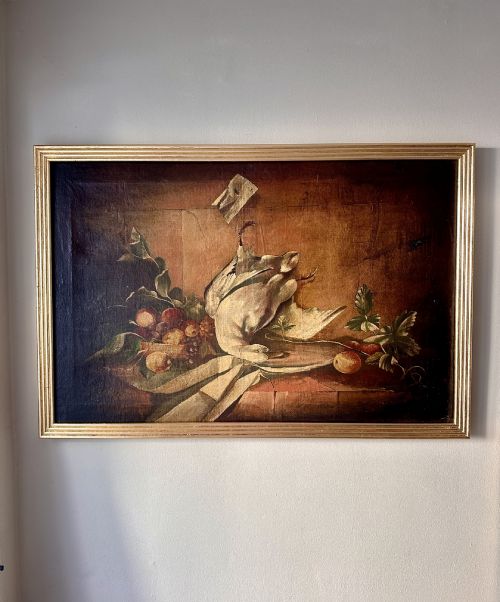
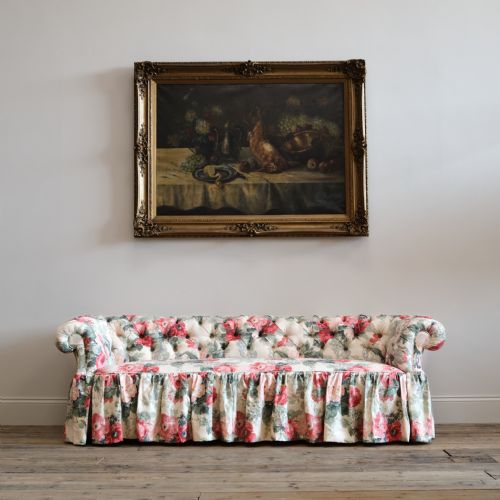
Hunting still life paintings capture the rich tradition of sport and game, offering striking studies of game, birds and hounds that bring depth to any interior.
Hunting Still Life
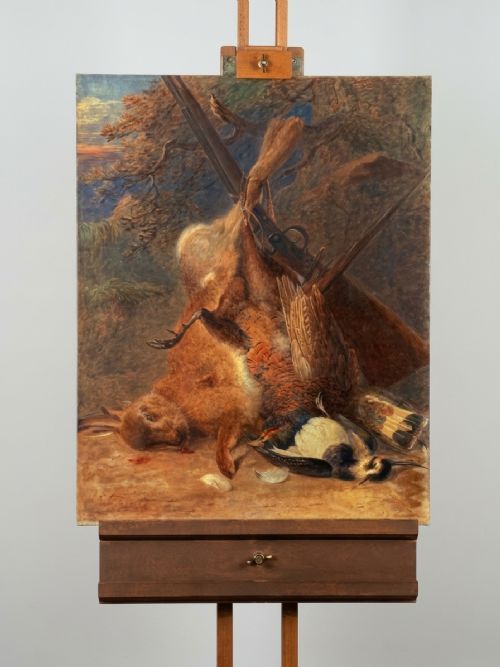
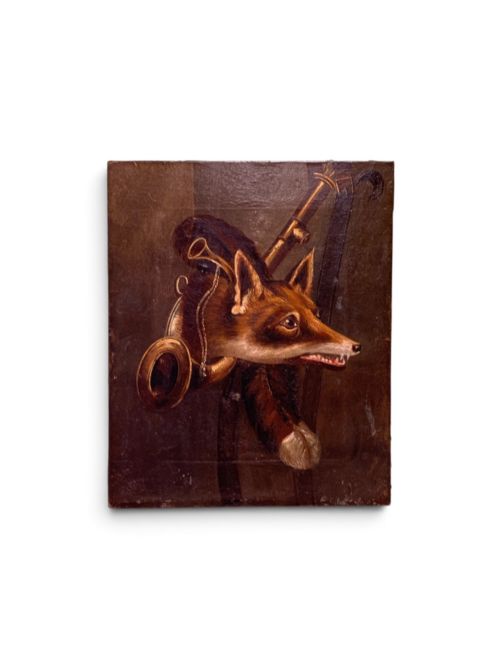
Hunting still life works primarily emerge from the nineteenth century, capturing Victorian sporting sensibilities alongside continental interpretations. These pieces focus on game, hares, foxes and hounds, rendered with careful attention to natural subjects.
Buyers frequently encounter oils on canvas and wood panel alongside watercolours and bodycolour on paper. These paintings range from Dutch school influences to impressionist treatments, often housed in gilt wood frames.
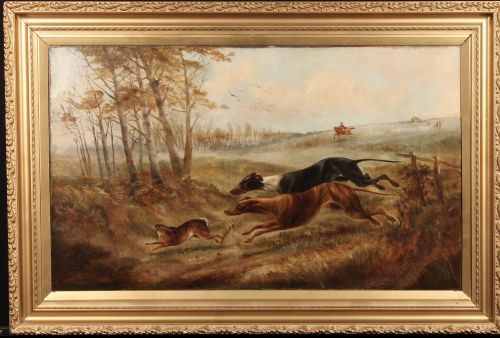
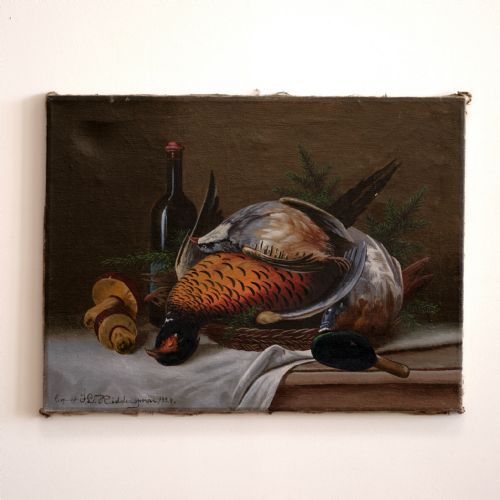
The subjects span from detailed depictions of dead game and hanging songbirds to expansive landscapes featuring coursing dogs. Each piece reflects the enduring appeal of sporting art across the Victorian period and into the mid-twentieth century.
Materials and Technique
Painters relied upon oil paint applied to canvas and wood panels, building rich textures for feathers, fur and foliage. Watercolours and bodycolour on paper were also utilised for finer, detailed studies of game and fruit.
Works are frequently presented within gilt wood frames that complement the depth of the palette. The technical execution varies from the meticulous brushwork of the Victorian era to freer impressionist strokes in later twentieth-century examples.
The documented periods span the nineteenth century, Victorian era, nineteen-twenty, nineteen-fifty and nineteen-sixty.
Judging Quality
Quality rests in the precision of the rendering, particularly in the handling of fur, feathers and anatomical proportions of animals. Superior works demonstrate a confident command of light and shadow that gives tangible weight to the game and hound subjects.
The strength of the composition and the integrity of the original support, whether canvas, panel or paper, distinguish finer examples. The harmony between the painting and its period gilt wood frame also contributes to the overall standing of a piece.
George Sydney Shepherd·George Armfield·Michelangelo Meucci·John Sherrin·Benjamin Blake·Henri Joseph Pauwels·Walter Hunt
The Hunting Still Life Glossary
- Bodycolour
- An opaque watercolour paint containing white pigment, used to create solid areas of colour and sharp highlights on paper.
- Gilt Wood Frame
- A wooden frame finished with a thin layer of gold leaf or gilt, standard for nineteenth-century fine art.
- Trompe l'Oeil
- An art technique that uses realistic imagery to create the optical illusion that the depicted objects exist in three dimensions.
- Continental School
- A term applied to artworks originating from mainland Europe rather than Britain, often reflecting regional academic styles.
- Wood Panel
- A flat wooden board utilised as a rigid support for oil paintings prior to and alongside stretched canvas.
Hunting Still Life: Frequently Asked Questions
What periods do these paintings span?
The pieces originate primarily from the nineteenth century and the Victorian era, with occasional examples extending into the early and mid-twentieth century.
This broad timeline encompasses traditional academic approaches as well as later impressionist interpretations.
What surfaces were used by artists?
Artists painted on stretched canvas, wood panels, and heavy paper supports depending on the chosen medium.
Oils were typically applied to canvas or panel, while watercolours and bodycolour were reserved for paper works.
How should I display a gilt wood frame?
These frames require stable wall environments away from direct sunlight and excessive humidity to preserve the gilt surface.
Allowing adequate space around the frame lets the artwork and its period setting command the room properly.
Are these works signed by the artists?
Many pieces bear signatures or are attributed to known painters and specific regional schools from the period.
Documentation often links works to continental or British traditions based on stylistic evidence and historical records.