




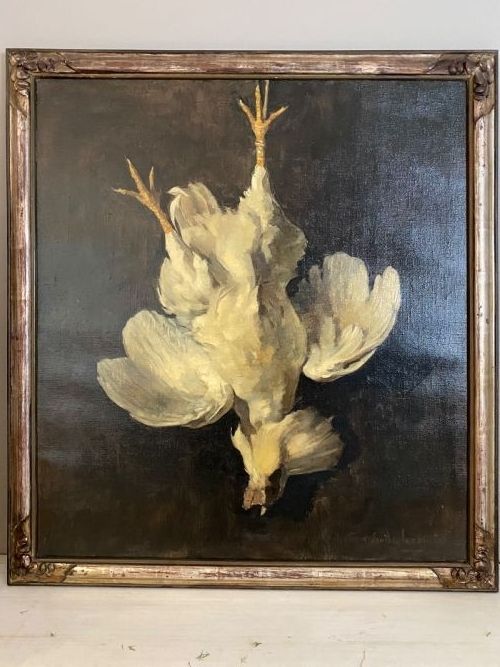

Canvas Game Still Life
A canvas game still life brings the rich tradition of pantry and sporting subjects straight to the wall.
Canvas Game Still Life
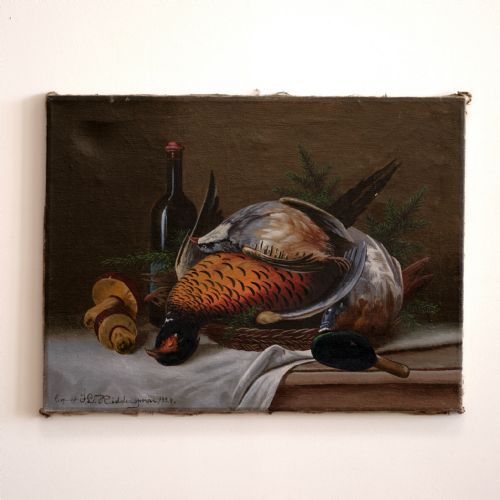
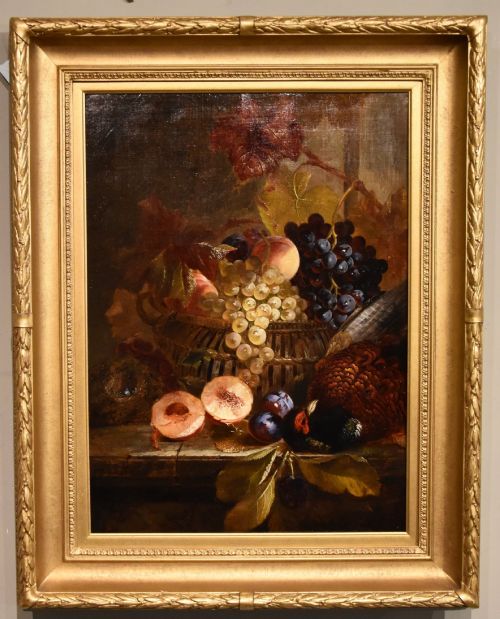
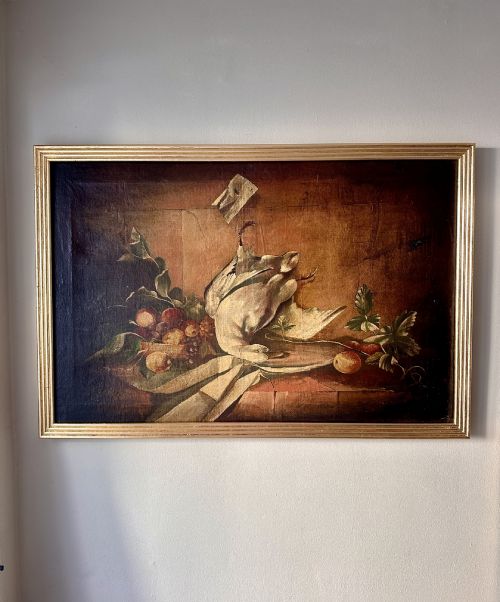
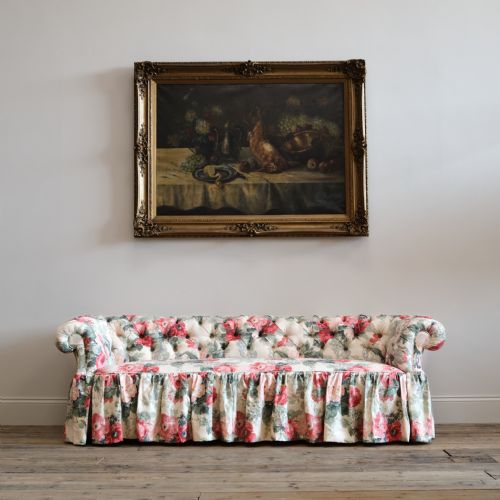
A canvas game still life captures traditional subjects of larder scenes, dead game, and sporting arrangements. These works span centuries, with examples ranging from 18th century Dutch school compositions to 19th century continental paintings and mid 20th century interpretations.
The most common forms on this page are oil paintings executed on canvas, often housed within wood or giltwood frames. Pieces feature subjects like rabbits, pheasants, cockerels, and fruit arranged in traditional larder settings.
Origin and period styles vary widely across the selection, moving from Victorian and Dutch school traditions through to impressionism, post impressionism, and expressionism. Buyers encounter everything from large continental school works to focused depictions of single birds.
How they were made
These works rely fundamentally upon oil paint applied directly to woven canvas supports. Artists built up their compositions using rich pigments to render the textures of feathers, fur, and foodstuffs within larder environments.
Frames play a structural and aesthetic role, constructed primarily from wood with occasional giltwood or gold leaf finishes. These surrounds serve to protect the canvas edge while completing the visual presentation of the painting.
Listings feature oil paintings on canvas spanning from the 18th century through to the 1960s, incorporating wood and giltwood frames.
What varies in quality
The handling of light and texture dictates the visual success of a canvas game still life. Superior examples demonstrate skilled brushwork that captures the subtle sheen of feathers and the dense weight of fur.
Compositional ambition also separates works, with complex multi element larder scenes requiring greater draughtsmanship than simpler single subject studies. The integration of the frame with the painting further influences the overall presence of the piece.
William Henry Ward·Henri Joseph Pauwels·Emile Lecomte
The Canvas Game Still Life Glossary
- Canvas
- A heavy woven fabric used as a surface for oil painting. It provides the primary support structure for the pigments in these works.
- Oil Paint
- A slow drying paint made by mixing pigments with oils. It allows for deep colour saturation and gradual blending of tones.
- Giltwood
- Wood that has been covered with a thin layer of gold leaf or gilt powder. This finish appears frequently on decorative antique frames.
- Dutch School
- A historical designation for painters working in the Netherlands following distinct regional traditions. These works often focus on domestic larder and interior scenes.
- Impressionism
- An art style characterised by relatively small, thin yet visible brush strokes. It emphasises accurate depiction of light in its changing qualities.
Canvas Game Still Life: Frequently Asked Questions
What is a canvas game still life?
A canvas game still life is an oil painting depicting harvested game birds, animals, and provisions, typically arranged in a larder setting. These artworks have a long history in European painting traditions.
Such pieces range from traditional 18th century Dutch school compositions to later 19th century and 20th century interpretations in impressionist or expressionist styles.
Where were these paintings displayed?
Historically, game still life paintings hung in dining rooms, kitchens, or country house larders. They celebrated the bounty of the estate and the success of the hunt.
Today, collectors place these works in dining rooms, studies, or living spaces to introduce traditional warmth and rich tonal depth.
How do I identify the period?
Dating relies on stylistic clues, framing techniques, and the preparation of the canvas support. Eighteenth century works often reflect the dark, structured palette of the Dutch school.
Nineteenth and twentieth century examples show shifts towards brighter impressionist palettes, bolder expressionist brushwork, or specific regional continental styles.
What subjects appear in these paintings?
Common subjects include rabbits, pheasants, cockerels, and game birds alongside fruit and kitchen utensils. Artists arranged these elements to display textures like feathers, fur, and smooth skin.
Some compositions present a crowded larder view, while others focus on a single animal study against a neutral background.