





Hoshiarpur Inlay Furniture
Hoshiarpur inlay furniture brings intricate craftsmanship into the home, offering striking geometric surfaces that transform ordinary rooms.
Hoshiarpur Inlay Furniture
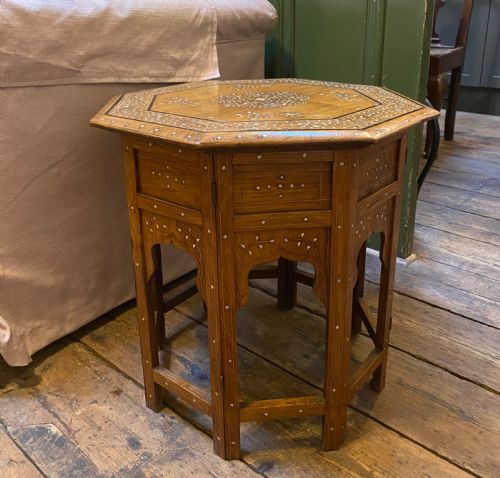
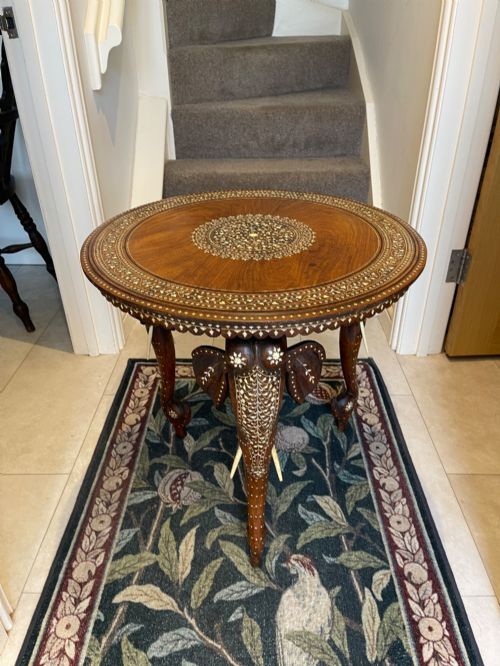
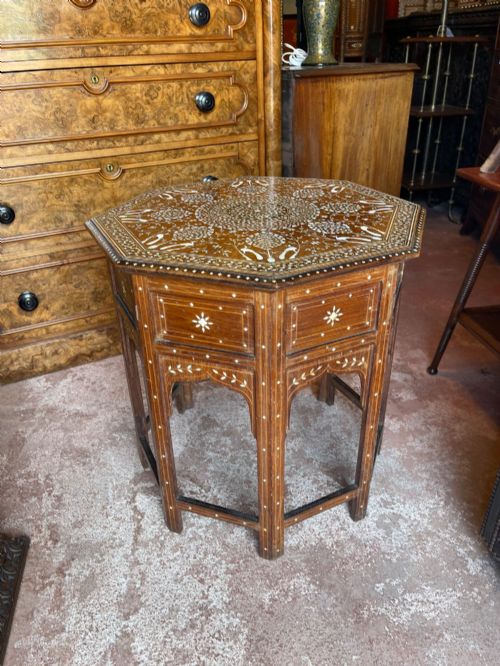
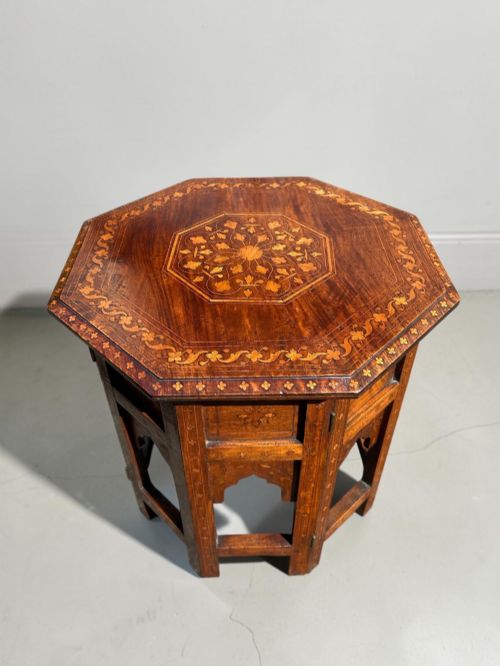
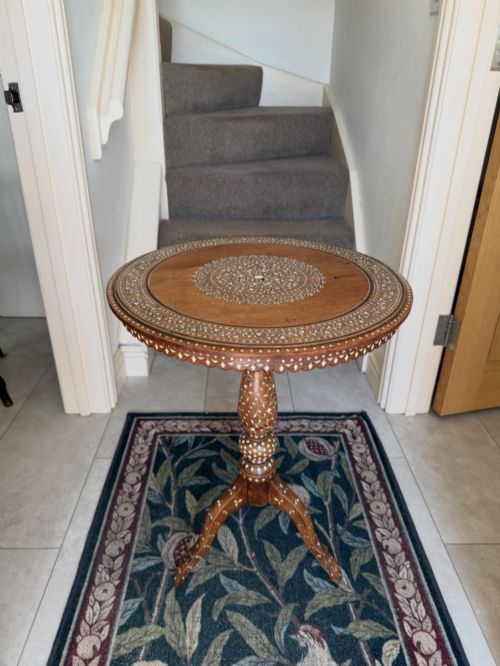
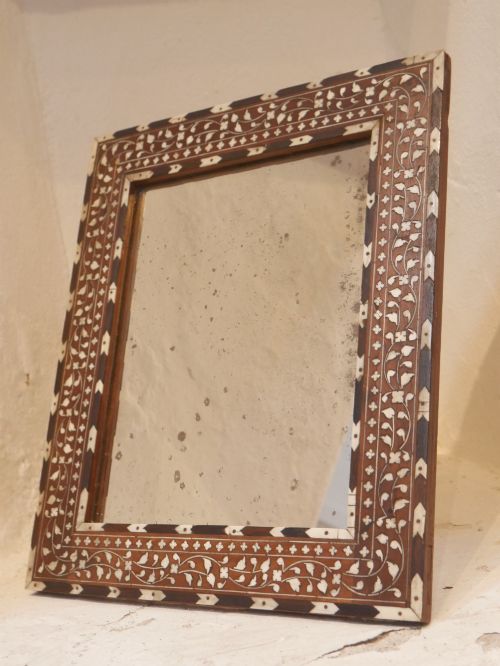
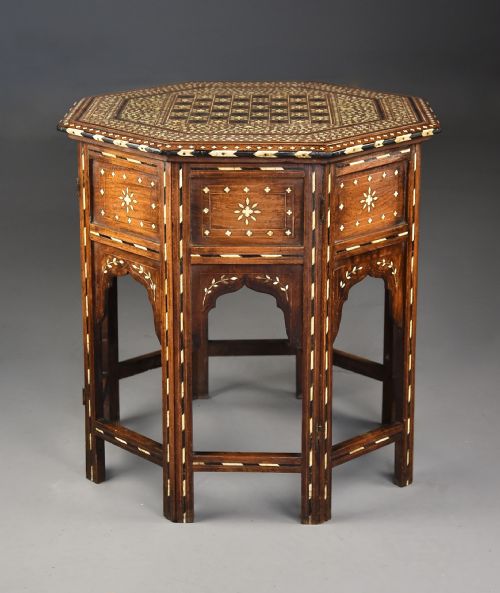
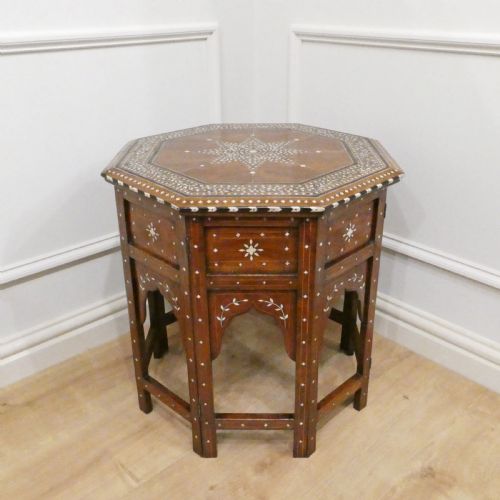
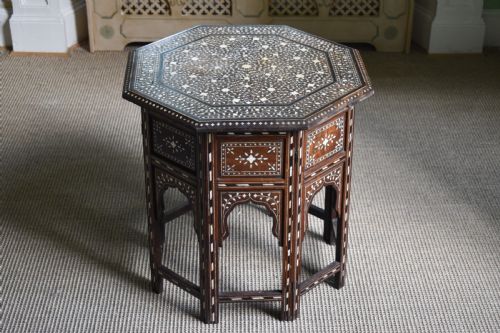
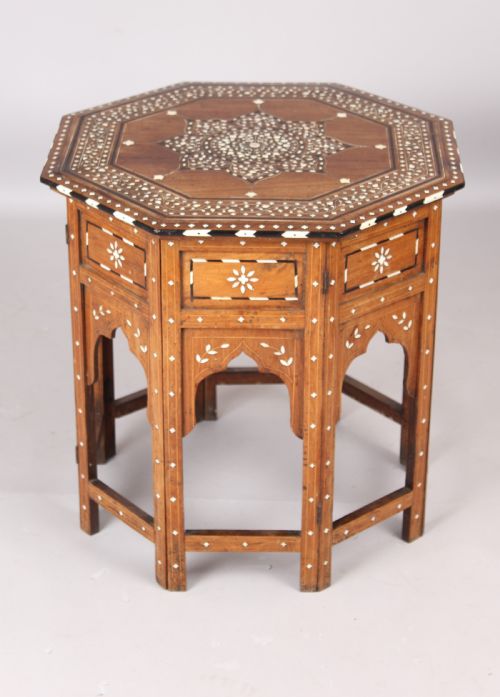
Octagonal tables and occasional tables form the core of what appears on this page, alongside square side tables, pedestal tables, and wall mirrors. Elephant tables and tripod Taj Mahal tables also occur, providing specialised forms within the wider category.
Most items date from the late nineteenth century, specifically around eighteen ninety, maintaining a consistent tradition of intricate surface decoration. These objects bring historical depth and distinctive visual texture to modern interiors.
How they were made
Makers utilised dense timbers such as rosewood, teak, and general hardwood as the structural foundation for each piece. These sturdy woods provided a stable canvas capable of supporting extensive surface embellishment.
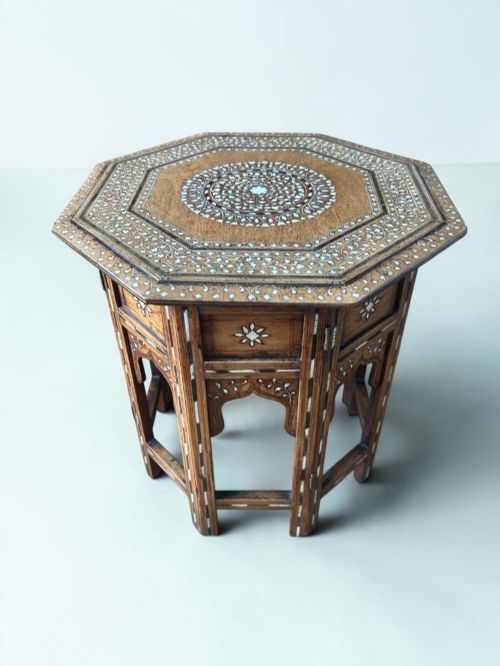
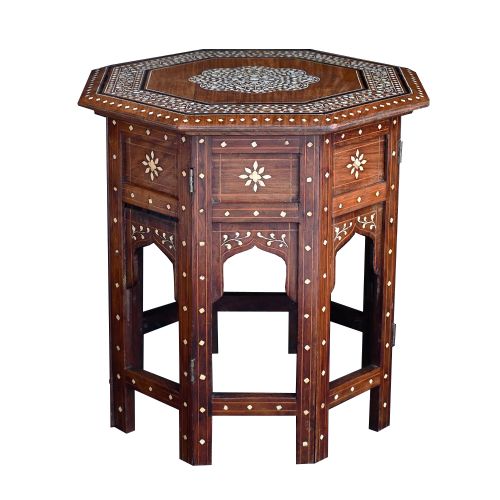
Artisans set detailed bone inlay, wood inlay, and brass elements directly into the timber framework to create complex geometric and figurative patterns. Mirror glass also appears in specific forms, particularly on wall mirrors designed to catch the light.
Hoshiarpur Inlay Furniture Retail Price Guide 2026
Typical asking prices for hoshiarpur inlay furniture among the pieces listed under this phrase on Sellingantiques today, from the lower quarter to the upper quarter. They describe what is for sale here now, not the wider market.
Listings span from the nineteenth century through to nineteen twenty, featuring rosewood, teak, hardwood, bone inlay, brass, and mirror glass.
What varies in quality
The density and precision of the inlay work distinguish finer examples from simpler production, reflecting the skill of the original workshop. Pieces described as fine quality demonstrate a higher degree of control in the arrangement of bone, brass, and wood.
The complexity of the form itself also separates standard items from more ambitious commissions, such as those incorporating figural elements like elephants or specific architectural motifs. Selection of timber, from ordinary hardwood to richly grained teak and rosewood, further defines the standard of a given piece.
The Hoshiarpur Inlay Furniture Glossary
- Bone inlay
- A decorative technique where small pieces of bone are shaped and set flush into a wooden surface to form intricate patterns. This method creates striking contrast against darker timbers.
- Anglo-Indian
- A design classification describing items produced in India under British influence, often combining traditional eastern craftsmanship with forms suited to western homes. These objects frequently blend distinct cultural aesthetics.
- Octagonal table
- A table featuring an eight-sided top, which is a particularly common format among tables from this region. This geometry allows for complex border patterns and central motifs.
- Tripod table
- A freestanding table supported by three legs, often carved with figural or zoomorphic details such as elephants. This construction provides stable footing on uneven floors.
Hoshiarpur Inlay Furniture: Frequently Asked Questions
What is hoshiarpur inlay furniture?
These pieces are decorative wooden items originating from India during the nineteenth and early twentieth centuries, characterised by extensive surface decoration. They combine dense timbers with intricate bone, brass, and wood inlay.
Items typically include various tables and wall mirrors created within the Anglo-Indian design tradition. Each piece showcases regional artistry developed specifically for export and domestic use during the colonial period.
How do I date hoshiarpur items?
Dating relies on recorded periods such as the nineteenth century, eighteen eighty, eighteen ninety, nineteen hundred, nineteen ten, and nineteen twenty. Stylistic cues and material choices help place pieces within this chronological range.
Earlier examples often feature heavier rosewood or teak construction combined with dense bone work. Later twentieth-century pieces sometimes show shifts in scale and assembly methods.
How should I style these tables?
These tables work well as occasional pieces in living spaces, serving as lamp tables or decorative centerpieces. Their patterned surfaces add visual interest alongside plain upholstery.
Matching them with simple modern furnishings allows the intricate bone and brass work to stand out. Wall mirrors can be hung in hallways or above mantelpieces to reflect light.