




Hoshiarpur Bone Inlay
Hoshiarpur bone inlay pieces are striking Anglo-Indian furnishings defined by intricate craftsmanship and geometric detail, made to bring character into any room.
Hoshiarpur Bone Inlay
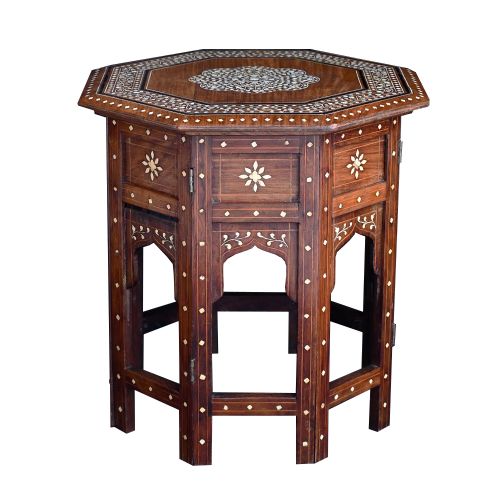
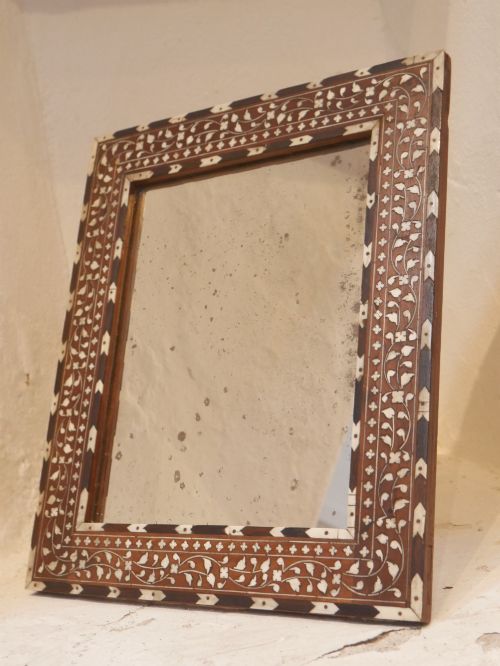
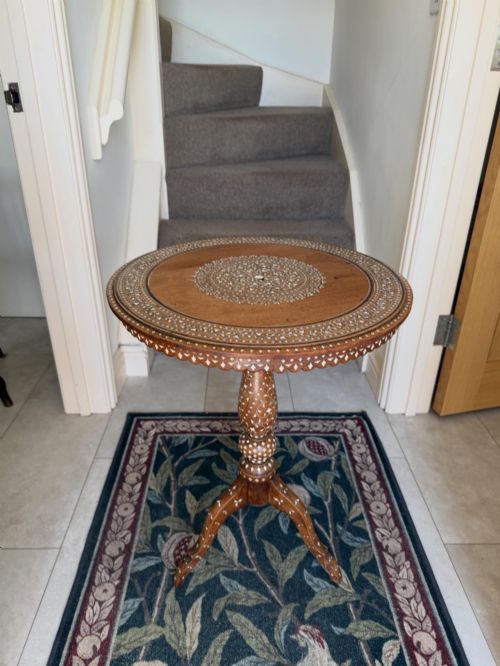
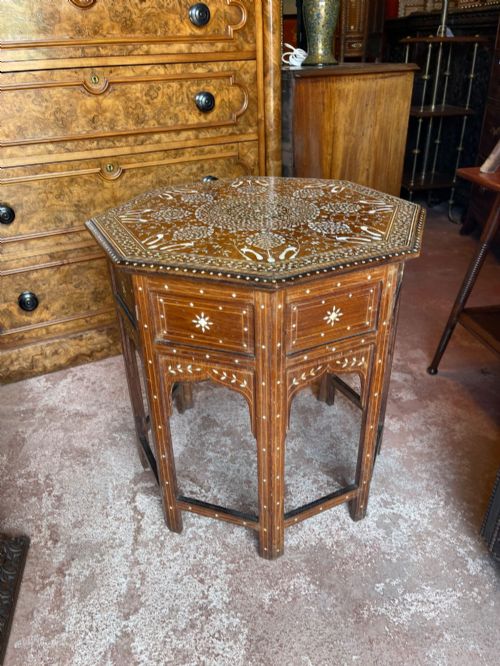
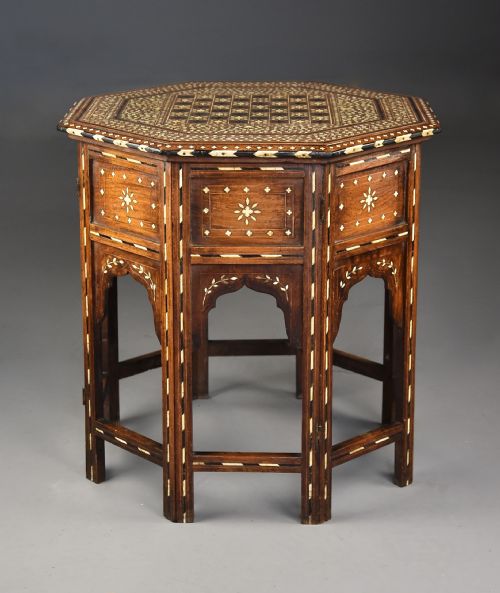
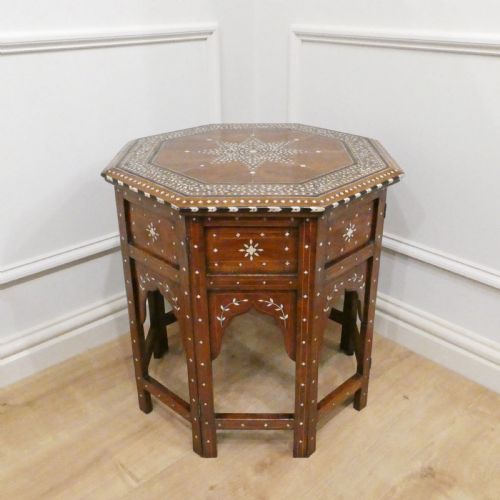
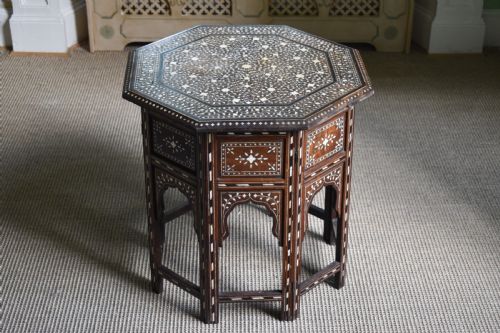
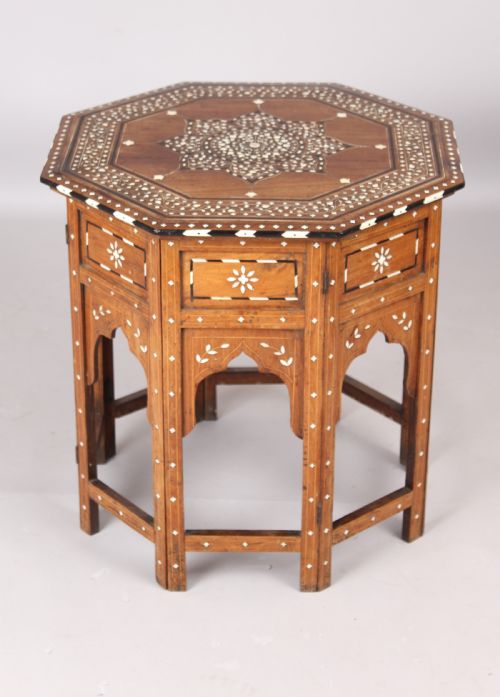
Octagonal tables and occasional pieces dominate the offerings, often presenting intricate star motifs and folding bases. Wall mirrors and standard lamps appear alongside these tables, displaying the carved woodwork and inlaid surfaces typical of the region.
The objects originate from the town of Hoshiarpur in Punjab, representing a rich tradition of decorative woodwork created for both local use and export during the British colonial period.
Materials and construction
Artisans built these pieces using dense regional timbers including rosewood, teak, sandalwood, ebony, hardwood, and padauk. Frameworks were meticulously hand-carved with dense foliate and geometric patterns before the decorative surfaces were applied.
Intricate bone and ivory elements were shaped by hand and pressed into precise recesses cut within the wooden base. Mirror glass was frequently integrated into the frames of wall mirrors and decorative screens to complement the reflective quality of the inlaid bone.
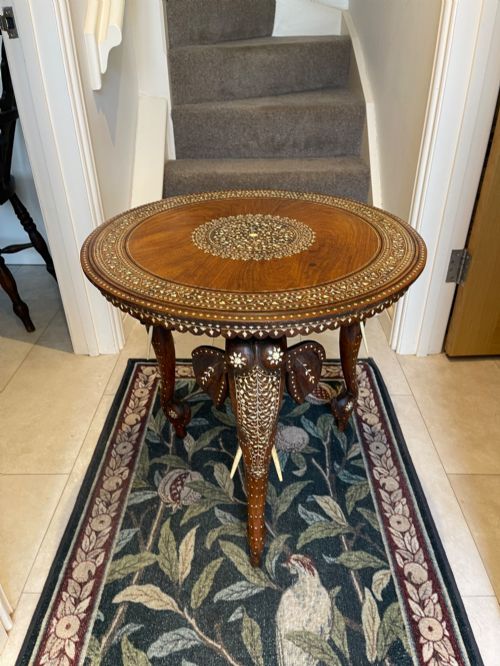
Keep an eye out for occasional tables supported by carved wooden elephants, bringing a touch of whimsical nineteenth-century charm to the parlour.
Evaluating the craftsmanship
Quality rests upon the density and precision of the carved woodwork and the tightness of the inlay work. Finer examples display minimal gaps between the bone fragments and the surrounding timber, maintaining crisp edges across intricate floral and geometric motifs.
The choice of primary wood also influences the character of a piece, with denser timbers such as sandalwood and rosewood supporting sharper relief carving than standard hardwoods. The complexity of the overall design, from simple occasional tables to elaborate elephant and Taj Mahal forms, dictates the level of artisan labour involved.
The Hoshiarpur Bone Inlay Glossary
- Anglo-Indian
- Descriptive term for furniture and decorative arts made in India under British influence, combining traditional local techniques with European forms. These items often blend British furniture shapes with detailed Indian carving.
- Bone Inlay
- Decorative technique where small pieces of animal bone are cut and pressed into carved recesses within a wooden surface. This method creates intricate contrasting patterns across tables and mirrors.
- Octagonal Table
- A table featuring an eight-sided top, which is a signature silhouette for folding tables from this region. These tops frequently display complex star geometry.
- Table Screen
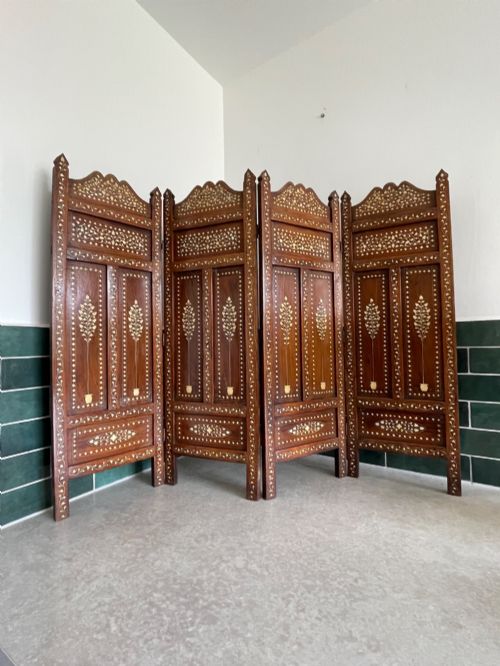
- A decorative folding panel designed to sit on a tabletop rather than stand on the floor. They feature carved wooden frames and inlaid panels.
- Standard Lamp
- A tall floor lamp designed to hold lighting, produced in carved wood with inlaid details. These serve as vertical focal points within a room.
Hoshiarpur Bone Inlay: Frequently Asked Questions
How do I date these pieces?
Dating relies on examining the timber types, joinery methods, and the style of the carved decoration present on the item.
Most examples originate from the late nineteenth century and the early decades of the twentieth century during the height of Anglo-Indian production.
Where were they made?
These items were produced in Hoshiarpur, a town in the Punjab region renowned for its skilled woodcarvers and inlay artisans.
Many pieces were created specifically for the export market and British households operating in India during the colonial era.
How do I clean the bone inlay?
Maintenance requires gentle dusting with a dry, soft cloth to prevent dirt from settling into the small crevices of the carved wood and inlay.
Avoid using liquid cleaners or harsh chemical polishes, as moisture can damage both the bone elements and the delicate timber substrate.
Are the tables sturdy?
Many tables feature clever folding designs intended for easy transport and storage within British colonial households.
While functional as occasional furniture, their stability depends on the condition of the wooden hinges and the original folding mechanism.