



Horse Portrait in Stable
A horse portrait in stable captures the quiet dignity of a valued animal within its traditional quarters, offering a direct link to nineteenth-century equine art.
Horse Portrait in Stable
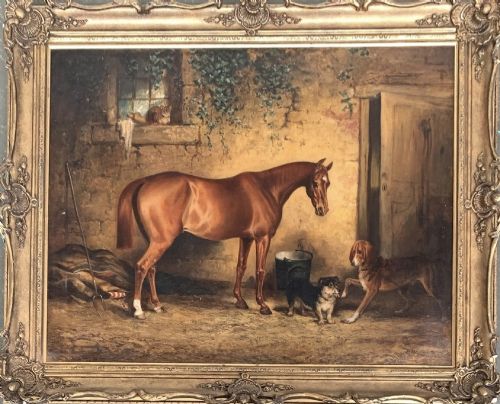
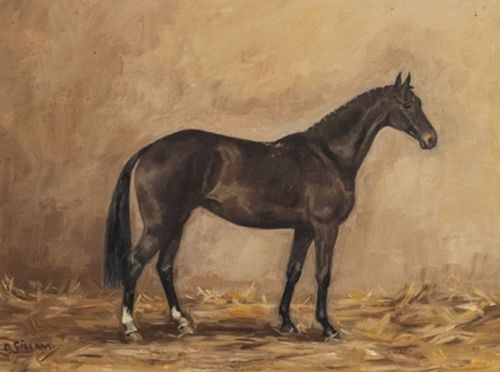
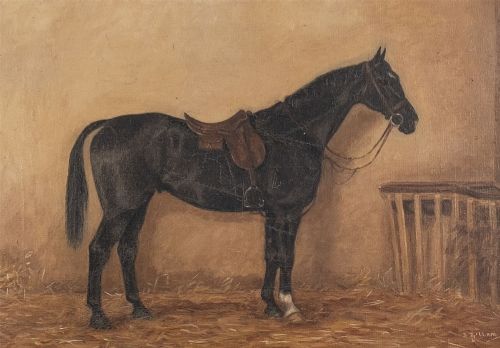
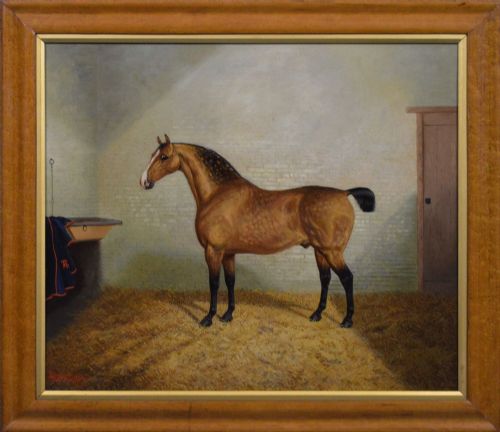
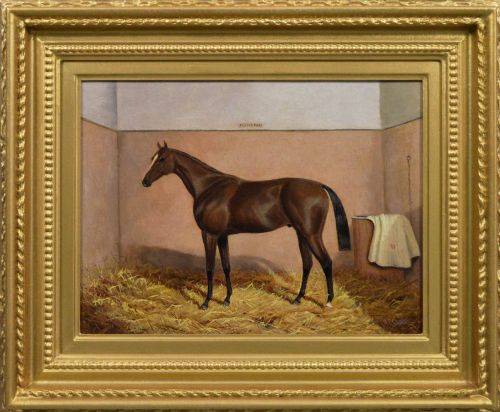
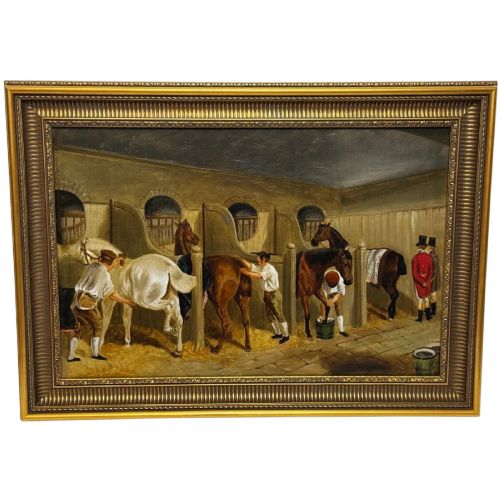
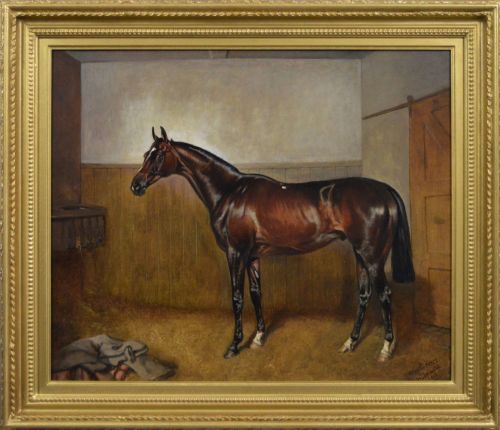
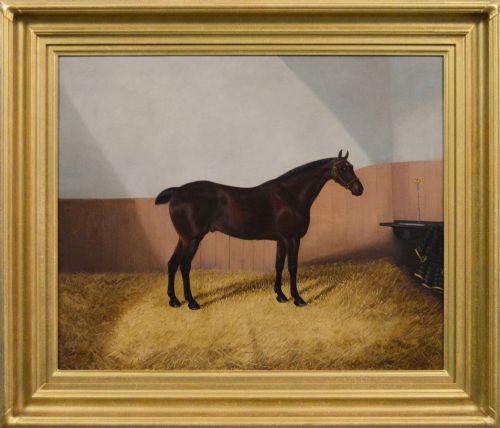
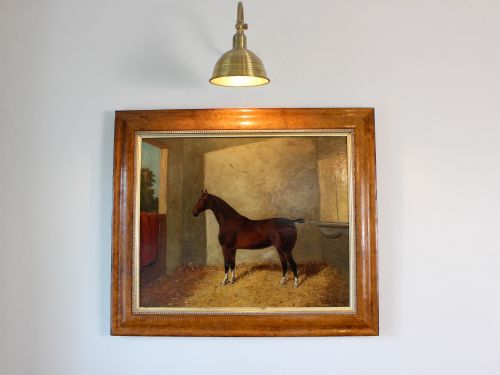
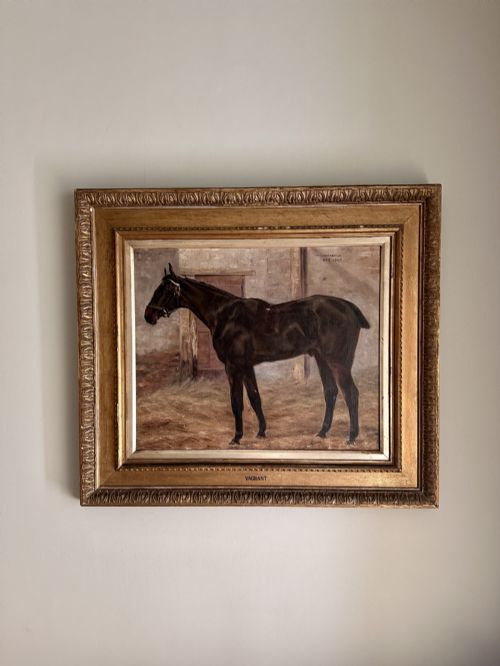
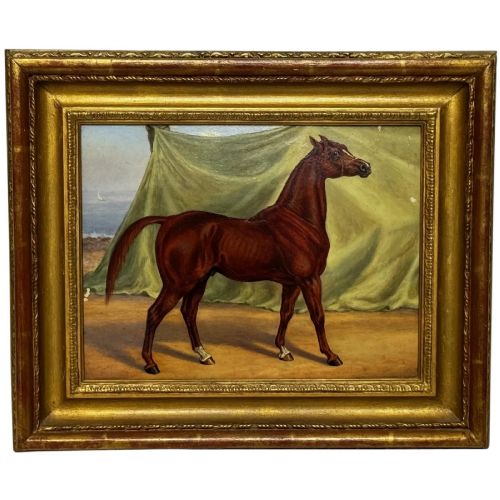
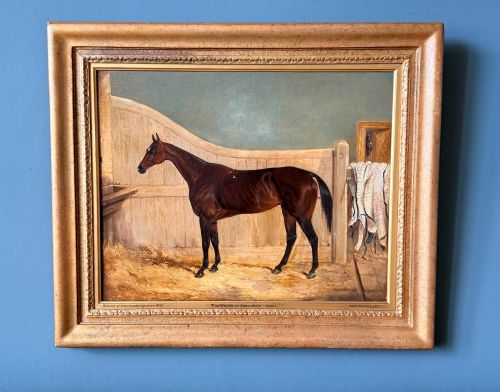
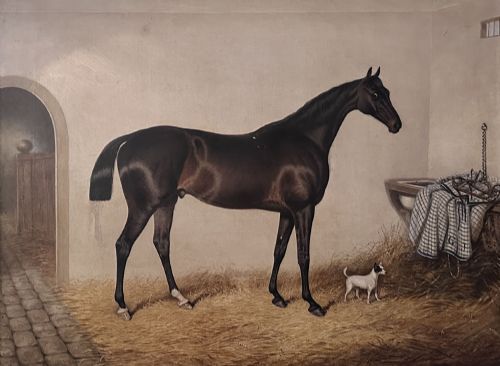
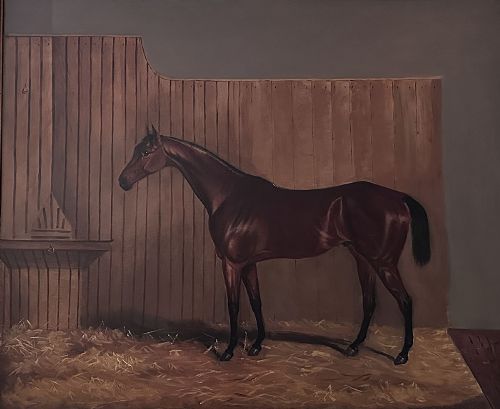
A horse portrait in stable depicts named hunters, racehorses, and purebreds within architectural stalls, reflecting the deep nineteenth-century fascination with equestrian life and breeding. These works frequently record specific animals, such as prize winners or estate hunters, alongside their grooms or canine companions.
The version most commonly encountered on this page is the nineteenth-century oil painting on canvas, often housed in its original giltwood frame. Examples range from works dated in the 1840s through to early twentieth-century interpretations, showing bays, chestnuts, and roans in realistic or sporting styles.
Materials and Technique
Artists relied primarily on oil paint applied to canvas or wood panels, building up rich coats of pigment to capture the sheen of a horse's hide and the dim light of an interior stable. Watercolour and gouache also appear on paper supports, offering a lighter medium for detailed equine studies.
Frames play an integral role in the physical structure of these works, constructed from wood adorned with gold leaf and gilt finishes. The combination of heavy gilt framing and oil on canvas defines the dominant aesthetic of the period.
Horse Portrait in Stable Retail Price Guide 2026
Typical asking prices for horse portrait in stable among the pieces listed under this phrase on Sellingantiques today, from the lower quarter to the upper quarter. They describe what is for sale here now, not the wider market.
Several stable scenes quietly include a small terrier keeping watch beside the hunter's hooves.
Assessing Quality in Equine Art
Quality rests upon the anatomical precision of the horse and the artist's ability to render light across muscle and straw. Stronger works demonstrate a confident command of perspective within the enclosed stable architecture, whereas lesser pieces often flatten the space.
The presence of a documented provenance or a recognised hand elevates a piece, connecting the canvas to notable estates or specific racing histories. Material preservation, including the stability of the original canvas and the crispness of the gilt frame, also distinguishes finer examples.
Charles Bilger Spalding·Henry Barraud·Albert Clark·John Alfred Wheeler·Samuel Spode
The Horse Portrait in Stable Glossary
- Bay
- A horse coat colour characterised by a reddish-brown body with a black mane, tail, and lower legs. This colour appears frequently across the nineteenth-century portraits listed here.
- Hunter
- A horse bred and trained for fox hunting, typically possessing strong bone structure and stamina. These animals formed the primary subject matter for Victorian sporting artists.
- Gouache
- An opaque water-based paint used alongside watercolour on paper supports. It provides solid areas of colour and fine detail in works on paper.
Horse Portrait in Stable: Frequently Asked Questions
What is a horse portrait in stable?
These works are nineteenth-century paintings depicting individual horses resting inside their stalls, often identified by name as hunters or racehorses.
Commissioned by owners to record prized animals, the genre blends portraiture with agricultural interior scenes.
How were these paintings displayed?
Original owners hung these framed canvases in country houses, estate offices, and hunting lodges to celebrate their equine investments.
Today, they suit traditional studies, living rooms, or hallways where period oil paintings complement classic interiors.
How do I identify the period?
Dating relies on stylistic markers within the Victorian sporting art tradition, dress of accompanying grooms, and stretcher frame construction.
Many works carry specific dates or attributions inscribed on the canvas or frame.
Are all the paintings in oil?
While the majority utilise oil paint on canvas or wood, a selection of pieces employs watercolour and gouache on paper.
Both mediums capture the distinct musculature and coat variations of horses from the period.