
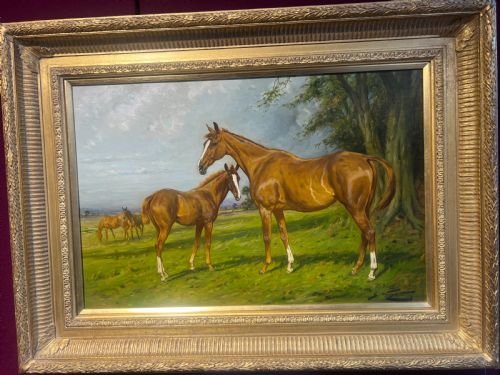
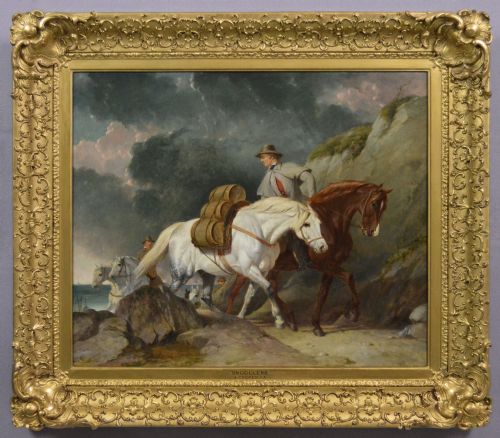

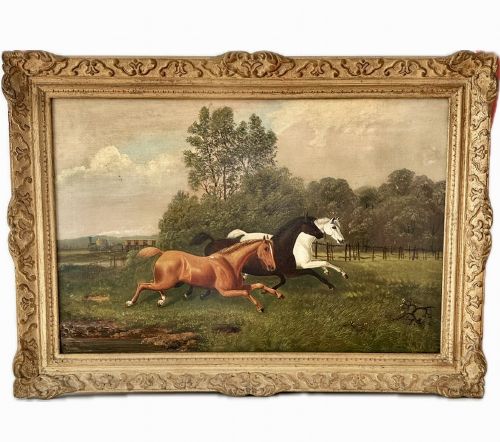
Horse Landscape Artwork
Horse landscape artwork captures equine subjects within rural, coastal, and sporting settings across centuries of British and European painting.
Horse Landscape Artwork
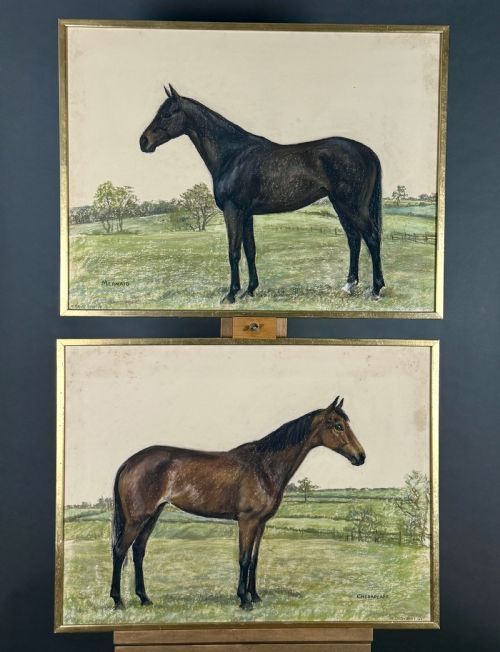
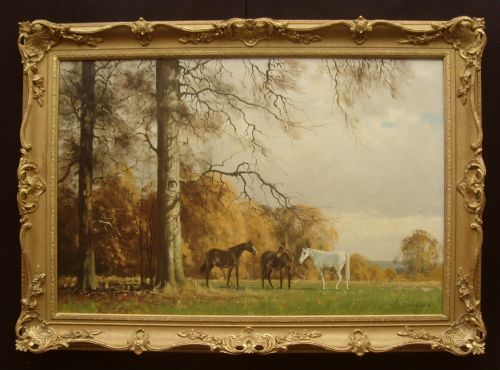
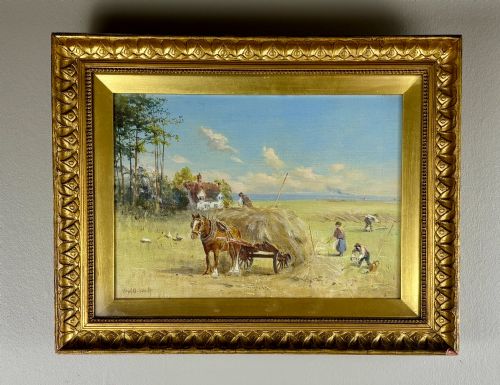
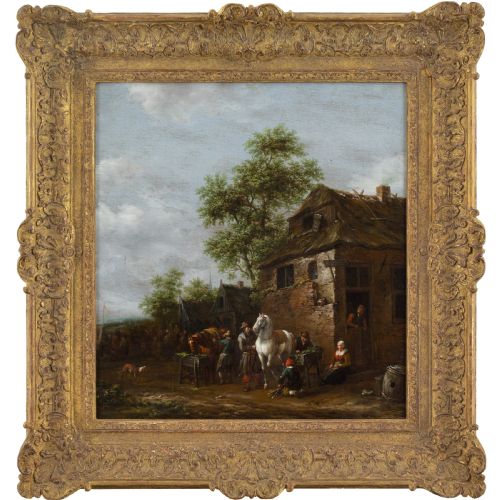
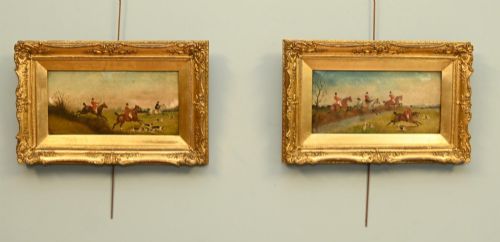
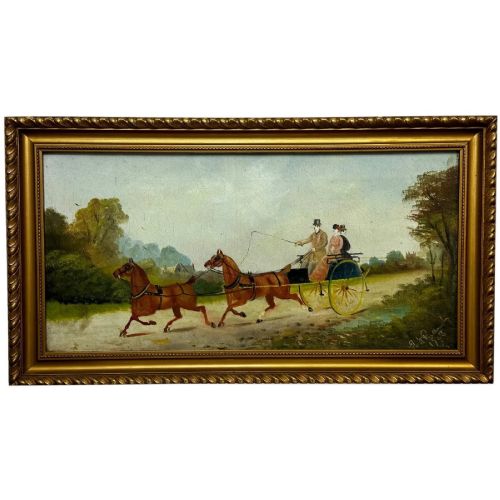
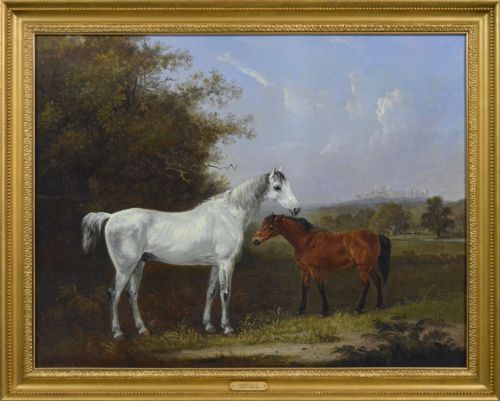
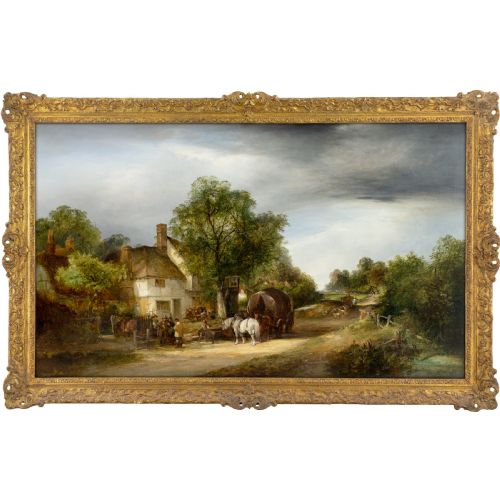
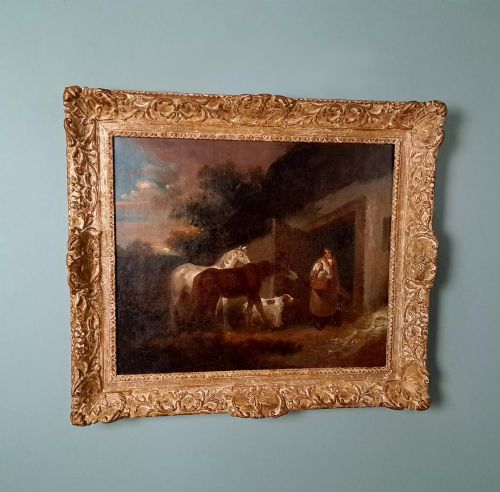
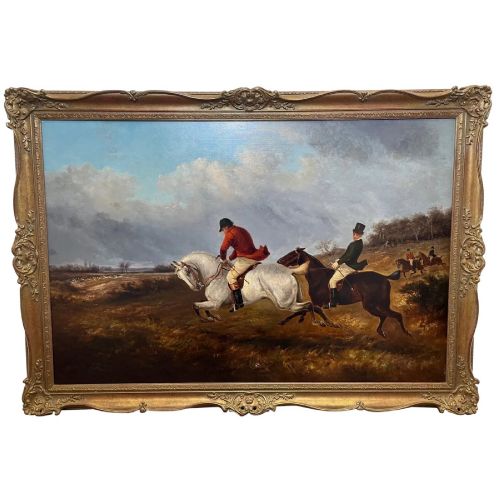
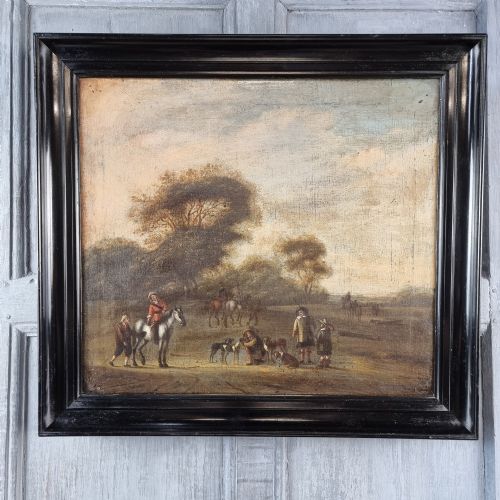
When you search for horse landscape artwork, you encounter oil paintings, watercolours, and pastels depicting equines in natural and rural environments. These pieces merge animal portaiture with topography, capturing working farm horses, coaching scenes, and hunting subjects.
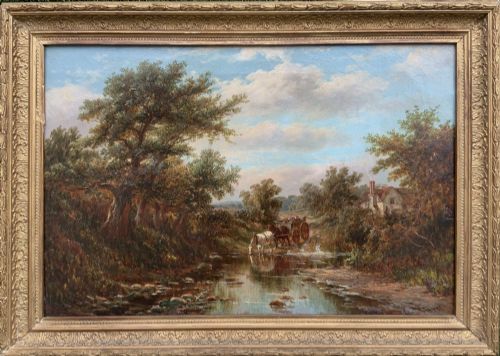
The selection ranges from Georgian and Victorian sporting oils to mid-twentieth-century provincial watercolours. Works depict animals beside rivers, within stableyards, and across open countryside.
Rural labour, agricultural life, and equestrian sport dominate the subject matter, showing horses at rest, ploughing fields, or participating in racing events.
Materials and Technique
Artists primarily applied oil paint to canvas, wood panels, or board, building depth through layered pigments and visible brushwork. Watercolours on paper and pastel studies also appear frequently.
Many historical works retain their original giltwood or wood frames, which complement the tonal palettes of the landscapes and equestrian subjects.
Listings span from the 17th century through the mid-20th century, featuring oil on canvas, watercolour, and pastel.
Assessing Quality
Quality rests upon the anatomical precision of the horse and the atmospheric handling of the surrounding landscape. Skilled painters capture the muscular structure and movement of the animal alongside balanced composition and natural light.
Condition of the canvas, pigment stability, and the presence of original framing contribute significantly to the standing of an individual piece.
William Joseph Shayer Senior·Thomas Smythe·Abraham Cooper·John Ferneley Senior·John Frederick Herring Jnr·Philip Henry Rideout
The Horse Landscape Artwork Glossary
- Equine study
- A preparatory drawing or finished painting focused primarily on the anatomy and form of a horse. These works often precede larger landscape compositions.
- Sporting art
- A genre of painting dedicated to equestrian sports, hunting, racing, and rural pastimes. It gained significant popularity during the Georgian and Victorian periods.
- Giltwood
- Timber frame or decorative element coated with a thin layer of gold leaf. Period frames frequently exhibit hand-carved details suited to oil paintings.
- Pastel on paper
- A dry medium utilising compressed pigment sticks applied to heavy paper surfaces. These works require protective glass glazing to prevent smudging.
- English School
- A designation applied to works created by artists trained or working within Britain. It groups together varied regional styles across multiple centuries.
Horse Landscape Artwork: Frequently Asked Questions
What subjects appear in horse landscape artwork?
These works depict working farm horses, hunting scenes, coaching carriages, and racehorses within rural or coastal settings.
Artists recorded agricultural labour, village life, and sporting pursuits across varied British and European landscapes.
How do I date an antique horse painting?
Dating relies on costume, architectural details, stretcher construction, and artist signatures recorded within the historical record.
Stylistic shifts between Georgian precision and mid-twentieth-century modernism also help determine the period of execution.
Where should I hang these artworks?
These paintings suit traditional studies, living rooms, and hallways, particularly paired with wood furniture or period interiors.
Keep pieces away from direct sunlight and excessive moisture to preserve the canvas, paper, and giltwood frames.
What is the difference between oils and watercolours here?
Oil paintings utilise heavy pigments on canvas or wood, offering rich texture and durability. Watercolours employ translucent washes on paper, requiring protective framing under glass.
Both mediums capture atmospheric light differently across rural and equestrian scenes.