







Horse and Carriage Drawing
Horse and carriage drawing brings together painted watercolours, chalks and framed oil scenes capturing historical transport, prized by collectors for their charming detail.
Horse and Carriage Drawing
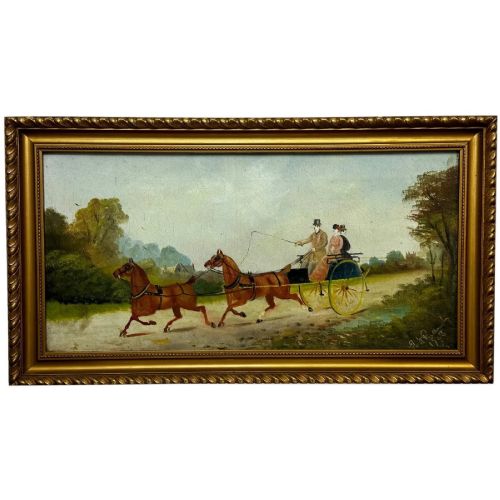
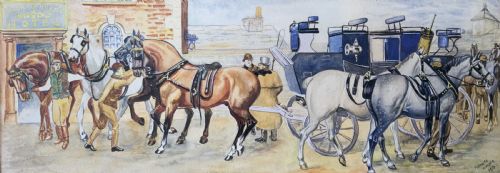
A horse and carriage drawing encompasses framed watercolours, chalk drawings and oil paintings depicting coaches, traps and cabs on the move. These works capture the kinetic energy of horse-drawn transport across nineteenth-century and early twentieth-century street scenes.
The versions most commonly met here include framed watercolour paintings and chalk drawings from the Edwardian era and the nineteenth century. Makers and artists often set their coaching scenes against winter snow or bustling city backdrops like Paris and London.
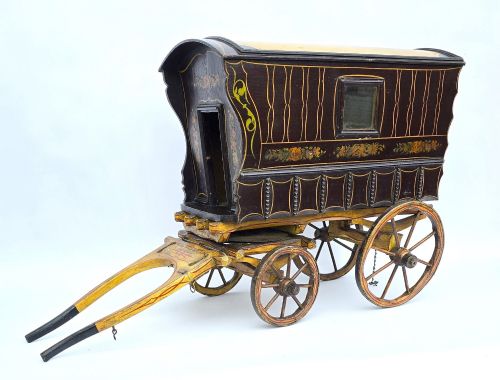
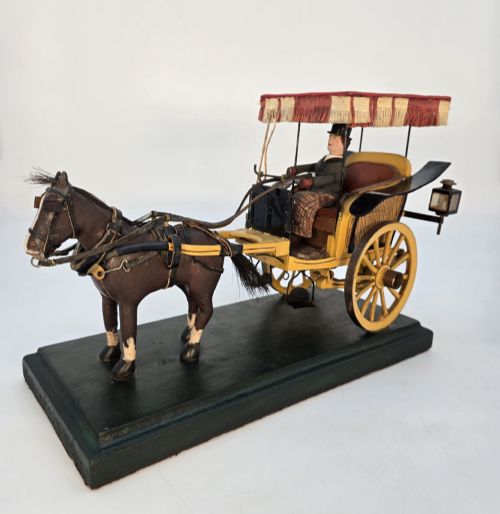
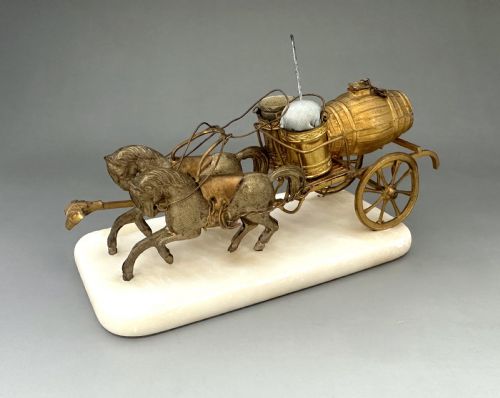
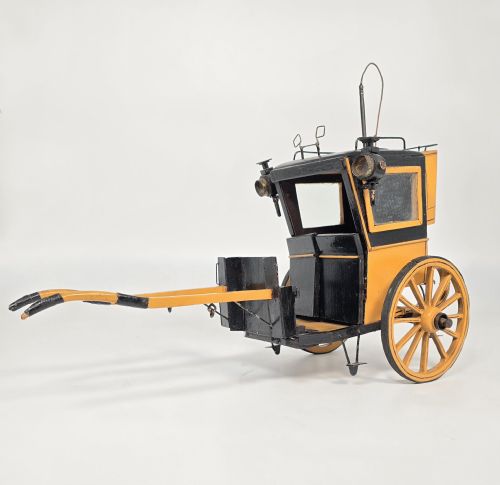
Beyond flat works on paper, the selection extends to three-dimensional folk art models, wooden scale models of carriages, and sewing companions. These varied forms reflect a widespread Victorian and Edwardian fascination with equine transport.
What varies in quality
Quality rests upon the precision of the draughtsmanship and the artist's ability to render the anatomy of trotting horses in motion. Top-tier works capture anatomical realism and atmospheric depth, whereas lesser pieces rely on stiff proportions.
In physical models, the intricacy of the scratch-built wooden elements and the preservation of original paint determine distinction. Masterpieces display fine detail in harnesses and drivers, whereas basic items show heavier, less refined construction.
Horse and Carriage Drawing Retail Price Guide 2026
Typical asking prices for horse and carriage drawing among the pieces listed under this phrase on Sellingantiques today, from the lower quarter to the upper quarter. They describe what is for sale here now, not the wider market.
One exceptional sewing companion transforms a horse-drawn carriage into a secret sewing box for nineteenth-century needlework.
R D Roberts·Albert Ludovici Jnr·Cecil Charles Windsor Aldin·William Manners·Charles James Lauder·Samuel Henry Alken·Eduard Leon Cortes·John Charles Maggs·John Richard Worsdale
The Horse and Carriage Drawing Glossary
- Watercolour
- A paint consisting of transparent pigment suspended in a water-based solution. It is applied to paper to achieve luminous, translucent washes.
- Chalk drawing
- An artwork created using dry pigment pressed into sticks. It provides soft lines well suited to expressive sketches.
- Folk art model
- A three-dimensional handmade object created outside academic traditions. These items reflect traditional rural craftsmanship and vernacular styles.
- Palais Royal
- A style associated with luxury Parisian goods from the nineteenth century. These decorative pieces often incorporate sewing accessories and carriage motifs.
- Trap
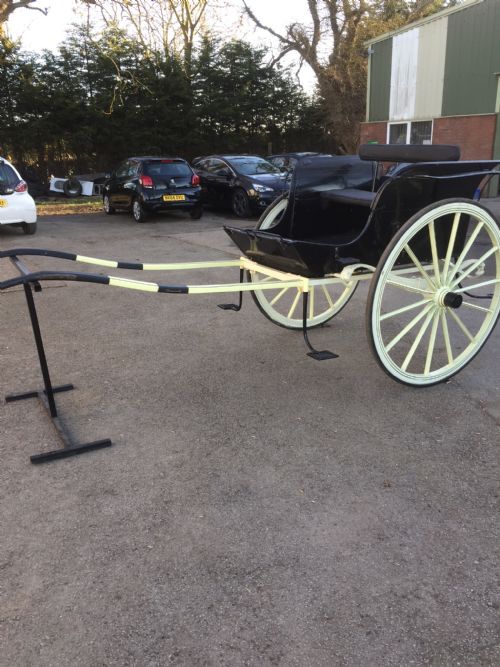
- A two-wheeled lightweight horse-drawn carriage. It appears frequently in nineteenth-century paintings and sketches.
Horse and Carriage Drawing: Frequently Asked Questions
What is a horse and carriage drawing?
It is an artwork depicting carriages, traps or coaches pulled by horses, rendered in mediums like watercolour, chalk or oil.
These pieces document historical modes of transport and street life from the nineteenth and early twentieth centuries.
How were carriage models used?
Scratch-built models served as decorative folk art ornaments or detailed representations of contemporary transport.
Some objects, such as sewing companions, combined sculptural carriage forms with functional compartments for needles and thread.
How do I date these artworks?
Dating relies on costume details of the passengers, the style of the carriage, and framing methods typical of specific periods.
Signatures, exhibition dates, and artist lifespans recorded on the works provide the most reliable chronological markers.
How should I display framed works?
Keep framed watercolours and chalk drawings away from direct sunlight to prevent fading of the delicate pigments on paper.
Maintain stable indoor humidity to protect original wooden frames and prevent warping of the backing materials.