


Horn Handle Sword Cane
These horn handle sword cane examples offer discreet personal protection disguised as gentlemanly walking canes.
Horn Handle Sword Cane
A horn handle sword cane combines a functional walking stick with a concealed steel blade, appearing as an ordinary accessory during the nineteenth and early twentieth centuries. When you search for horn handle sword cane, you encounter walking sticks and canes spanning periods from the 1880s through the 1930s, including Victorian and Edwardian examples.
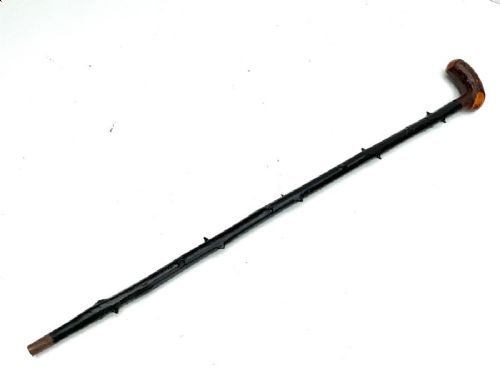
Handles fashioned from horn or antler pair with shafts of wood, malacca cane, or snakeskin-covered hafting. Specific regional forms include traditional Irish blackthorn and 19th Century French variations alongside British styles.
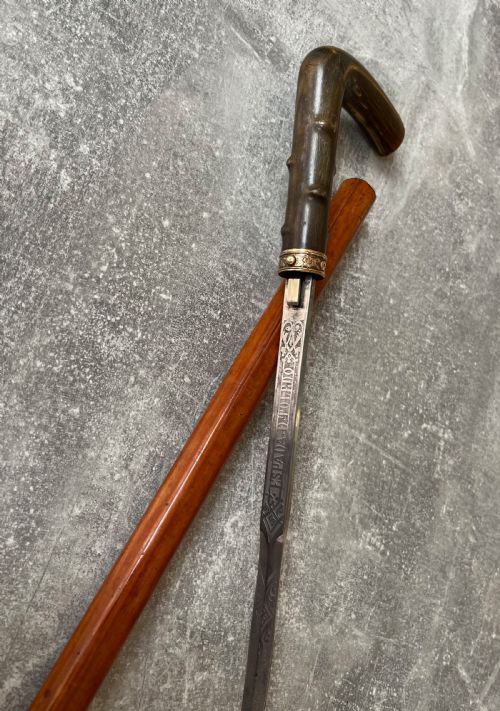
Most pieces feature a button release mechanism to secure the blade within the shaft. Collars mounted below the handle often comprise silver, gold coloured metal, or brass.
Materials and construction
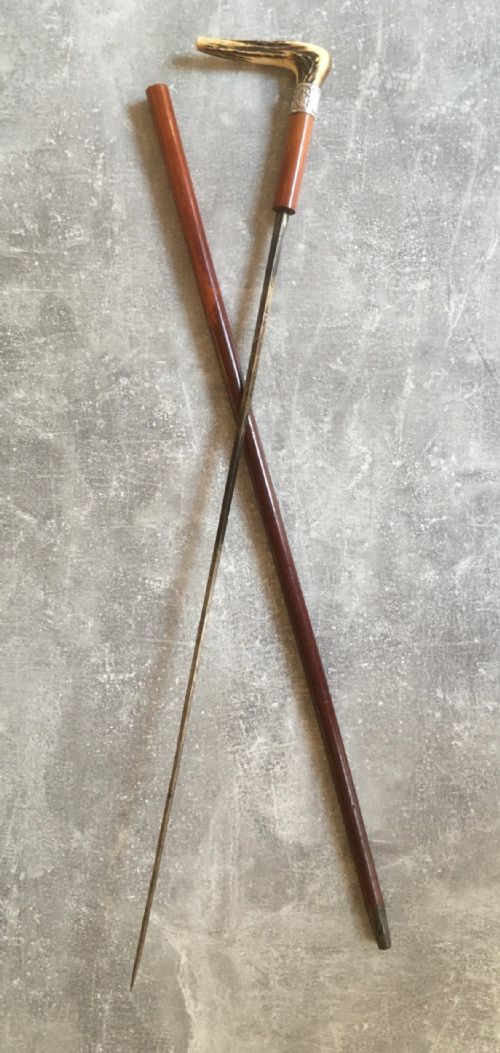
Craftsmen shaped natural horn and antler to form ergonomic handles, mounting them securely onto shafts of malacca cane, rosewood, or blackthorn. Metal collars in silver or brass reinforce the join between the handle and the wooden or cane shaft.
Steel blades, occasionally etched, fit inside the hollow interior of the shaft. Fastening mechanisms such as button releases secure the blade safely until needed.
Listings feature periods spanning from the 1880s through the 1930s, incorporating Victorian and Edwardian styles.
Distinguishing quality in construction
Quality rests in the integration of the handle to the shaft and the precision of the blade release mechanism. Superior examples feature hallmarked silver mounts and finely etched Toledo steel blades housed within sturdy malacca or rosewood shafts.
Material selection dictates the character of the piece, from simple horn grips to intricate antler handles paired with snakeskin coverings. The alignment of the collar and the smooth action of the button release distinguish finer items from simpler utilitarian versions.
The Horn Handle Sword Cane Glossary
- Malacca cane
- A resilient botanical material imported from Southeast Asia used for walking stick shafts. Its distinctive mottled brown surface provides both flexibility and strength.
- Toledo blade
- A steel blade originating from Toledo, Spain, known for its metallurgical quality and historical association with edged weapons. These blades appear in nineteenth-century sword sticks.
- Blackthorn
- A dense wood traditionally sourced from the sloe shrub, utilised for Irish walking sticks. It retains gnarled knot formations along the shaft.
- Collar
- A metal band encircling the top of the walking stick shaft directly beneath the handle. Collars frequently bear silver hallmarks or metal engraving.
- Button release
- A mechanical catch set into the collar or shaft that locks the concealed blade in place. Pressing the button permits the sword to be drawn from the cane.
Horn Handle Sword Cane: Frequently Asked Questions
What is a horn handle sword cane?
A horn handle sword cane is a gentleman's walking stick equipped with a hidden steel blade beneath a natural horn or antler grip.
Such items served as practical walking aids and discrete personal defence tools during the Victorian and Edwardian eras.
How do you release the blade?
Most examples utilise a spring-loaded button release mechanism fitted into the collar or upper shaft. Depressing this button disengages the internal lock, allowing the blade to slide smoothly out from the cane.
Careful handling ensures the locking mechanism remains functional and secures the blade safely during transport.
What materials were used for the shafts?
Shafts commonly consist of malacca cane, rosewood, blackthorn, or wooden cores covered in snakeskin. Each material offers distinct flexibility, weight, and visual texture.
Collars made of silver, brass, or gold-coloured metal frequently reinforce the junction where the handle meets the shaft.
How do you date these walking sticks?
Dating relies on stylistic markers, hallmarks on silver collars, and documented manufacturing periods ranging from the late nineteenth century through the 1930s. Victorian and Edwardian examples often display specific design traits typical of French or British workshops.
Examining the materials and construction techniques provides further context for placing a piece within its historical era.