
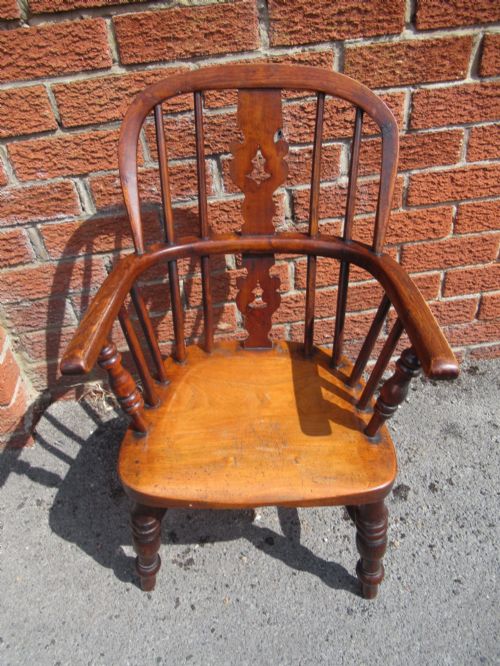


Hoop Back Childs Armchair
These small hoop back childs armchair examples are miniature Windsor seating built with the same sturdy vernacular joinery as full-sized country chairs.
Hoop Back Childs Armchair
A hoop back childs armchair is a scaled-down country seat designed for young occupants, typically constructed with a continuous bentwood bow that forms the back and armrests. These pieces appear in forms such as stick backs, splat backs, and rocking chairs, originating from domestic settings across Georgian, Victorian, and later periods.
The versions you meet most frequently on this page date from the nineteenth century and the Georgian era, constructed by regional vernacular makers. They combine small proportions with robust country timbers, serving as both functional seating and miniature expressions of adult Windsor design.
How they were made
Cabinet makers and bodgers built these chairs using a combination of turned underframes and steam-bent components. Green wood working techniques allowed craftsmen to shape flexible timbers like ash and elm into continuous hoops.
Seats are typically carved from a single solid piece of elm or other native woods, serving as the heavy anchor into which the legs, spindles, and back bows are wedged and pinned.
Some miniature rockers show distinct wear marks on the lower runners where generations of small occupants pushed themselves back and forth across flagstone floors.
What varies in quality
The distinction between standard examples and superior ones lies in the selection of timber and the complexity of the turning. Yew wood examples with rich grain patterns and crinoline stretchers sit at the higher end of craftsmanship.
Proportion and retention of original surfaces also dictate standing. Chairs that maintain their native patina without excessive timber replacement or clumsy repairs command greater appreciation among collectors of country furniture.
The Hoop Back Childs Armchair Glossary
- Hoop back
- A continuous bentwood rail that forms the upper back and armrests of a Windsor chair. This element provides structural rigidity while distributing weight evenly.
- Crinoline stretcher
- An arched underframe connecting the legs of a chair for added stability. It resembles the shape of a crinoline petticoat and often appears on earlier vernacular pieces.
- Stick back
- A chair back constructed from multiple plain turned spindles rather than a solid central splat. These spindles are tenoned directly into the seat and top rail.
- Vernacular furniture
- Domestic objects made by regional craftsmen using local traditions rather than mengikuti high urban styles. These pieces prioritize utility and available materials.
- Saddle seat
- A wooden seat base scooped out to resemble the shape of a saddle for comfort. This technique requires skilled adze work on thick elm boards.
Hoop Back Childs Armchair: Frequently Asked Questions
Were these chairs made for real children?
Yes, these miniature seats were constructed for the domestic use of children in wealthy or comfortable country households during the Georgian and Victorian eras.
Despite their small size, they were built by local joiners to withstand daily use, employing the same robust construction methods found in adult seating.
How do I identify a yew wood chair?
Yew wood displays a distinctive, highly figured grain with contrasting red, amber, and golden tones. It is denser and heavier than other common country timbers.
Cabinet makers reserved yew for finer Windsor chairs, particularly for the bent bows and prominent spindles where its natural flexibility and visual depth stood out.
What is a crinoline stretcher?
A crinoline stretcher is a curved metal or wooden brace that links the legs of a chair together in a sweeping loop. It adds lateral strength to the underframe.
Its presence on an early piece often points towards eighteenth-century or early nineteenth-century rural workshops influenced by contemporary fashion.
How should I care for an elm seat?
Elm is prone to splitting if exposed to rapid changes in humidity or central heating due to its interlocking grain. Keep the wood nourished with appropriate wax.
Placing the chair away from direct heat sources and sunlight preserves the original surface and prevents the timber from drying out over time.