




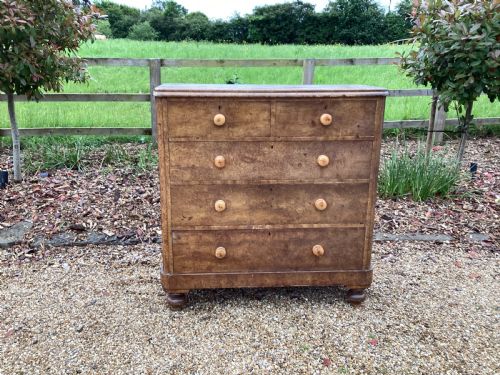


Honey Wood Tallboy
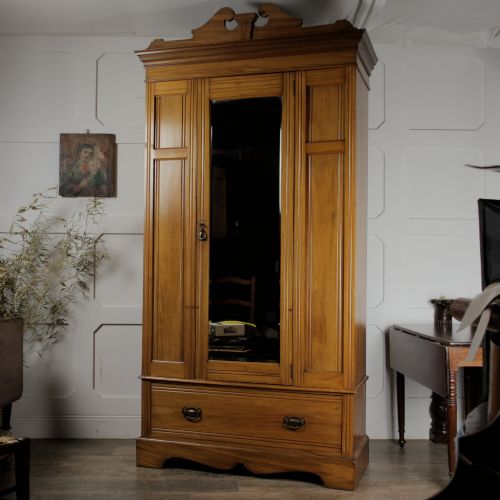
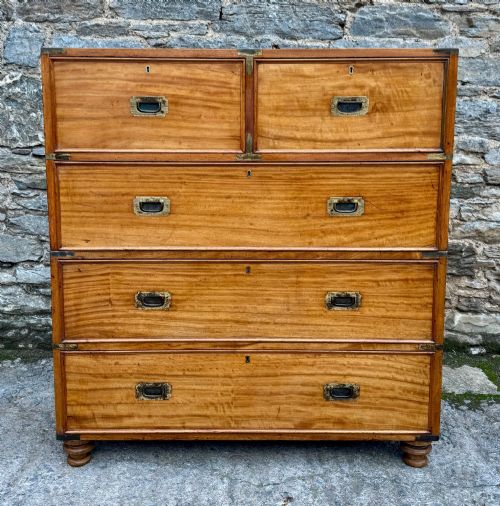
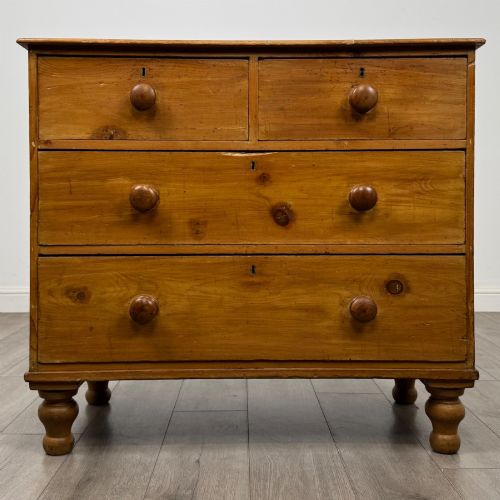
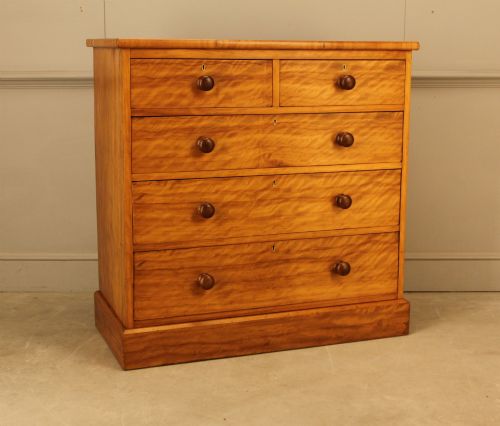
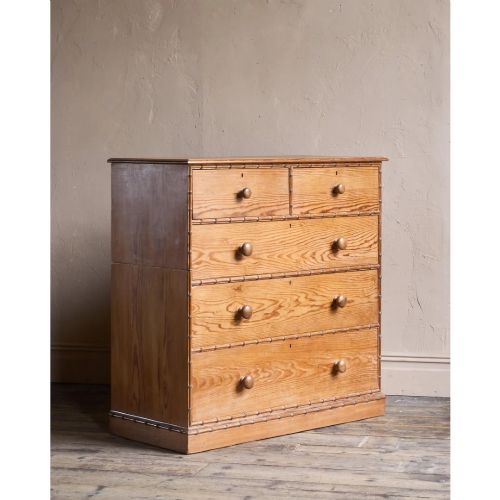
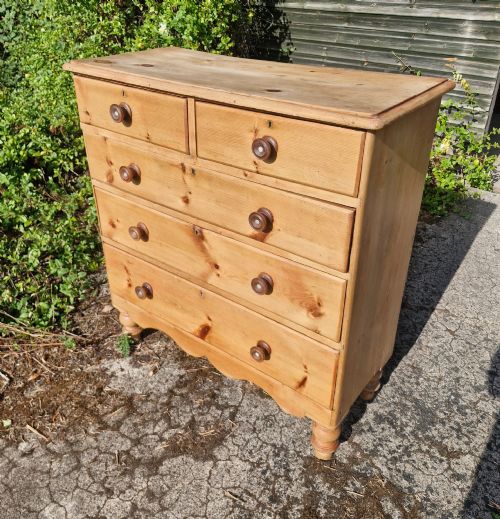
These honey wood tallboy pieces are tall chests of drawers formed from light timber, offering useful height without dominating a room.
Honey Wood Tallboy
When buyers search for a honey wood tallboy, they are usually looking at tall chests of drawers dating from the nineteenth and early twentieth centuries. The examples recorded here span the Victorian and Edwardian eras, alongside some later pieces from the 1920s and 1930s.
Most pieces on this page take the form of stacked drawer units made from pale or golden timbers. These items serve as practical tall storage for clothing and linens while bringing warm, light wood tones into a bedroom or dressing space.
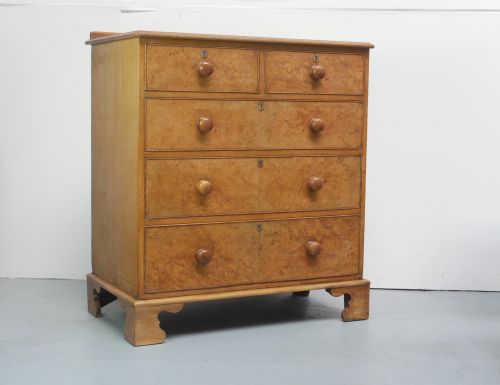
Origins represented in these records range from English country workshops to Scandinavian makers. The common thread is vertical capacity combined with lighter wood finishes such as pine, satinwood, and burr ash.
How they were made
Makers relied on solid timbers including pine, satinwood, fruitwood, and burr ash to build the carcass and drawers. Some pieces incorporate painted finishes or simulated birch effects to alter the visual weight of the wood.
Metal hardware such as brass handles and drawer pulls appeared alongside bone details on specific items. Construction methods reflect the period standards of nineteenth-century cabinet makers and twentieth-century workshops.
Honey Wood Tallboy Retail Price Guide 2026
Typical asking prices for honey wood tallboy among the pieces listed under this phrase on Sellingantiques today, from the lower quarter to the upper quarter. They describe what is for sale here now, not the wider market.
What varies in quality
The choice of timber creates a clear distinction across the range, moving from utilitarian softwood and painted pine up to decorative satinwood and burr ash veneers. Finer pieces display careful selection of grain patterns on the drawer fronts.
Howard and Sons·Gemla Fabrikers
The Honey Wood Tallboy Glossary
- Tallboy
- A tall chest of drawers, typically formed by stacking one cabinet section on top of another or building a single tall vertical unit. This configuration maximises storage capacity while occupying a smaller floor footprint.
- Satinwood
- A hard, durable timber with a natural golden sheen that takes a high polish. It was favoured by nineteenth-century cabinet makers for fine bedroom furniture.
- Burr ash
- Wood taken from the growth excrescences of an ash tree, producing intricate and swirling grain patterns. It is used as a decorative veneer on drawer fronts.
- Gallery back
- A raised timber or decorative upstand along the top rear edge of a chest. It prevents items placed on top from sliding off the back.
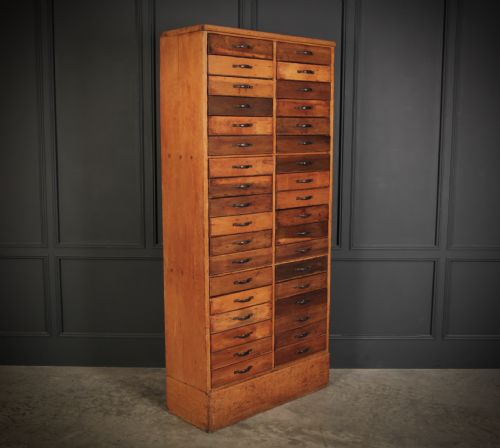
- Haberdashery chest
- A cabinet originally designed for storing small sewing goods, ribbons, or merchant stock, featuring multiple shallow drawers.
Honey Wood Tallboy: Frequently Asked Questions
What is a tallboy used for?
These tall chests provide vertical storage for clothing, linens, and personal items in bedrooms or dressing rooms. Their height allows them to hold substantial volume without taking up excessive floor space.
They function well in rooms where horizontal surface space is limited but vertical capacity is needed.
How do I date a wooden chest?
Dating relies on observing construction methods, timber choices, and hardware styles associated with periods like the Victorian or Edwardian eras. Secondary woods inside the drawers and joint types offer clues to the decade of manufacture.
Stamped maker names or paper labels inside the drawers can also provide a specific workshop origin.
Are these pieces made of solid wood?
The listings include pieces constructed from solid timbers such as pine and fruitwood, alongside items featuring decorative veneers like burr ash. Painted finishes and simulated birch effects were also applied to various softwood carcasses.
Each material responds differently to room humidity and care routines over time.
How do I care for antique timber furniture?
Maintain antique wood by keeping it away from direct heat sources and strong sunlight, which can dry out or fade the finish. Regular dusting with a dry cloth and occasional application of appropriate wax preserves the surface sheen.
Avoid excessive moisture and harsh chemical polishes that can damage older timber finishes.