

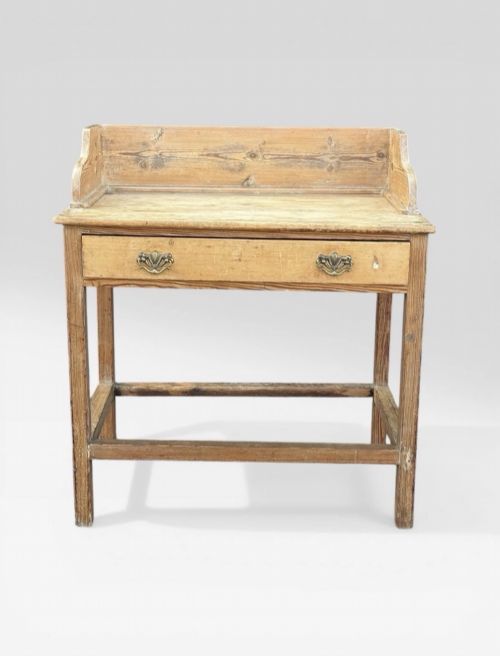


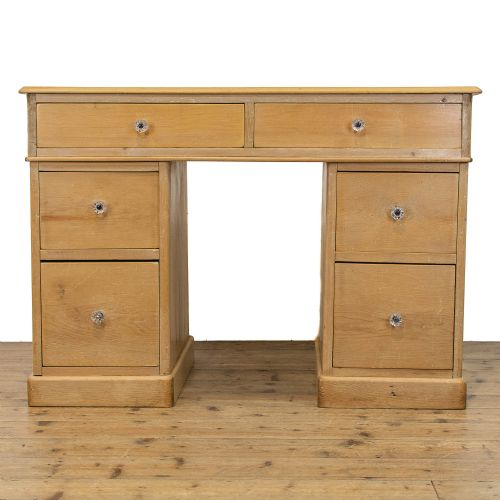


Honey Pine Vanity
These honey pine vanity items and related dressing furniture offer warm domestic timber character for period bedrooms.
Honey Pine Vanity
A honey pine vanity or dressing piece brings warm nineteenth-century timber into a bedroom scheme. Buyers searching this phrase encounter dressing chests, washstands, and dressing tables spanning the Georgian, Victorian, and Edwardian periods.
The selection on this page relies heavily on nineteenth-century pieces, including rustic country designs and faux bamboo variants. Forms range from simple drop leaf side tables and small bowfront sideboards to fitted dressing chests with mirrors.
How they were made
Construction relies primarily on solid pine timber, frequently paired with glass mirrors, brass hardware, and occasional bone or metal details. Beech also appears within the structural elements of these nineteenth-century pieces.
Surface treatments vary from plain waxed timber to stencilled decoration, whilst specialist styles like faux bamboo demonstrate distinct turnery and shaping techniques.
Honey Pine Vanity Retail Price Guide 2026
Typical asking prices for honey pine vanity among the pieces listed under this phrase on Sellingantiques today, from the lower quarter to the upper quarter. They describe what is for sale here now, not the wider market.
Some nineteenth-century makers went to great lengths to carve solid pine into convincing faux bamboo stalks.
What varies in quality
Quality depends on the integrity of the pine construction and the retention of original surface finishes, such as period stencilling. Simpler rustic country items differ from more refined faux bamboo or bowfront forms.
The presence of original hardware, integrated mirrors, and secondary timbers like beech dictates the overall coherence of each piece.
The Honey Pine Vanity Glossary
- Faux bamboo
- A decorative style mimicking bamboo through turned and carved wood, popular during the late nineteenth century. It adds an exotic visual texture to standard pine furniture.
- Bowfront
- A convex curved front contour typical of finer sideboards and case pieces. This shaping requires expert carpentry to execute smoothly.
- Dressing chest
- A chest of drawers fitted with a mirror at the top, serving the function of a modern vanity. They became ubiquitous in Victorian and Edwardian bedrooms.
- Washstand
- A domestic item designed to hold a basin and jug, often sharing dimensions and timber construction with dressing tables of the same era.
Honey Pine Vanity: Frequently Asked Questions
How do I date a pine vanity?
Dating relies on stylistic clues like faux bamboo turnery or stencilling, alongside broader period indicators such as Georgian bowfronts or Edwardian proportions.
Construction methods and timber selection also help distinguish earlier nineteenth-century pieces from later examples.
Were these pieces used for washing?
Many items listed as washstands were built specifically for morning ablutions before plumbing became standard in bedrooms. Over time, many such pieces adapted to serve general vanity or surface roles.
Dressing chests and tables focused purely on grooming and cosmetics rather than water.
How do I clean honey pine?
Maintain the timber using a traditional beeswax polish to nourish the pine without building up heavy synthetic residues. Avoid excessive moisture on antique surfaces.
Glass components and mirrors require standard glass cleaner applied carefully away from the wood.
Are faux bamboo pieces fragile?
The turned wooden stalks are structurally sound but require care around projecting carved joints. Normal domestic placement suffices for daily use.
They share the same robust pine foundation as standard pieces from the same era.