



Faux Bamboo Bedroom Furniture
These faux bamboo bedroom furniture pieces bring whimsical charm and clever turning to any interior.
Faux Bamboo Bedroom Furniture
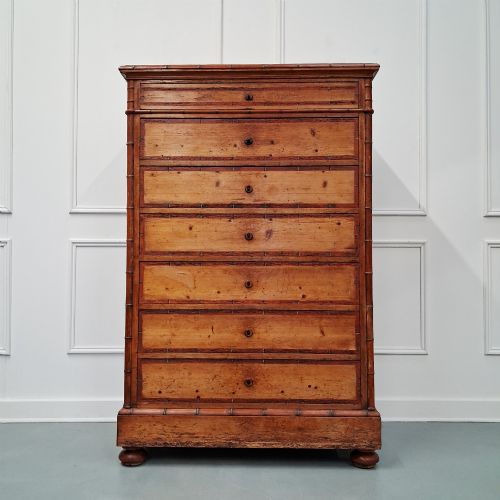
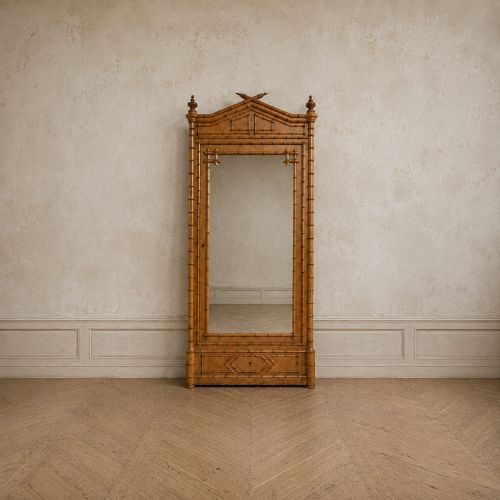
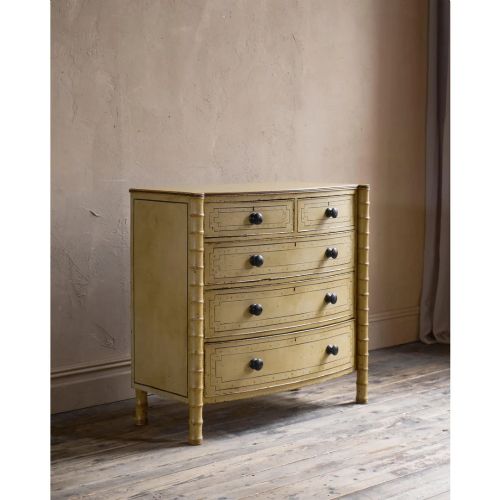
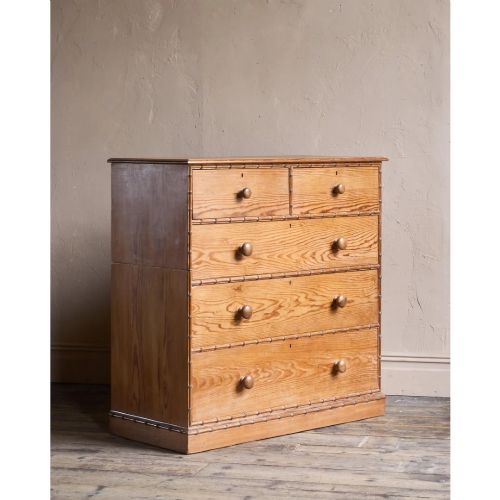
Faux bamboo bedroom furniture comprises turned wooden pieces made to resemble natural cane, appearing frequently in nineteenth-century and Edwardian forms. These items span practical storage and seating, including chests of drawers, armoires, and wardrobes.
Buyers encounter numerous variations ranging from Regency painted bamboo chairs to French nineteenth-century commodes and dressing tables. Aesthetic Movement pieces also feature strongly among the available seating and chests.
Makers utilised diverse woods and finishes, producing side chairs, rocking chairs, and mirrored wardrobes that capture botanical themes through simulated joints and nodes. These furnishings often reflect French and British design influences from the eighteen-seventies onward.
How they were made
Craftsmen shaped solid timber such as pine, walnut, and bird's eye maple into cylindrical sections, carving nodal rings by hand or lathe to imitate real bamboo stalks. Ebonised wood and painted finishes provided alternative surface treatments for these frames.
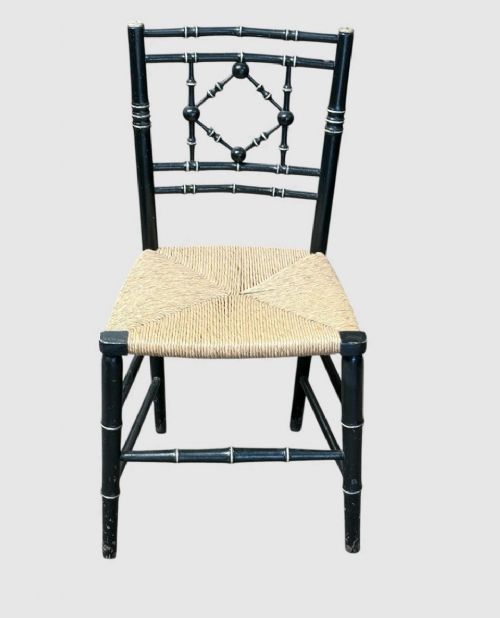
Makers incorporated auxiliary materials like rush for seating bases, inset marble slabs for commode tops, and mirrored glass within armoire doors. Iron framework and structural glass also appear in select nineteenth-century pieces to support the turned woodwork.
Faux Bamboo Bedroom Furniture Retail Price Guide 2026
Typical asking prices for faux bamboo bedroom furniture among the pieces listed under this phrase on Sellingantiques today, from the lower quarter to the upper quarter. They describe what is for sale here now, not the wider market.
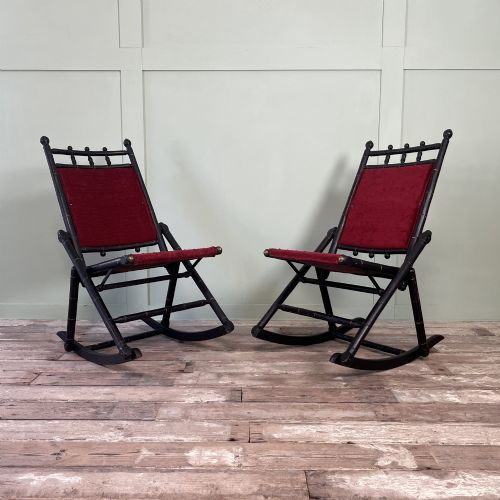
Even the rocking chairs learned how to fold.
What varies in quality
The precision of the simulated bamboo turning determines much of the visual success, with superior pieces displaying crisp nodal rings and convincing joint details carved into the wood. The choice of primary timber, such as figured bird's eye maple or walnut over standard pine, elevates the distinction of a chest or commode.
Integration of secondary elements like rush seating, marble tops, and bevelled mirror plates demonstrates the maker's ambition. Surface preservation, whether ebonised or painted decoration, influences how faithfully the piece retains its original character.
Howard and Sons
The Faux Bamboo Bedroom Furniture Glossary
- Faux bamboo
- Simulated cane furniture where wood is turned and carved to resemble natural bamboo stalks. This technique flourished during the nineteenth century across Britain and France.
- Armoire
- A large freestanding wardrobe used for clothing storage. French examples often feature mirrored doors and bird's eye maple construction.
- Commode
- A low chest of drawers or cabinet. These frequently incorporate marble tops and walnut frames within nineteenth-century designs.
- Ebonised wood
- Timber stained or finished to resemble heavy ebony. This treatment creates a dark, dramatic surface often seen on Aesthetic Movement pieces.
- Rush
- Woven marsh plant stems utilised for seat bottoms. It provides a durable, tactile surface on side chairs and rocking chairs.
Faux Bamboo Bedroom Furniture: Frequently Asked Questions
What periods do these pieces come from?
The selection spans the nineteenth century through to the Edwardian era and the nineteen-twenties. Key periods include Regency, Victorian, and the Aesthetic Movement.
French and British workshops drove production across these decades, employing styles like nineteenth-century Chinoiserie and Napoleon III designs.
What types of storage furniture are available?
Storage items include chests of drawers, dressing tables, and large mirrored armoires. Commodes also provide surface space and drawer storage.
These pieces often combine turned wooden frames with marble inserts and mirrored glass.
How do I identify Aesthetic Movement examples?
Aesthetic Movement pieces often feature ebonised wood and geometric simplicity combined with simulated bamboo turning. Folding rocking chairs and side chairs represent this style in the listings.
These designs prioritise artistic form and decorative surface grain over excessive ornamentation.
What materials were used for seating?
Seating incorporates painted wood, iron, and ebonised frames alongside woven rush for chair bases. Side chairs and rocking chairs utilise these varied components.
Makers selected pine and hardwood to support the intricate turned bamboo detailing.