

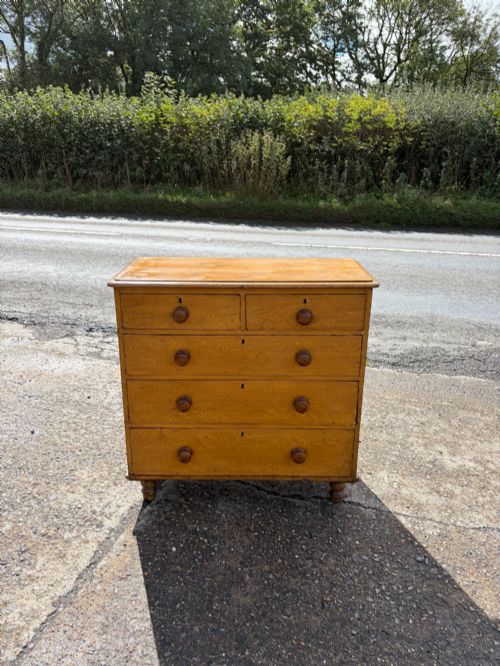
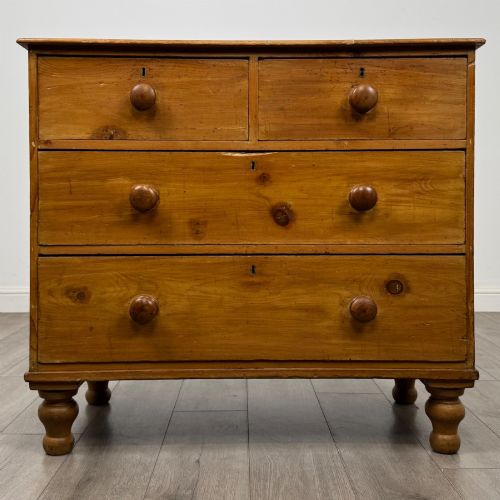
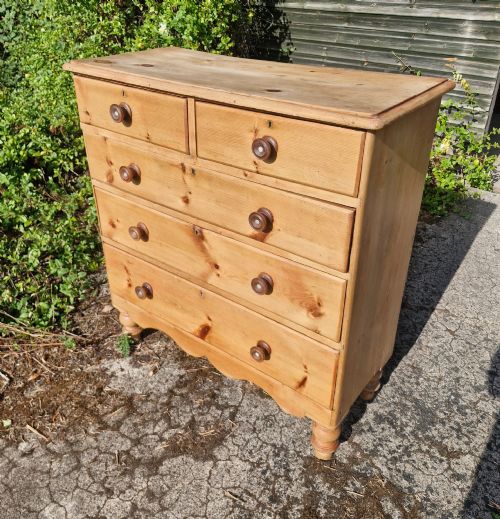
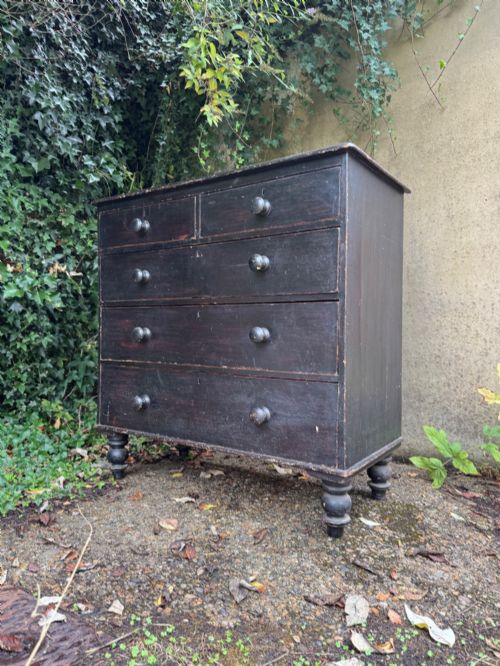



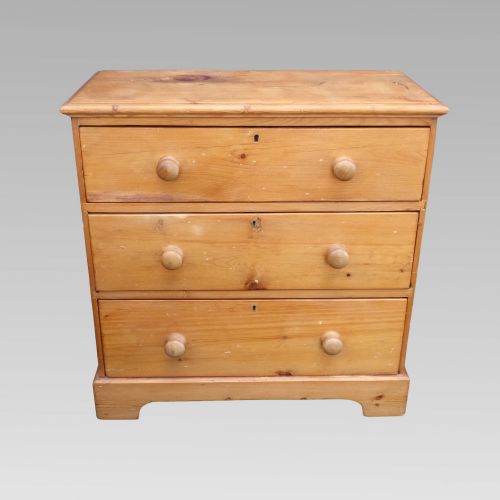


Turned Pine Chest Drawers
These turned pine chest drawers bring practical storage and honest nineteenth-century character into a room.
Turned Pine Chest Drawers
A turned pine chest drawers provides domestic storage through stacked timber compartments built during the nineteenth century and the early twentieth century. Buyers encounter forms ranging from compact two-over-three drawer layouts to tall three-drawer configurations and dressing table hybrids.
Most pieces seen here belong to the Victorian era, spanning specific decades like 1850, 1870, 1890, and 1900, alongside occasional Regency and Edwardian examples. The designs originate from English workshops as well as continental sources.
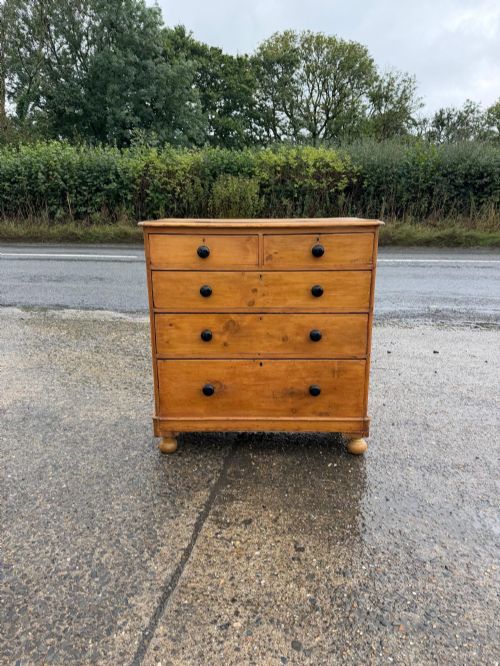
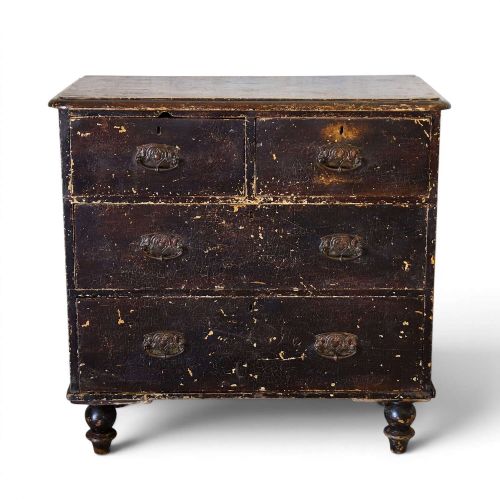
Makers utilised resilient softwood timber to build sturdy carcases supported by turned feet and fitted with turned wooden knobs. Surfaces frequently retain scumble paint, painted finishes, or waxed treatments developed over generations of use.
How they were made
Makers constructed these storage pieces primarily from pine timber, incorporating supplementary materials such as brass, iron, bone, and metal for hardware and fittings. Surfaces were finished with paint, brown scumble paint, or natural wax to protect the softwood.
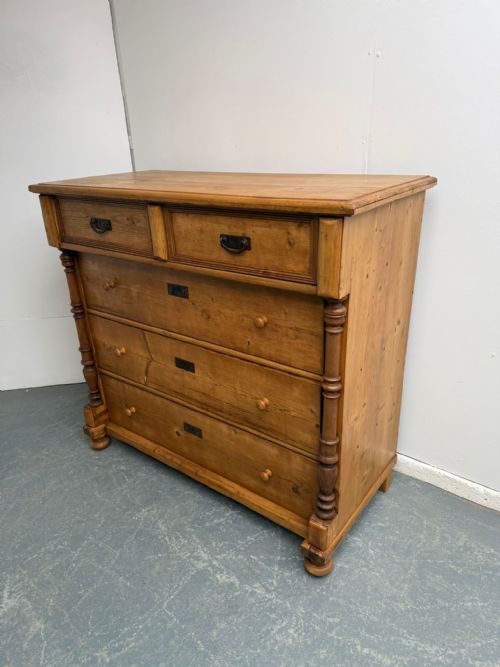
Construction relied on traditional joinery techniques suited to utility furniture, paired with turned wooden components for feet and drawer handles. Some variants incorporated marble tops or decorative columns alongside standard timber framing.
Turned Pine Chest Drawers Retail Price Guide 2026
Typical asking prices for turned pine chest drawers among the pieces listed under this phrase on Sellingantiques today, from the lower quarter to the upper quarter. They describe what is for sale here now, not the wider market.
Listings feature items from the Victorian and Regency periods, utilising pine, paint, brass, and iron.
What varies in quality
The distinction between tiers of quality rests on the preservation of original finishes, such as untouched scumble paint or early waxed patination, compared to later alterations. Superior examples maintain their original turned knobs, feet, and structural timber without extensive replacement.
Proportion and execution set the finer items apart, visible in the balance of two-over-three drawer configurations and the crisp turning of legs and handles. Pieces retaining untouched regional character command greater interest from collectors.
Howard and Sons
The Turned Pine Chest Drawers Glossary
- Scumble paint
- A decorative oil-based glaze applied over a lighter ground and manipulated with combs or brushes to simulate finer grain woods. This technique was widely utilised on nineteenth-century pine furniture.
- Turned feet
- Support blocks shaped on a lathe to form rounded, bulbous, or spool profiles beneath the carcase. These components elevate the chest off the floor and define the period style.
- Faux bamboo
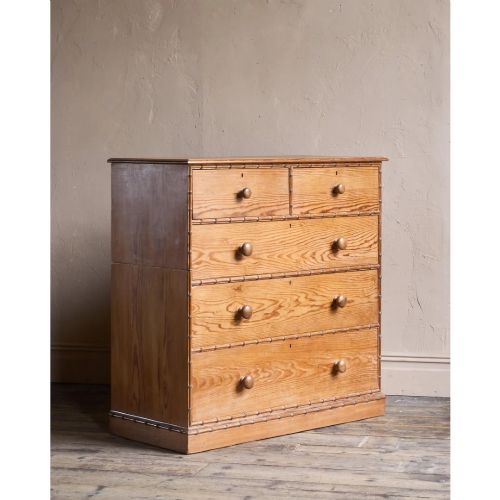
- A decorative finish where softwood or hardwood is carved and painted to imitate natural bamboo stalks. This style appeared frequently on late nineteenth-century dressing tables and cabinets.
- Waxed pine
- A surface treatment where clear or tinted beeswax is rubbed into the timber to nourish the grain and produce a soft sheen. It protects the wood while preserving its natural colour.
Turned Pine Chest Drawers: Frequently Asked Questions
What periods do these chests come from?
The listings span the nineteenth century and early twentieth century, with a strong concentration of Victorian pieces dated between 1850 and 1900. Occasional examples trace back to the Regency period or forward to Edwardian production.
Buyers also encounter specific dates recorded in individual pieces, ranging from the 1850s through to 1910. This timeline reflects the height of pine furniture manufacturing in domestic workshops.
How were these drawers used originally?
These chests provided essential bedroom and domestic storage for clothing and linens in nineteenth-century homes. Tall variants and dressing table combinations served specific grooming and makeup needs.
Sturdy construction allowed them to withstand daily household service across generations. Today they function equally well in modern interiors for bedroom or hallway storage.
What finishes should I expect to find?
Surfaces appear in original painted schemes, brown scumble paint, or traditional waxed pine finishes. Many retain their dry scraped surfaces revealing the underlying timber colour.
Hardware typically includes original turned wooden knobs, alongside occasional metal or bone details. Some variations feature exposed grain while others preserve historic coats of paint.
How do I identify a Victorian piece?
Victorian examples display characteristic proportions, such as the common two-over-three drawer arrangement, constructed from solid pine. They frequently feature turned wooden feet and matching turned drawer handles.
Stylistic markers like scumble paint, faux bamboo detailing, and columned corners further point towards nineteenth-century production. Construction methods rely on traditional softwood joinery typical of the era.