
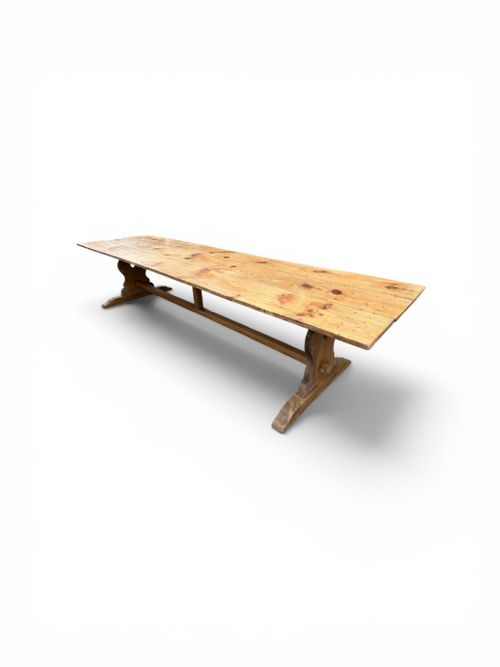


Honey Oak Refectory Table
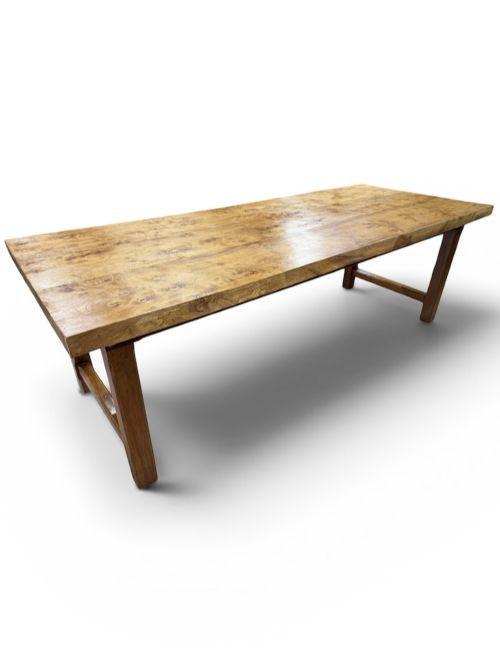
A honey oak refectory table brings warmth and scale to a room, offering a long timber surface built for gathering.
Honey Oak Refectory Table
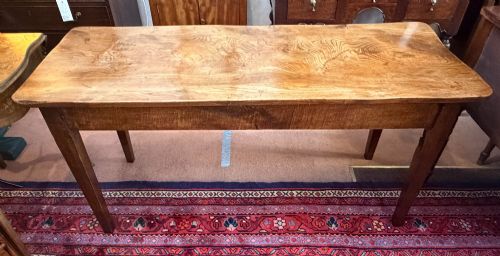
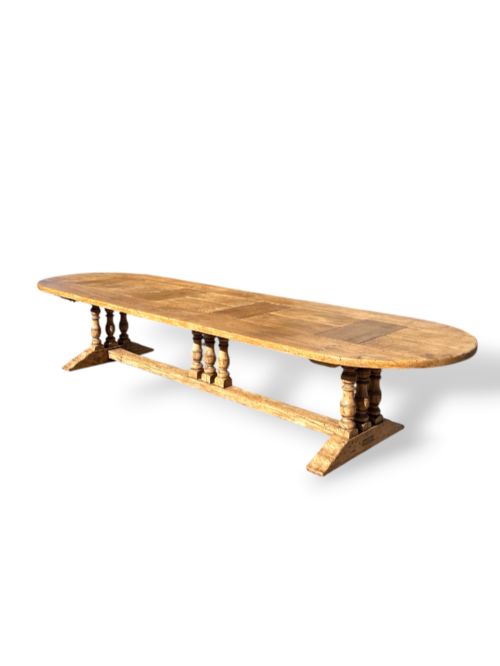
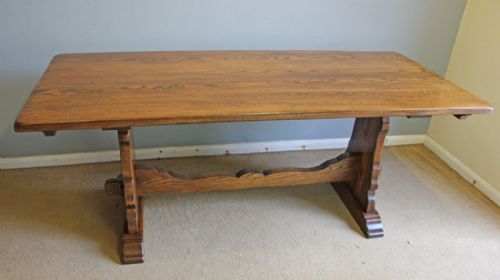
When you search for a honey oak refectory table, you are looking at substantial dining tables designed for long-term daily use. The pieces listed span the nineteenth century through the early twentieth century, taking the form of large kitchen, dining, and refectory formats.
You are most likely to meet French country and traditional English forms on this page. These tables often appear in oak, pine, fruitwood, elm, and general timber, frequently presenting a rustic farmhouse character.
The styles range from seventeenth-century interpretations and Gothic revival designs to French provincial and rustic farmhouse aesthetics. Many feature plank tops, and certain examples include practical additions such as a bread slide.
How they were made
The construction of these tables relies primarily on solid timber, with oak forming the core structural material alongside pine, elm, and fruitwood. Carpenters joined heavy planks to create expansive tops capable of withstanding heavy daily use.
Joinery techniques focus on sturdy framing and trestle supports to bear the weight of long timber surfaces. Master builders utilised traditional wooden joints rather than modern fixings to stabilise the substantial length of each refectory and farmhouse table.
One listed kitchen table even includes a built-in bread slide for slicing loaves right at the board.
What varies in quality
The distinction between standard examples and the finest pieces lies in the choice of primary timber and the integrity of the plank top. Superior tables display well-matched grain patterns across wide boards rather than mismatched timber sections.
Structural harmony also defines the better pieces, where the proportions of the base match the substantial weight of the top. Craftsmanship shows in the stability of the frame and the retention of original functional elements like bread slides.
The Honey Oak Refectory Table Glossary
- Refectory table
- A long, narrow dining table originally built for communal dining in monasteries or large halls. They provide substantial seating capacity along their length.
- Plank top
- A table surface constructed from multiple parallel boards of timber joined together. This method allows for the creation of very wide and long dining surfaces.
- Bread slide
- A pull-out wooden board integrated beneath the table top. Historically, this feature provided extra workspace for slicing bread or cooling loaves.
- Trestle table
- A table supported by two or more upright frames connected by a horizontal beam. This design offers maximum legroom along the length of the table.
- Fruitwood
- A dense timber sourced from fruit-bearing trees such as cherry or pear. Cabinetmakers valued it for its fine grain and warm tone.
Honey Oak Refectory Table: Frequently Asked Questions
What is a refectory table?
A refectory table is a long, narrow dining table traditionally used in communal halls for large gatherings and meals. They are characterised by their substantial length and sturdy wooden construction.
Today, these tables serve as the central feature in large kitchens and dining rooms. Their design accommodates numerous chairs along both sides.
How do I care for an oak table?
Caring for an antique oak table involves using soft cloths for dusting and avoiding harsh chemical cleaning products. Regular maintenance preserves the natural timber finish and grain.
Keep the wood away from direct heat sources and extreme moisture fluctuations to prevent splitting. Using placemats helps protect the historical surface from daily wear.
What periods do these tables come from?
The listings on this page span the nineteenth century and the early decades of the twentieth century. You will encounter pieces dating from the eighteen-seventies through to nineteen-thirty.
These dates encompass various revival styles and regional vernacular designs from France and England. Each period brings distinct characteristics in the timber selection and joinery.
What materials are used?
These tables are constructed primarily from solid oak, supplemented by pine, elm, and fruitwood. Carpenters selected these hardwoods and softwoods for their structural strength and durability.
The use of mixed timber species often reflects the regional traditions of French and English workshops. Oak remains the predominant material across the selection.