




Historical Marine Painting
Historical marine painting captures centuries of seafaring life, naval warfare and coastal trade through enduring works on canvas and paper.
Historical Marine Painting
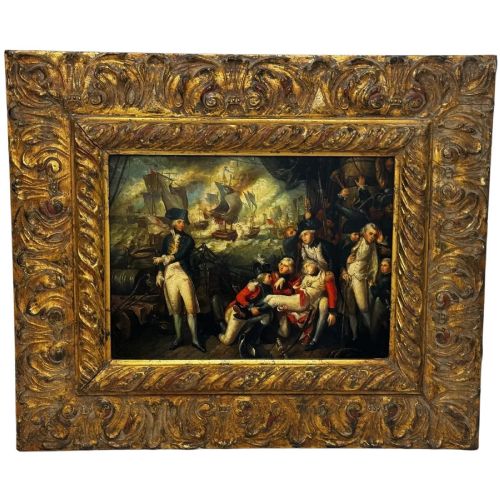
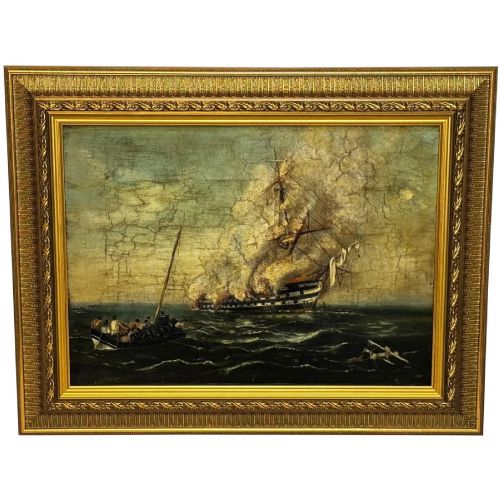
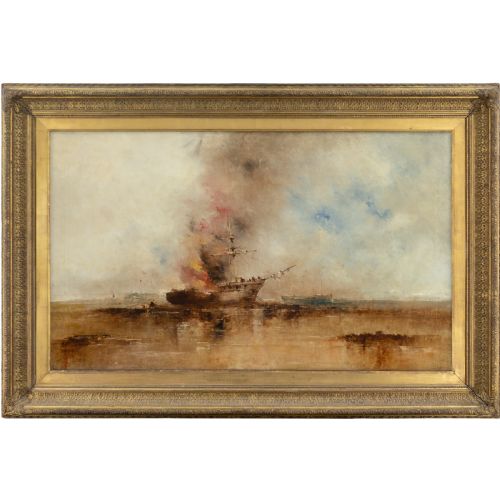
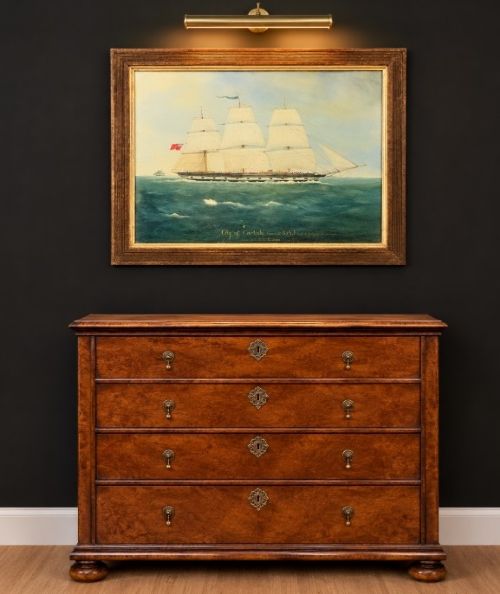
A historical marine painting records naval engagements, merchant shipping and coastal scenes from the seventeenth century onwards. These works document specific vessels, famous sea battles and busy harbours using traditional artistic mediums.
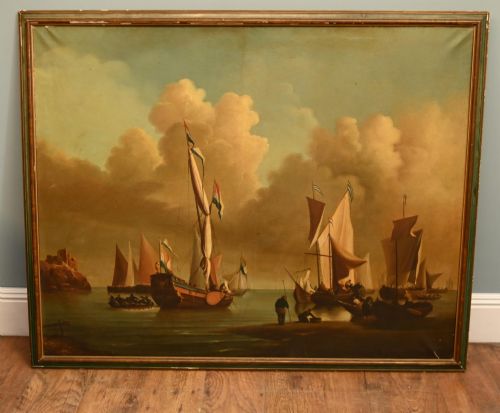
The selections span distinct periods including the Dutch Golden Age, Georgian era, Regency, Victorian and Edwardian times. Forms range from large oil paintings on canvas housed in giltwood frames to delicate watercolours on paper.
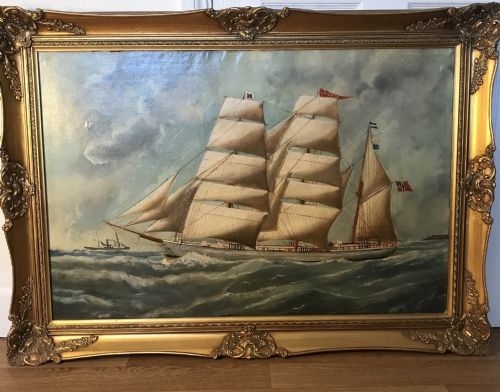
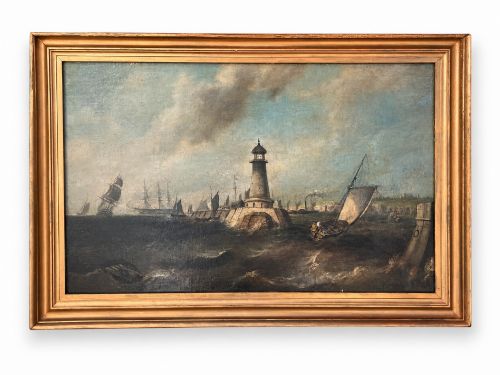
Works on this page include depictions of warships with raised sails, fishing docks, dockyards and river scenes along the Thames and Medway. Regional schools such as the Dutch School and British maritime traditions are widely represented.
Materials and technique
Artists painted primarily with oil paint on canvas or wood panels, whilst others utilised watercolour on paper. Canvases are frequently housed in period giltwood frames adorned with gold leaf.
Techniques combine precise draughtsmanship of rigging and hulls with atmospheric handling of rolling seas, skies and coastal light. The physical construction relies on stretched canvas, wooden stretchers and protective varnishes.
Historical Marine Painting Retail Price Guide 2026
Typical asking prices for historical marine painting among the pieces listed under this phrase on Sellingantiques today, from the lower quarter to the upper quarter. They describe what is for sale here now, not the wider market.
Materials recorded across these listings include oil on canvas, wood, paper and gold leaf.
Assessing quality
Quality rests upon the artist's command of maritime architecture, rigging accuracy and the convincing movement of water. Stronger examples display deft brushwork in rendering turbulent seas and atmospheric light.
The condition of the original paint surface and the presence of a period-appropriate giltwood frame influence the overall integrity of the piece. Attribution to a recorded hand or identifiable school also distinguishes finer works.
William McAlpine·Alfred George Morgan·Charles Napier Hemy·Vincenzo D’Esposito·Samuel Owen·William Wyld·Walter Duncan·Paul Jean Clays·Edward Fletcher·Frank Wasley·Richard Ball Spencer·Arthur David Mccormick·Hubert Thornley·Bertram Priestman·James Hardy·Jacob Knyff·Abraham Storck
The Historical Marine Painting Glossary
- Dutch Golden Age
- A period in seventeenth-century art renowned for detailed seascapes and shipping scenes. It established many conventions of maritime painting.
- Giltwood
- Wood carved and covered with a thin layer of gold leaf. It forms the decorative frames typical of finer antique oil paintings.
- Maritime
- Pertaining to the sea, navigation and shipping. This term describes subjects focused on vessels and coastal waters.
- Watercolour
- A paint consisting of pigment suspended in a water-based solution. Applied to paper, it creates translucent effects seen in coastal views.
Historical Marine Painting: Frequently Asked Questions
What periods do these paintings cover?
The works span from the seventeenth century through the Georgian, Regency and Victorian eras into the early twentieth century. Each era brings distinct stylistic approaches to maritime subjects.
Earlier centuries often focus on Dutch shipping and sea battles, whilst nineteenth-century works frequently portray steam and sail alongside naval history.
How are these paintings framed?
Many oil paintings are presented in period giltwood frames featuring gold leaf detailing. These frames often complement the age and origin of the artwork.
Watercolours on paper are typically mounted under glass with traditional surrounds to protect the delicate medium.
Where were these scenes typically set?
Locations range from the English coast and the River Thames to Dutch waters and international ports like Ostia. Scenes often capture specific docks, fishing villages and historical naval engagements.
Artists frequently recorded recognisable landmarks such as Plymouth Breakwater or Rochester on the Medway alongside passing merchant vessels and warships.
What subjects besides battles appear?
Beyond naval warfare and sea battles, artists recorded everyday maritime life, fishing boats and coastal trade. Harbour views, dockyard scenes and vessels at anchor are common.
Some works document specific historical events, such as troop transports heading to the Crimea or polar expeditions.