




Historical Equestrian Oil Painting
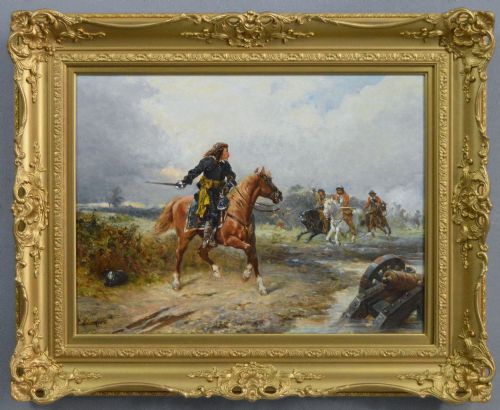
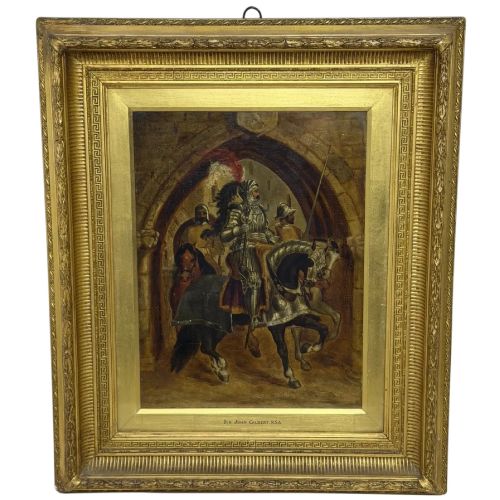
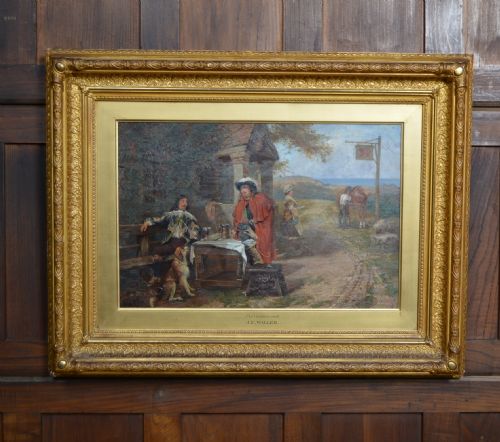
These historical equestrian oil painting works capture mounted figures and cavalry scenes across centuries, prized for their dramatic narrative and fine brushwork.
Historical Equestrian Oil Painting
A historical equestrian oil painting depicts mounted figures, cavalry skirmishes, and nobility on horseback across various periods from the seventeenth century onward. Buyers exploring historical equestrian oil painting find works attributed to specific schools and circles, portraying subjects like Renaissance knights and civil war pursuits.
The selections available lean heavily toward nineteenth-century academic and Victorian interpretations alongside earlier Flemish and Italian influences. Canvases frequently present grand landscapes populated by sportsmen or dramatic military encounters captured in traditional pigment.
Materials and construction
These works rely primarily on oil paint applied to canvas supports, utilising the rich consistency of the medium to build depth in both figures and background landscapes. Frames fashioned from giltwood, gesso, and wood complement the canvases, often matching the period of the painting itself.
Artists employed traditional brushwork techniques typical of academic and baroque schools to render the intricate details of horses, riders, and period attire. The interaction of oil on canvas allows for subtle shifts in light across the subjects, enhancing the dynamic movement inherent in equestrian scenes.
Material evidence across the selection highlights oil on canvas supports paired with ornate giltwood and gesso frames.
Assessing quality and execution
Quality in these works rests upon the anatomical accuracy of the horses and the compositional balance between the mounted figures and their surrounding landscape. Superior examples demonstrate confident handling of light and shadow, particularly in the rendering of fabrics, armour, and musculature.
The depth of historical narrative and the sophistication of the surrounding frame contribute significantly to the standing of an individual piece. Stronger paintings exhibit a cohesive relationship between the central equestrian subject and the broader historical context portrayed.
Jean Sobieski·Pieter Bout·Adriaen Frans Boudewyns·Heywood Hardy·J. E. Waller·Albert Ferdinand Le Dru·Abraham Cooper
The Historical Equestrian Oil Painting Glossary
- Oil on Canvas
- A painting medium where pigments suspended in drying oils are applied to stretched fabric. This combination allows for rich colour blending and lasting durability.
- Giltwood
- Wood carved and coated with a thin layer of gold leaf or metallic powder. It frequently frames historical canvases to enhance their visual presence.
- Gesso
- A paint mixture consisting of a binder mixed with chalk, gypsum, or pigment. It prepares wooden frames and panels for subsequent gilding or painting.
- Flemish Baroque
- An artistic style originating in the seventeenth century known for exuberant movement and rich colour. Works from this tradition often feature dramatic lighting and detailed landscapes.
Historical Equestrian Oil Painting: Frequently Asked Questions
How do I identify the period of a painting?
Dating relies on stylistic clues within the clothing, armour, and handling of the oil medium, alongside any framing materials typical of specific eras.
Examining the canvas preparation and the specific attribution details recorded in the title provides further historical context.
Where were these paintings displayed originally?
Such works traditionally hung in country houses, institutional libraries, and the reception rooms of nobility to signal historical lineage and military prowess.
Their grand scale and dramatic subject matter suited formal architectural settings designed to impress visitors.
How should I care for an antique canvas?
Protect the oil on canvas surface from direct sunlight and maintain stable indoor humidity levels to prevent cracking in the paint layer.
Dust the giltwood frame gently with a soft, dry brush without applying chemical cleaners to the aged surfaces.
What distinguishes academic art from school works?
Academic paintings follow rigorous training standards set by official academies, emphasising precise anatomy, historical accuracy, and polished finish.
School attributions indicate works produced within the sphere or tradition of a master rather than by their direct hand.