






Historic Woven Art
Historic woven art brings centuries of textile skill into modern spaces, offering large-scale wall hangings and detailed fragments that anchor a room with rich texture and deep colour.
Historic Woven Art
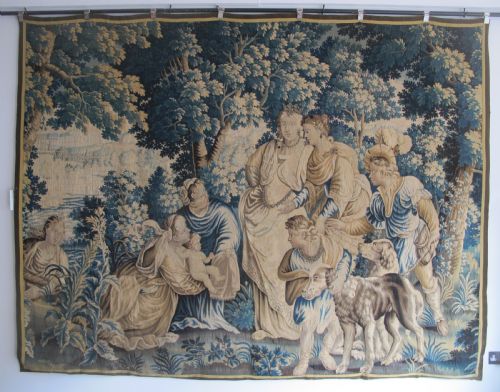
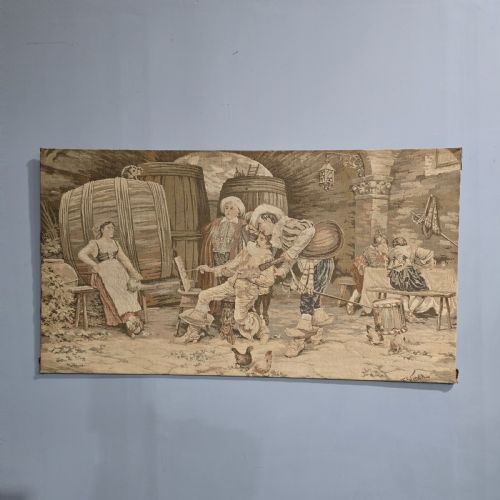
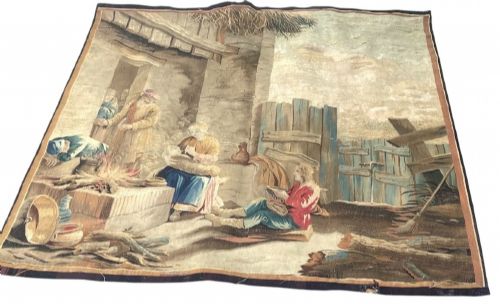
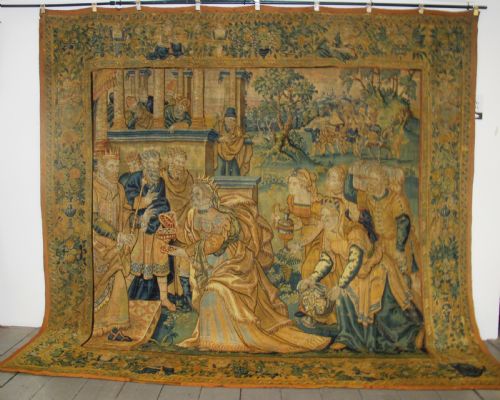
When you search for historic woven art, you encounter centuries of textile craft spanning the sixteenth through to the nineteenth century, with seventeenth-century Flemish pieces forming a core part of the selection. These items appear primarily as wall tapestries, verdure tapestry borders, framed fragments, and tapestry cushions that show classical, biblical, and rural scenes.
The objects on this page range from large wall hangings measuring over three metres down to smaller mounted fragments and cushion pairs. Flemish workshops dominate the earlier periods, whilst later examples include French Aubusson productions, Brussels panels after Teniers, and North German pieces.
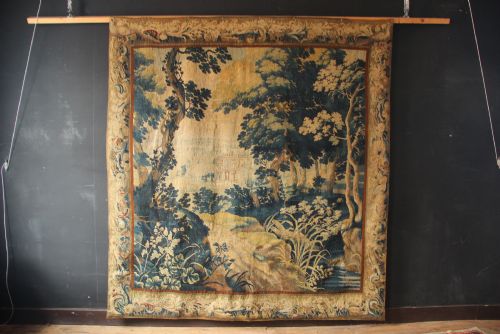
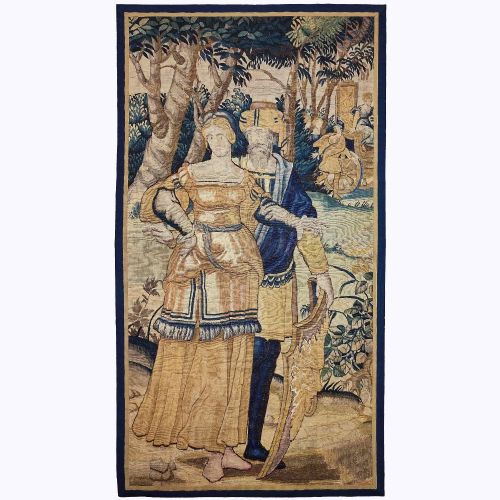
Buyers often meet verdure tapestries depicting lush foliage and landscapes alongside figural panels showing biblical or pastoral narratives. Whether presented as complete wall art or mounted textile fragments on linen, these works bring traditional and baroque aesthetics into interior schemes.
How they were made
These textiles rely on hand-weaving techniques utilising natural fibres such as wool, silk, and linen, often enriched with metallic thread for luminous detail. Artisans built up complex pictorial surfaces on looms, interlocking different coloured yarns to create pictorial depth.
Larger panels required substantial time and collaborative workshop labour, whilst smaller items like fragments and cushions repurposed surviving sections of older textiles. Some pieces are mounted on linen or wooden boards to provide structural support for display.
Historic Woven Art Retail Price Guide 2026
Typical asking prices for historic woven art among the pieces listed under this phrase on Sellingantiques today, from the lower quarter to the upper quarter. They describe what is for sale here now, not the wider market.
Some seventeenth-century weavers hid tiny signature marks within the dense foliage of verdure borders.
What varies in quality
Quality in these textiles depends upon the finesse of the weave, the preservation of the original yarns, and the complexity of the pictorial design. Finer works display intricate rendering of foliage, figures, and architectural details using sophisticated colour gradations.
Condition and completeness also separate pieces, as intact panels and signed works on board differ significantly from fragmented borders or heavily restored sections. The integration of silk and metallic thread often indicates higher status workshops and richer visual impact.
The Historic Woven Art Glossary
- Verdure tapestry
- A wall hanging featuring a landscape dominated by trees, plants, foliage, and sometimes animals or distant buildings. These green-toned scenes were popular in Flemish weaving centres.
- Tapestry fragment
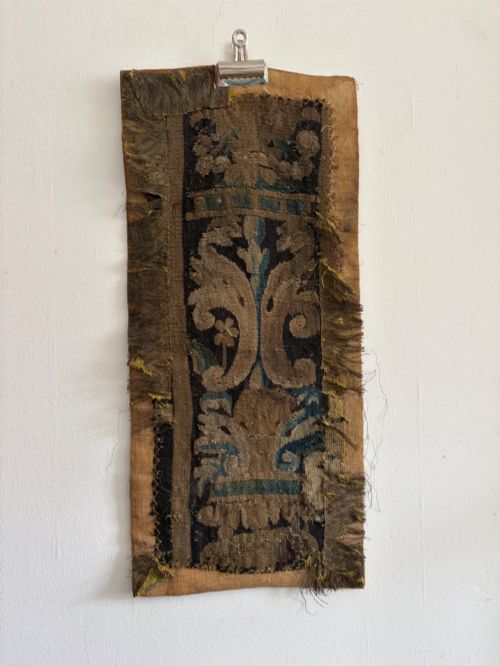
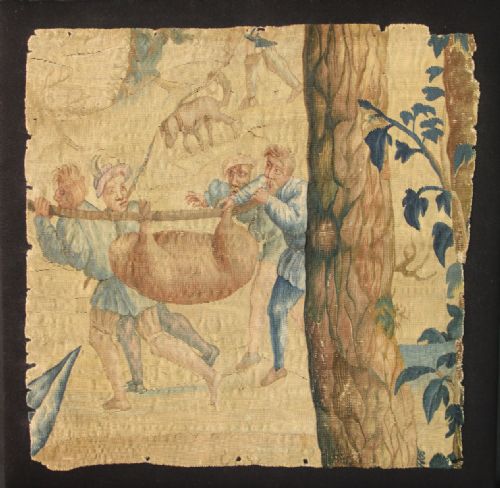
- A surviving portion of a larger textile wall hanging, often mounted for display. Fragments preserve specific design motifs or figures from damaged or disassembled panels.
- Metallic thread
- Fine strands of gold, silver, or gilt metal wrapped around a core fibre and woven into textiles. This material adds reflective highlights and signifies high status production.
- Aubusson tapestry
- A textile produced in the French town of Aubusson, known for fine pictorial weaving. These pieces often feature pastoral or classical scenes in refined colour palettes.
Historic Woven Art: Frequently Asked Questions
How do I hang a large tapestry safely?
Large wall hangings require even distribution of weight across the upper edge to prevent distortion of the weave. Dealers often recommend professional framing or mounting a supportive fabric sleeve to the reverse for hanging on a concealed baton.
Direct sunlight and heavy dampness must be avoided to protect delicate wool and silk fibres from fading or deterioration over time.
What is a verdure tapestry?
A verdure tapestry is a wall hanging that depicts a landscape or garden scene filled with lush foliage, trees, and plants. These botanical compositions often include small animals or distant architectural elements.
Originating largely from Flemish workshops, they were designed to bring the feeling of the outdoors into seventeenth-century interiors.
How should I clean historic woven art?
Historic textiles require specialist conservation rather than domestic cleaning methods. Gentle surface dusting with a soft brush can remove loose particles, but washing or chemical treatments should be left to professional conservators.
Protecting the pieces behind glass or mounting them securely helps minimise dust accumulation in everyday settings.
Can I use tapestry cushions on furniture?
Tapestry cushions offer a way to incorporate historic textiles into daily domestic spaces. Placing them on seating where friction is low helps preserve the delicate wool and silk yarns.
Rotating the cushions periodically ensures even wear across the woven surface.