




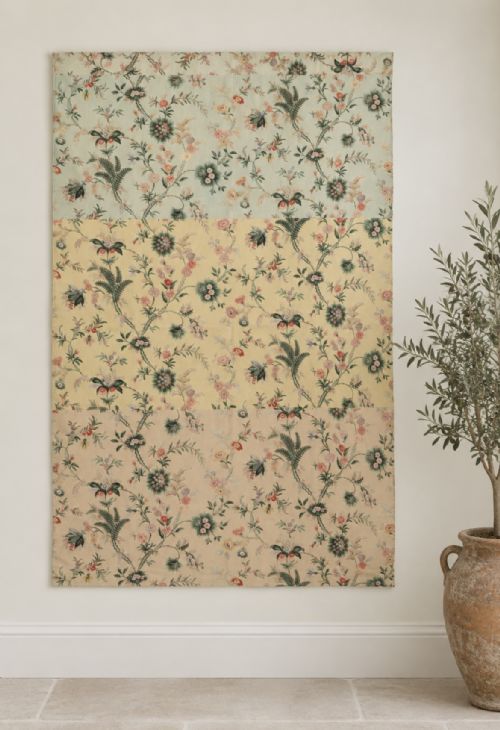
Historic Textile Hanging
A historic textile hanging brings centuries of handwork into a room, offering large woven panels, crewelwork, and needlepoint fragments.
Historic Textile Hanging
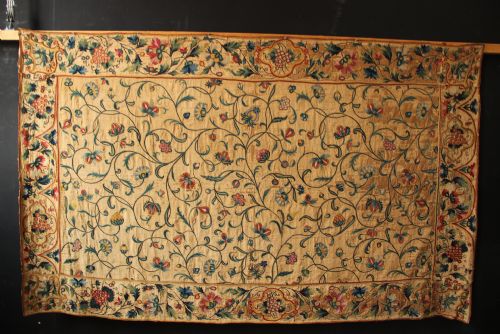
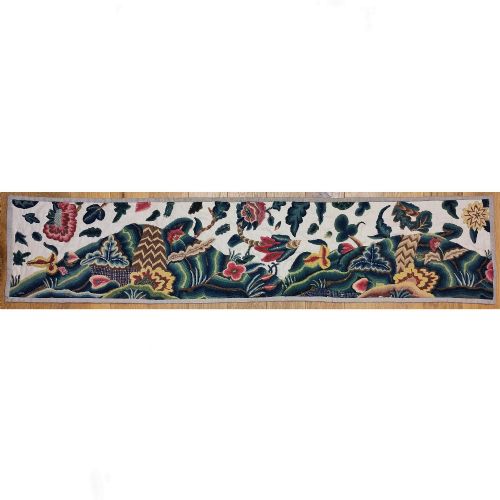
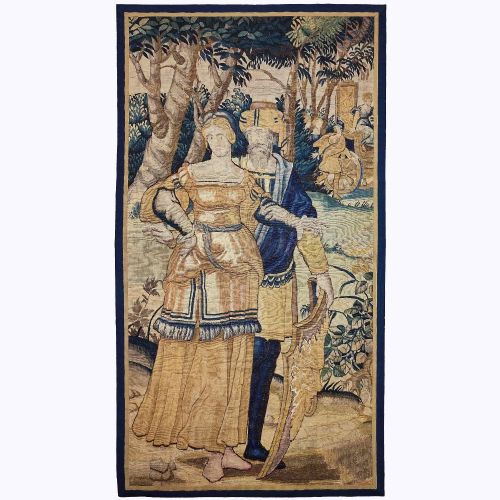
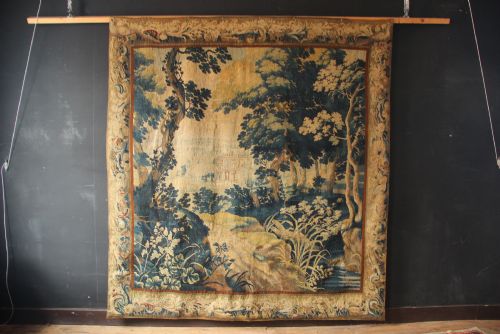
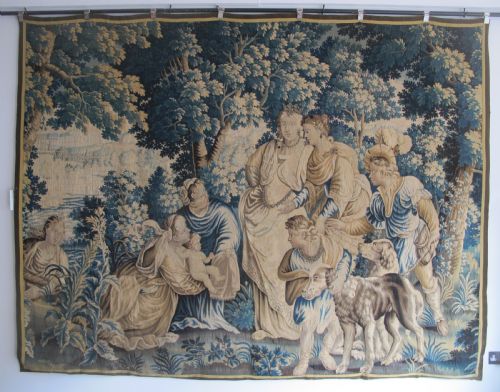
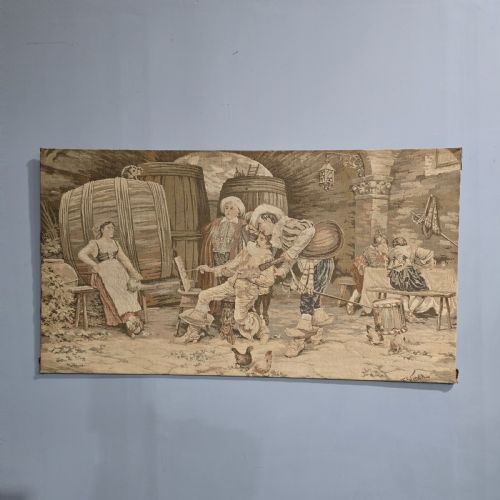
A historic textile hanging encompasses wall tapestries, crewelwork panels, flags, and ecclesiastical vestments originating from the sixteenth century onward. These pieces range from large room-defining Flemish verdure landscapes to smaller mounted fragments and cushion covers.
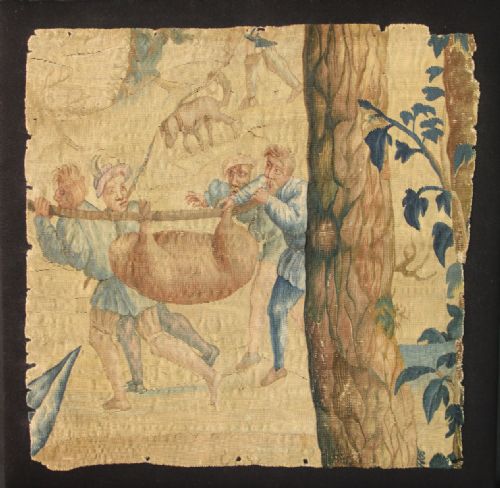
Buyers are most likely to encounter Flemish tapestries from the seventeenth century, English crewelwork panels, and structured velvet or silk hangings. Many pieces preserve only a portion of a larger original composition, mounted to linen or framed for display.
The material form varies from woven wool and silk wall tapestries to embroidered linen panels, velvet copes, and printed cotton flags spanning multiple European traditions.
How they were made
Makers utilised natural fibres including wool, silk, and linen, often combining them with metallic thread to catch the light within woven and embroidered compositions. Artisans built heavy pile velvets, fine crewelwork embroidery on linen grounds, and complex warp-and-weft tapestries.
Many large panels were hand-woven on looms in workshops across Flanders, France, and England, following detailed cartoons designed by artists. Smaller panels and cushions relied on needlepoint and surface embroidery executed by hand with dyed wool and silk threads.
Historic Textile Hanging Retail Price Guide 2026
Typical asking prices for historic textile hanging among the pieces listed under this phrase on Sellingantiques today, from the lower quarter to the upper quarter. They describe what is for sale here now, not the wider market.
Styles represented include Flemish Baroque, Jacobean, French Baroque, and English Country across various wall hangings and cushions.
What varies in quality
State of preservation significantly influences a textile, with complete panels or well-mounted fragments holding greater visual coherence than heavily patched or structurally compromised pieces. The complexity of the palette, particularly the survival of original dyed wools and metal threads, determines the visual depth of the hanging.
Teniers
The Historic Textile Hanging Glossary
- Verdure tapestry
- A wall hanging dominated by botanical and landscape motifs, typically featuring trees, foliage, and animals woven in greens and blues. These were widely produced in Flemish and European workshops during the sixteenth and seventeenth centuries.
- Crewelwork
- A style of surface embroidery using wool yarn on a linen or cotton ground. Early English examples often display dense floral and scrolling patterns executed in varied stitches.
- Cisé silk velvet
- A velvet where the pattern is created by cutting some pile loops and leaving others uncut. This technique produces contrasting textures within the fabric surface.
- Tapestry fragment
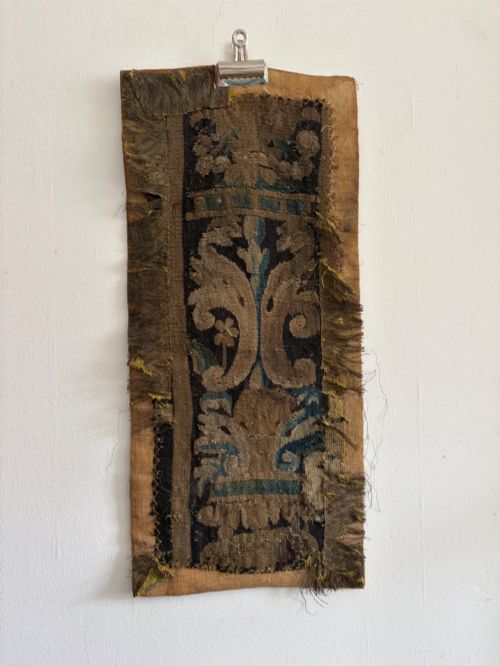
- A surviving portion of a larger wall hanging, often cut down and subsequently mounted onto linen for modern display. These pieces preserve specific pictorial elements from otherwise lost compositions.
- Ecclesiastical textile
- Fabrics created for church use, such as the Spanish velvet cope listed here. They often incorporate rich materials like silk velvet and metallic thread.
Historic Textile Hanging: Frequently Asked Questions
How do I hang a heavy textile safely?
Large tapestries and heavy velvet panels require even weight distribution across the top edge. A common method involves sewing a heavy-duty cotton sleeve to the back and sliding a flat wooden batten through it, which is then secured to the wall.
Smaller fragments mounted to linen or framed in oak can be hung using standard picture-hanging hardware suited to their total weight. Direct exposure to strong sunlight should be avoided to protect dyed wool and silk fibres from fading.
What is the difference between crewelwork and tapestry?
Crewelwork is an embroidery technique where wool yarn is stitched onto an existing woven base fabric, such as linen. This method allows for raised surface textures and flowing floral designs executed by hand.
Tapestries are woven textiles where the design is built directly into the fabric structure on a loom by interlacing warp and weft threads. They form a single cohesive fabric rather than an embroidered surface.
Can textile hangings be cleaned?
Historic textiles require specialised conservation cleaning rather than standard domestic washing methods. Surface dust can be removed very gently using a low-suction vacuum with a mesh screen barrier.
Water or chemical cleaning risks damaging brittle fibres, fragile metallic threads, and historic dyes. Professional textile conservators should be consulted for deeper restoration or cleaning work.
How are periods identified in antique textiles?
Dating relies on stylistic clues within the design, such as Baroque architectural framing, Flemish Renaissance landscape conventions, or Jacobean floral motifs. Material analysis of the underlying linen, wool types, and dye characteristics also provides strong chronological indicators.
Comparing construction techniques with dated examples in museum collections helps narrow down the century of production.