






Historic Silk Embroidery
Historic silk embroidery brings centuries of delicate handiwork into your home, offering framed panels, samplers and embroidered borders rich in detail.
Historic Silk Embroidery
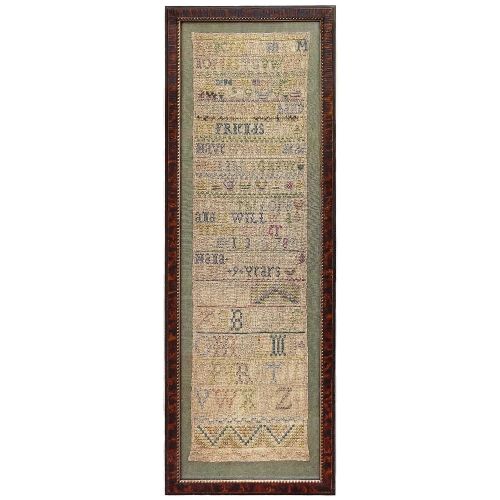
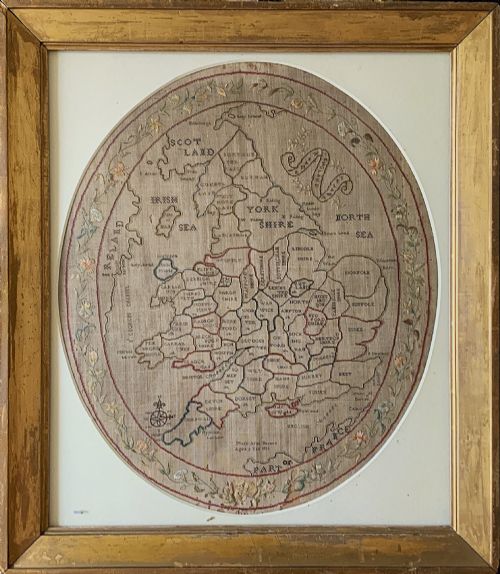
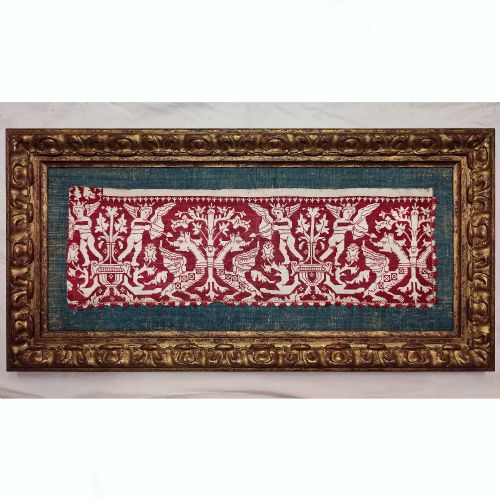
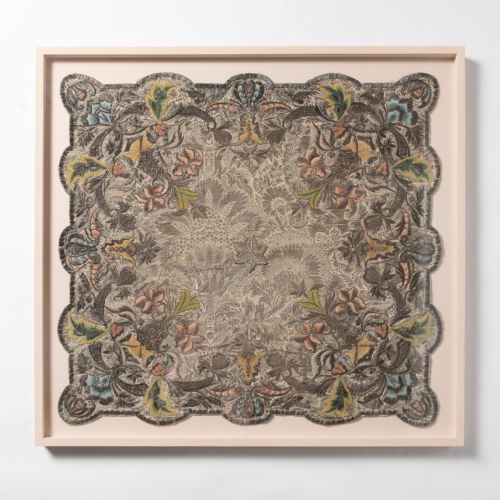
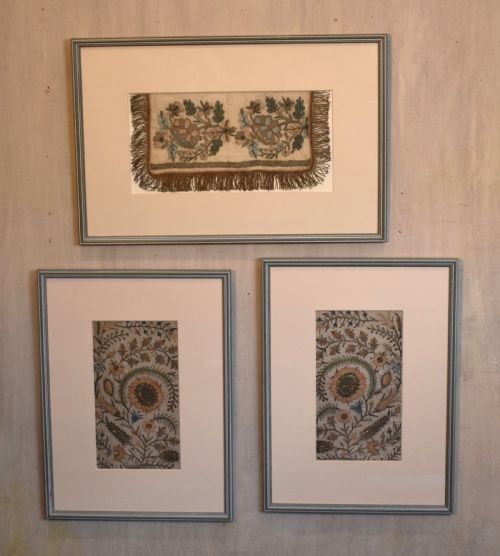
Map samplers worked by young girls and framed pictorial panels form a significant portion of what appears on this page. These works combine silk thread with linen and wool, frequently preserved behind glass within wood or giltwood frames.
How they were made
Maker's materials typically centre on silk thread stitched onto linen grounds, sometimes supplemented with wool and mounted in timber frames. Early pieces often feature delicate needlepoint or embroidered borders worked by hand.
Makers housed these fragile textiles behind glass and secured them within period frames, including octagonal giltwood designs, to protect the delicate threads from damage.
Historic Silk Embroidery Retail Price Guide 2026
Typical asking prices for historic silk embroidery among the pieces listed under this phrase on Sellingantiques today, from the lower quarter to the upper quarter. They describe what is for sale here now, not the wider market.
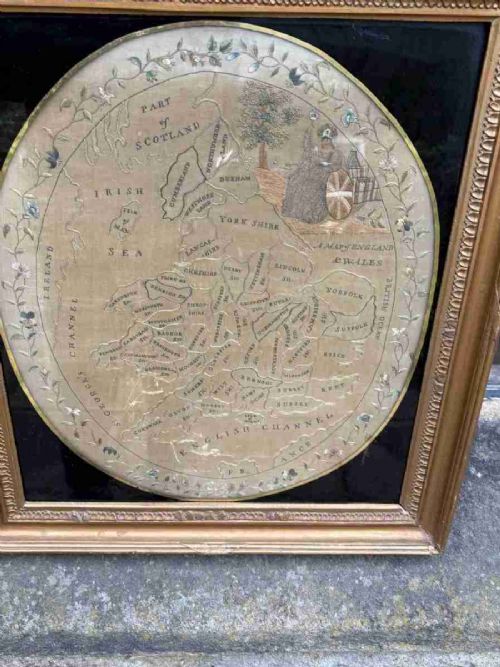
Nine-year-old Mary Banion carefully stitched an entire map of England and Wales in eighteen hundred, ensuring posterity could judge her geography alongside her needlework.
What varies in quality
Quality depends upon the clarity of the stitching, the preservation of the silk threads and the integrity of the original backing material. Finer examples display precise lettering, well-rendered figures and maps with legible cartography.
The condition of the framing and the survival of documented makers' names or dates further separate exceptional panels from standard decorative fragments.
Mary Banion·Mary Greening·Ann Hodson·Sarah Baker·Martha Hall·Mary Pinfold
The Historic Silk Embroidery Glossary
- Sampler
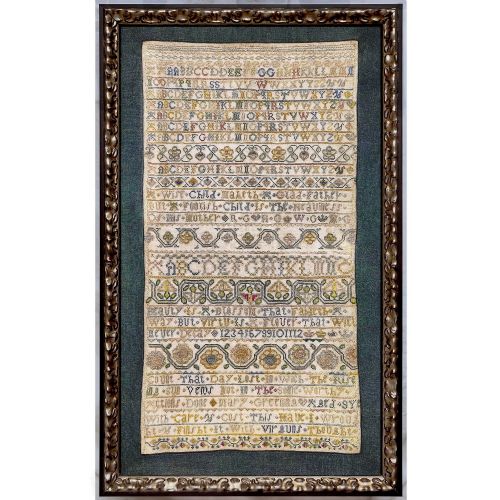
- A piece of needlework produced as a demonstration or test of skill in various stitches. These often feature alphabets, numbers, verses or genealogical records.
- Giltwood
- Wood carved and covered with a thin layer of gold leaf or gold paint. This material is commonly found on frames housing finer eighteenth and nineteenth century panels.
- Needlepoint
- A type of canvas work embroidery where yarn or thread is stitched through a stiff open weave canvas. It creates a dense, durable surface pattern.
- Band sampler
- A long, narrow strip of linen worked with a horizontal sequence of diverse embroidery patterns. They were popular in the seventeenth and eighteenth centuries for recording stitch techniques.
Historic Silk Embroidery: Frequently Asked Questions
How should I hang antique silk embroidery?
Keep these framed textiles away from direct sunlight and damp environments to protect the fragile silk threads from fading or degradation.
Secure them using appropriate wall fixings that match the weight of the timber or giltwood frames.
What is a map sampler?
A map sampler is an educational needlework piece depicting geographical regions, such as England and Wales, stitched by young scholars.
These pieces often include cartouches, compass roses and the name and age of the maker alongside the date.
How do I identify a Georgian sampler?
Georgian samplers typically display specific stylistic traits such as neat alphabetical rows, floral borders and precise cartography characteristic of the period between seventeen fourteen and eighteen thirty.
Many bear the stitched name of a young girl along with a date or the name of her school.
Can I clean historic textile art?
Professional textile conservators should handle any cleaning or restoration required for these delicate historical works.
Attempting amateur cleaning can easily destroy the aged silk threads and linen grounds.