



Historic Linen Embroidery
Historic linen embroidery brings centuries of domestic needlecraft into your home through framed samplers, crewelwork panels and Greek island bedsheet borders.
Historic Linen Embroidery
Historic linen embroidery comprises textile art, needlework samplers and framed wall hangings executed on a linen ground. These pieces originate from the seventeenth, eighteenth and nineteenth centuries, spanning Georgian, Victorian, Stuart and Jacobean traditions.
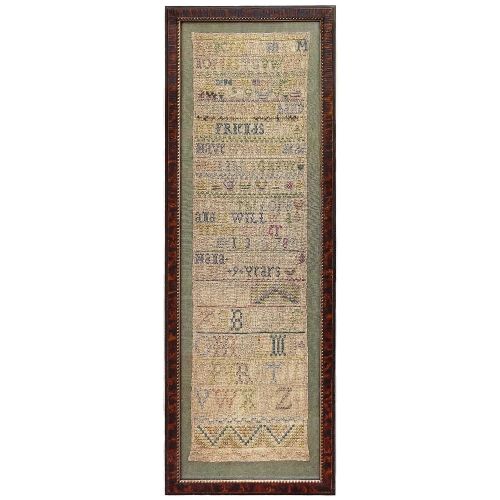
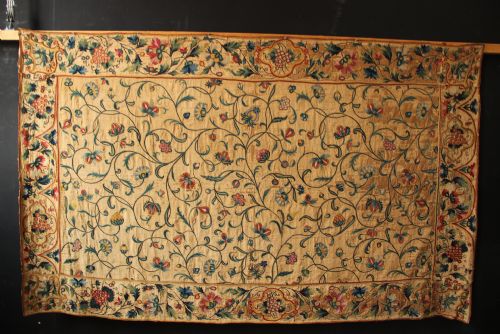
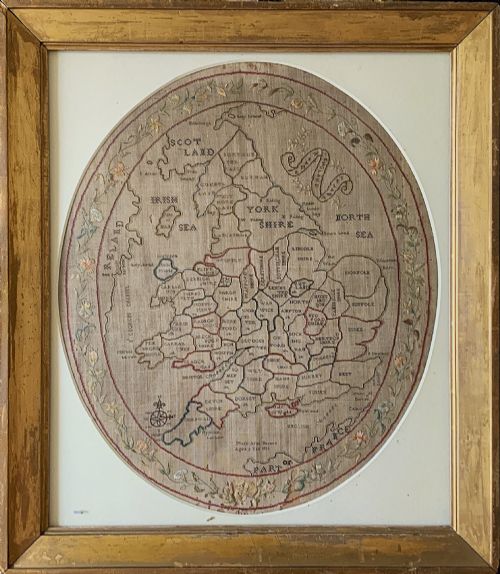
The most common examples you will encounter are needlework samplers worked by young girls, such as schoolgirl map samplers of England and Wales or verse samplers detailing the commandments and education. Crewelwork panels and embroidered borders also appear frequently among these textiles.
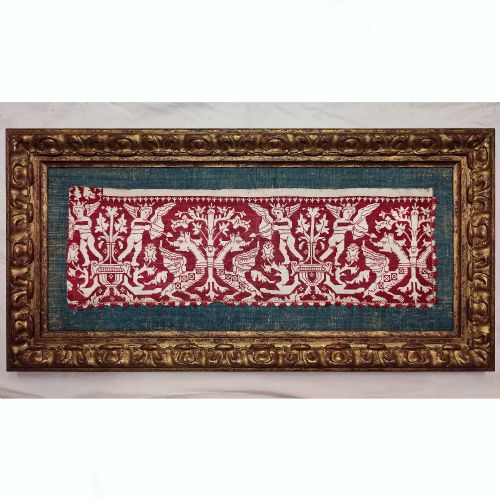
Makers ranged from professional workshops producing Italian borders and Greek folk art to children like nine-year-old Mary Banion and thirteen-year-old Ann Hodson working stitched exercises. Their survival offers a direct record of domestic handwork across successive centuries.
How they were made
Needleworkers utilised woven linen as the foundation fabric for stitching maps, alphabets, borders and pictorial scenes. Wool and silk threads provided the colour and texture for the diverse stitches employed across each composition.
Makers incorporated specialised threads onto the linen ground, sometimes combining crewel wools with fine silk thread. Framed textile pieces frequently retained glass and wooden surrounds to protect the delicate fibres from atmospheric damage.
Historic Linen Embroidery Retail Price Guide 2026
Typical asking prices for historic linen embroidery among the pieces listed under this phrase on Sellingantiques today, from the lower quarter to the upper quarter. They describe what is for sale here now, not the wider market.
Listings span the seventeenth, eighteenth and nineteenth centuries, featuring materials such as linen, wool, silk thread and glass.
What varies in quality
The skill of the needleworker dictates the refinement of the execution, from simple schoolgirl exercises to exceptionally fine early English crewelwork. Greater complexity in design, such as detailed cartography or intricate floral motifs, elevates the accomplishment of the piece.
The preservation of the linen ground and the stability of the silk and wool threads determine the enduring integrity of the textile. Complete legibility of stitched inscriptions, dates and maker signatures preserves the historical documentation embedded in the work.
The Historic Linen Embroidery Glossary
- Sampler
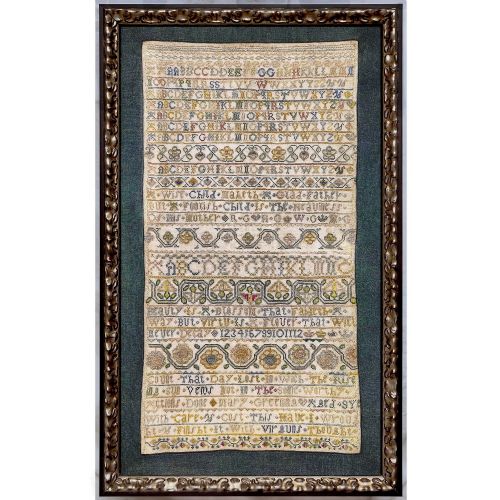
- A piece of needlework demonstrating various stitches and motifs, traditionally worked by young girls to display proficiency. These often include alphabets, numerals, verses and the maker's name with an age or date.
- Crewelwork
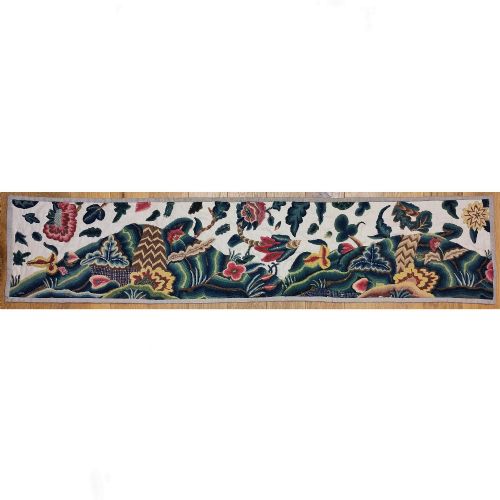
- Embroidery executed with wool yarn on a linen or cotton twill ground. This technique creates textured, densely stitched designs associated with Jacobean and Stuart styles.
- Band sampler
- A long, narrow format containing horizontal rows of distinct embroidery patterns and stitches. This layout represents an earlier tradition before the square sampler format became standard.
- Needlepoint
- Embroidery stitched onto an open-weave canvas or linen ground where the threads cover the entire background. Map samplers frequently employ this technique to delineate counties and regions.
- Folk art
- Traditional decorative work produced within a community cultural tradition rather than academic fine art. Greek island bedsheet borders and regional samplers fall into this category.
Historic Linen Embroidery: Frequently Asked Questions
What is a schoolgirl sampler?
A schoolgirl sampler is a piece of needlework stitched by a child or young teenager as part of her education. These textiles typically display alphabets, numbers, moral verses and decorative motifs.
Many examples include the maker's name, age and date, providing a direct personal record of the child. Subjects ranged from simple lettering to complex maps of England and Wales.
How old is crewelwork?
Crewelwork embroidery dates back centuries, with notable English examples surviving from the seventeenth century onward. The technique utilises wool yarn on linen foundations to create rich floral and pictorial designs.
Stitchers applied various specialised stitches to build texture and depth within Jacobean and Stuart style panels and hangings. These textiles were traditionally used for furnishings and wall decoration.
How should I display antique textiles?
Antique textiles require protection from direct sunlight and excessive humidity to prevent the linen and silk threads from degrading. Professional framing behind glass safeguards the fragile fibres from dust and handling.
Keep framed samplers and wall hangings away from heat sources and damp exterior walls. Proper mounting ensures the weight of the textile is supported evenly across the linen ground.
What is a band sampler?
A band sampler is an early needlework format featuring horizontal bands of different embroidery patterns and stitches. Needleworkers stitched these strips side by side as a reference library of techniques.
This linear style preceded the more pictorial and square samplers that gained popularity in later centuries. They demonstrate the technical proficiency required in historic needlecraft.
Can I date a sampler without a year?
Dating an undated sampler relies on analyzing the style of the lettering, the framing materials, and the types of stitches used. The format of the composition and the specific motifs often point to a particular century or period.
Experts compare the linen ground and thread composition against dated examples from the same stylistic tradition. Physical clues in the wood and glass of the frame also offer chronological context.