


Historic Landscape Painting
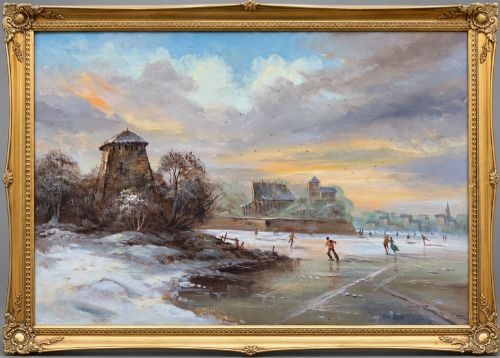
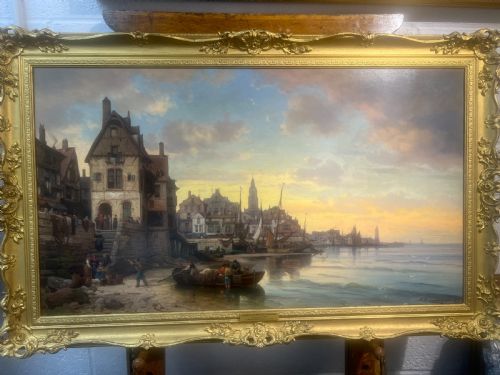
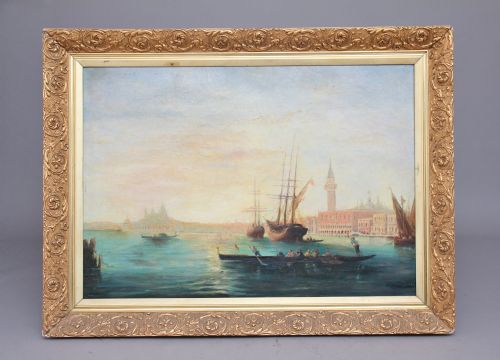
Historic landscape painting captures places of note, ranging from Yorkshire towns to Venetian lagoons, executed in oil or watercolour.
Historic Landscape Painting
A historic landscape painting records specific geographic locations, architecture, and river views from past centuries. When searching for historic landscape painting, buyers encounter works depicting British castles, London landmarks, and continental scenes.
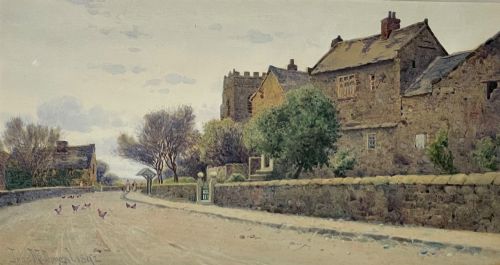
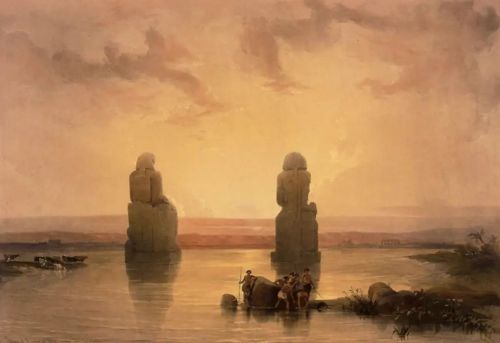
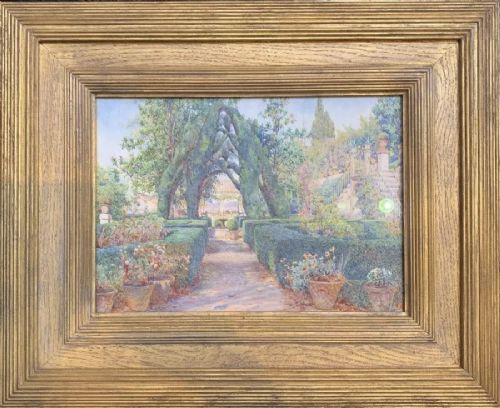
The selections span the eighteenth century through the early twentieth century, taking the form of framed watercolours on paper and oil paintings on canvas or wood panels. Many record recognisable townscapes, village streets, and formal gardens.
Victorian and Edwardian examples dominate the selection, alongside earlier Georgian compositions and early twentieth-century views. Subjects stretch from Yorkshire and the Wirral to Seville, Venice, and Paris.
Materials and technique
Artists applied oil paint to canvas or wood panels, building rich textures and deep tones for architectural and river scenes. Watercolours on paper offered a lighter medium well suited to detailed topography and atmospheric light.
Framing typically involved timber mouldings, occasionally accented with gold leaf to complement the work. Support materials such as paper and canvas were secured within protective glass or traditional wooden frames.
Gentlemen playing bowls and birds feeding outside St Martin-in-the-Fields share space with grand palaces and ancient castles.
Distinctions in quality
Top-tier examples demonstrate confident brushwork, precise architectural perspective, and effective control of light and atmosphere. Weaker works often rely on formulaic compositions and stiff, unconvincing spatial depth.
The reputation of the artist and the documentary value of the specific location influence the standing of a piece. Signed works with clear provenance and skilled handling of pigment command greater attention than anonymous student copies.
John McDougal·David Roberts·Ernest Arthur Rowe·Charles William Wyllie·Frank Moss Bennett·Rowland Henry Hill·Henry Barlow Carter·Beatrice Parsons·John Thistle·Peter de Wint
The Historic Landscape Painting Glossary
- Watercolour
- A painting method where fine pigment is suspended in a water-based, translucent solution applied to paper.
- Canvas
- A heavy woven fabric stretched across a wooden frame to serve as a sturdy support for oil paint.
- Oil paint
- A slow-drying medium composed of pigments mixed with drying oils, allowing for blended tones and heavy texture.
- Gold leaf
- Thinly hammered gold beaten into sheets used to gild picture frames and decorative elements.
- Italianate style
- An artistic approach influenced by classical Italian landscapes, featuring picturesque ruins, classical buildings, and gentle rivers.
Historic Landscape Painting: Frequently Asked Questions
What periods do these paintings cover?
The works span from the eighteenth century through the Victorian and Edwardian eras up to the early twentieth century.
Most pieces date from the nineteenth and early twentieth centuries, reflecting changing artistic approaches to topography and nature.
How do oil and watercolour differ?
Oil paintings utilise pigment bound in oil on canvas or wood, creating rich colour depth and durable textured surfaces.
Watercolours employ water-soluble pigments on paper, yielding translucent washes and delicate atmospheric effects.
Where were these landscape views set?
Subjects include British landmarks such as Windsor Castle, London streets, Yorkshire towns, and Welsh coastal forts.
Continental locations like Venice, Seville, Paris, and Granada also feature prominently in the available works.
How should framed watercolours be hung?
Watercolours on paper require protection from direct sunlight to prevent fading of the delicate pigments over time.
Displaying them away from moisture sources and behind conservation glass preserves both the paper and the surrounding frame.