





Historic Firearms
Historic firearms are tangible pieces of military and technological heritage, sought after for their intricate mechanisms and connection to past conflicts.
Historic Firearms
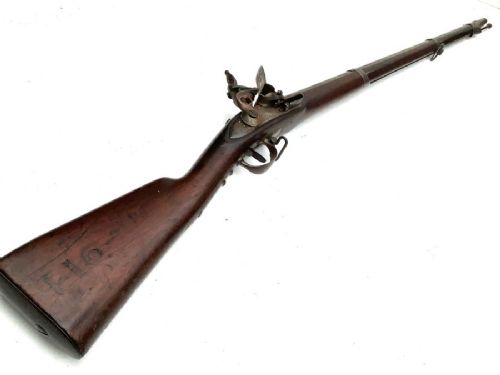
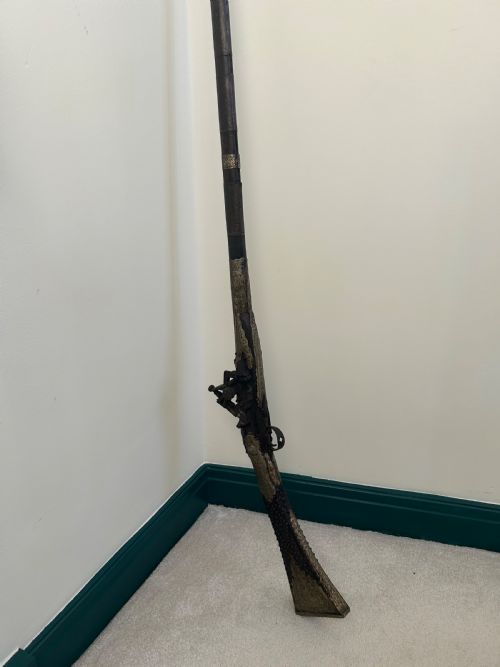
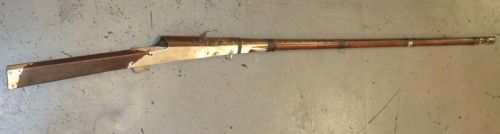
When buyers search for historic firearms, they encounter a range of military and civilian pieces spanning the eighteenth and nineteenth centuries. These items encompass heavy infantry muskets, delicate duelling pistols, and tribal longarms from various global origins.
The most common forms found on this page are flintlock and matchlock muskets alongside single and cased pairs of pistols. Examples hail from British, French, Belgian, Ottoman, and Indian workshops, reflecting diverse regional manufacturing traditions.
Dating ranges from the early eighteenth century through the Napoleonic period and into the nineteenth century. Pieces often carry specific associations with military service, colonial expansion, or tribal craftsmanship.
Materials and construction
Construction relies heavily on forged steel and iron for barrels and lock mechanisms, combined with wooden stocks shaped from walnut, mahogany, and other hardwoods. Brass often appears in mounts, trigger guards, and decorative bands.
Decoration techniques include cast barrel ornamentation, gilt inlay, and silver wire or sheet parc on the stocks. Matchlock and flintlock mechanisms demonstrate the complex mechanical ingenuity of the period.
Historic Firearms Retail Price Guide 2026
Typical asking prices for historic firearms among the pieces listed under this phrase on Sellingantiques today, from the lower quarter to the upper quarter. They describe what is for sale here now, not the wider market.
Some nineteenth century pistols survived so well they still wait quietly in their original velvet-lined wooden cases.
Factors of quality
Quality rests in the originality of the components and the clarity of maker marks or proof stamps on the lockplate and barrel. Engraving depth and the precision of decorative metalwork further separate standard military issue from bespoke civilian pieces.
The condition of the wooden stock, particularly regarding repairs, shrinkage, or the retention of original surface finishes, plays a major role in the overall integrity of the piece.
Sargant & Son·H.W. Mortimer & Son·Dumarest
The Historic Firearms Glossary
- Flintlock
- An ignition mechanism utilising a piece of flint held in a cock to strike a steel frizzen, creating sparks to ignite the priming powder. This system dominated military and civilian arms for centuries.
- Matchlock
- An early type of firearm ignition where a slow-burning match is lowered into a pan of gunpowder by pulling a lever. It represents one of the earliest mechanical methods of firing a gun.
- Musket
- A muzzle-loading shoulder gun designed for infantry use. These long-range weapons were the standard equipment for soldiers throughout the eighteenth and nineteenth centuries.
- Toradar
- A traditional South Asian matchlock musket characterised by a long, slender wooden stock and distinctive barrel bands. These longarms were widely used across the Indian subcontinent.
- Jezail
- A type of long-gun used in the Middle East and Central Asia, typically featuring a distinctive curved stock and matchlock or flintlock firing mechanisms. They are frequently associated with tribal warfare on the North-West Frontier.
Historic Firearms: Frequently Asked Questions
What is a flintlock pistol?
A flintlock pistol is a hand-held firearm that uses a flint and steel mechanism to create a spark and ignite gunpowder.
These weapons were commonly carried by officers and civilians for personal defence during the Georgian and Napoleonic eras.
How do matchlock and flintlock differ?
Matchlock firearms use a slow-burning cord held in a serpentine lever to ignite the powder charge manually.
Flintlock arms replace this cord with a spring-loaded flint that strikes a steel plate automatically upon pulling the trigger.
Are these firearms functional?
These items are collected and displayed as historical artefacts and antique pieces of metalwork.
Owners typically preserve them in their current mechanical state rather than attempting to load or fire them.