





Historic English Watercolour
A historic english watercolour captures topography and architecture across centuries using paper, pigment and ink.
Historic English Watercolour
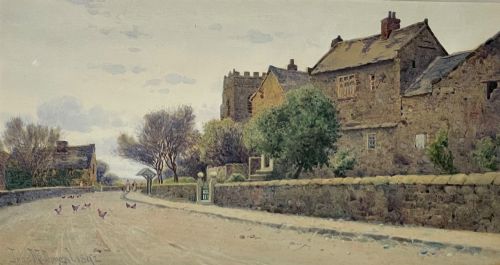
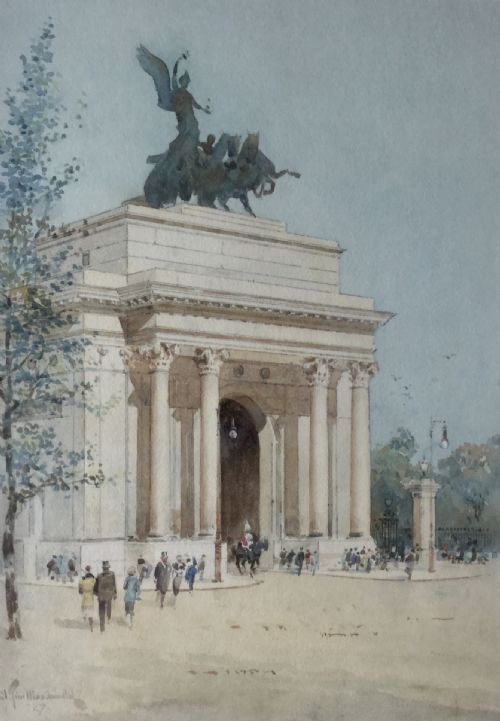
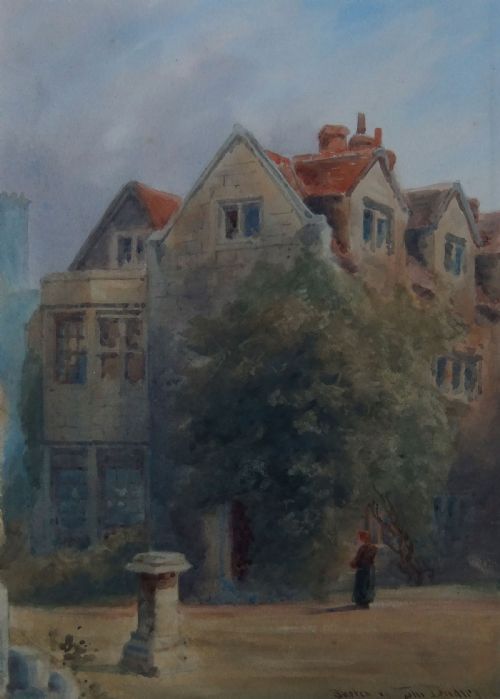
A historic english watercolour records landscapes, townscapes, architectural interiors and portraits executed on paper. These paintings span from the eighteenth century through the nineteenth century and into the early twentieth century.
The most frequent examples encountered on this page originate in the Victorian period and the nineteenth century, alongside works from the Georgian, Edwardian and early twentieth century eras.
Subjects range from Yorkshire landmarks and London street scenes to provincial village views, historical inns and English school compositions.
Materials and execution
Surviving examples are preserved under glass and framed in materials such as gilt wood to protect the delicate paper supports.
The inventory records architectural interiors, townscapes and rural landscapes framed in glass and gilt wood.
Quality and execution
Quality rests in the precision of the draughtsmanship and the handling of pigment washes across the paper surface. Stronger works demonstrate confident control of light, shadow and spatial depth.
Condition of the paper support and the clarity of the pigment contribute to the standing of an individual painting.
John McDougal·Percy Robertson·Henry Barlow Carter·Rowland Henry Hill·Fred Stead·Beatrice Parsons·Tom Dudley·Owen Bowen·John Thurtle·Jack Cross
The Historic English Watercolour Glossary
- Watercolour paint
- A medium consisting of colour pigments suspended in a water-based solution, applied to paper surfaces.
- Sepia ink
- A brown ink derived from the cuttlefish, utilised for monochrome or tonal wash drawings.
- Gilt wood
- Wood coated with a thin layer of gold leaf or gold-coloured paint, frequently utilised for framing historic works.
- Topographical
- A style of painting focused on the accurate depiction of specific places, buildings or landscapes.
Historic English Watercolour: Frequently Asked Questions
What periods do these watercolours cover?
The pieces span multiple eras, beginning in the eighteenth century and continuing through the Victorian and Edwardian periods into the early twentieth century.
Datings reflect the active years of artists and specific historical styles recorded across the archive.
How were these paintings created?
Artists applied watercolour pigment, ink and sepia wash directly onto paper supports using brushes and pens.
Works were subsequently framed, frequently behind glass within gilt wood frames to ensure preservation.
Where do the subjects originate?
Subjects focus primarily on English locations, including London landmarks, Yorkshire towns, Kent villages and various architectural interiors.
Topographical views document historic buildings, street scenes and regional landscapes.
How should historic watercolours be displayed?
Display watercolours away from direct sunlight to prevent the fading of delicate pigments on paper supports.
Maintaining stable indoor environments helps protect both the paper and the original framing materials.