



Hinged Silver Trinket Box
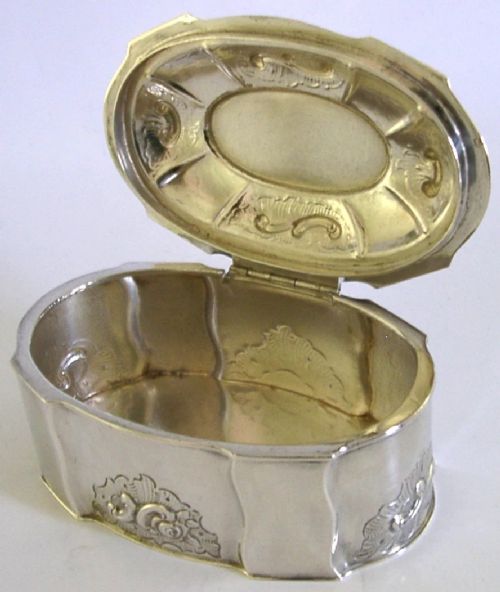
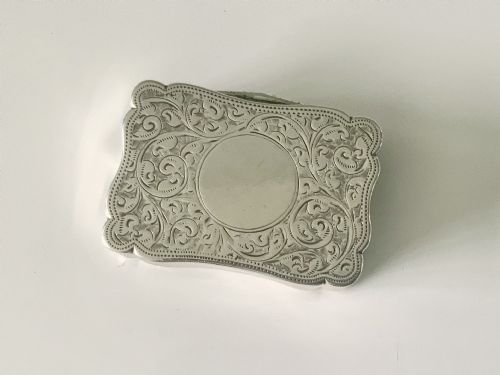
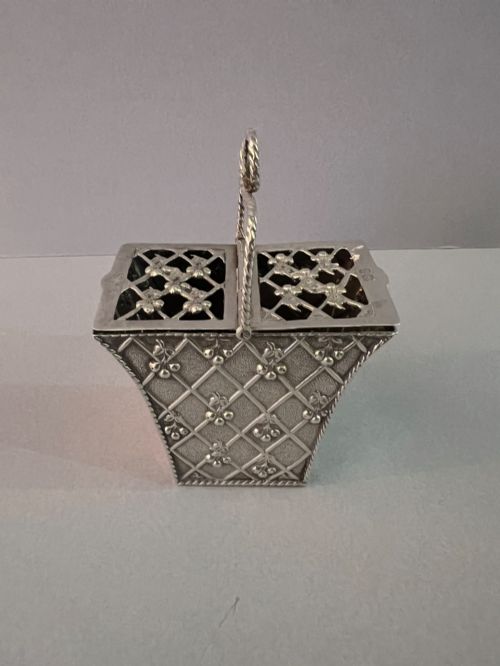
These hinged silver trinket box examples combine practical storage with miniature metalwork, offering neat homes for small keepsakes and dressing table items.
Hinged Silver Trinket Box
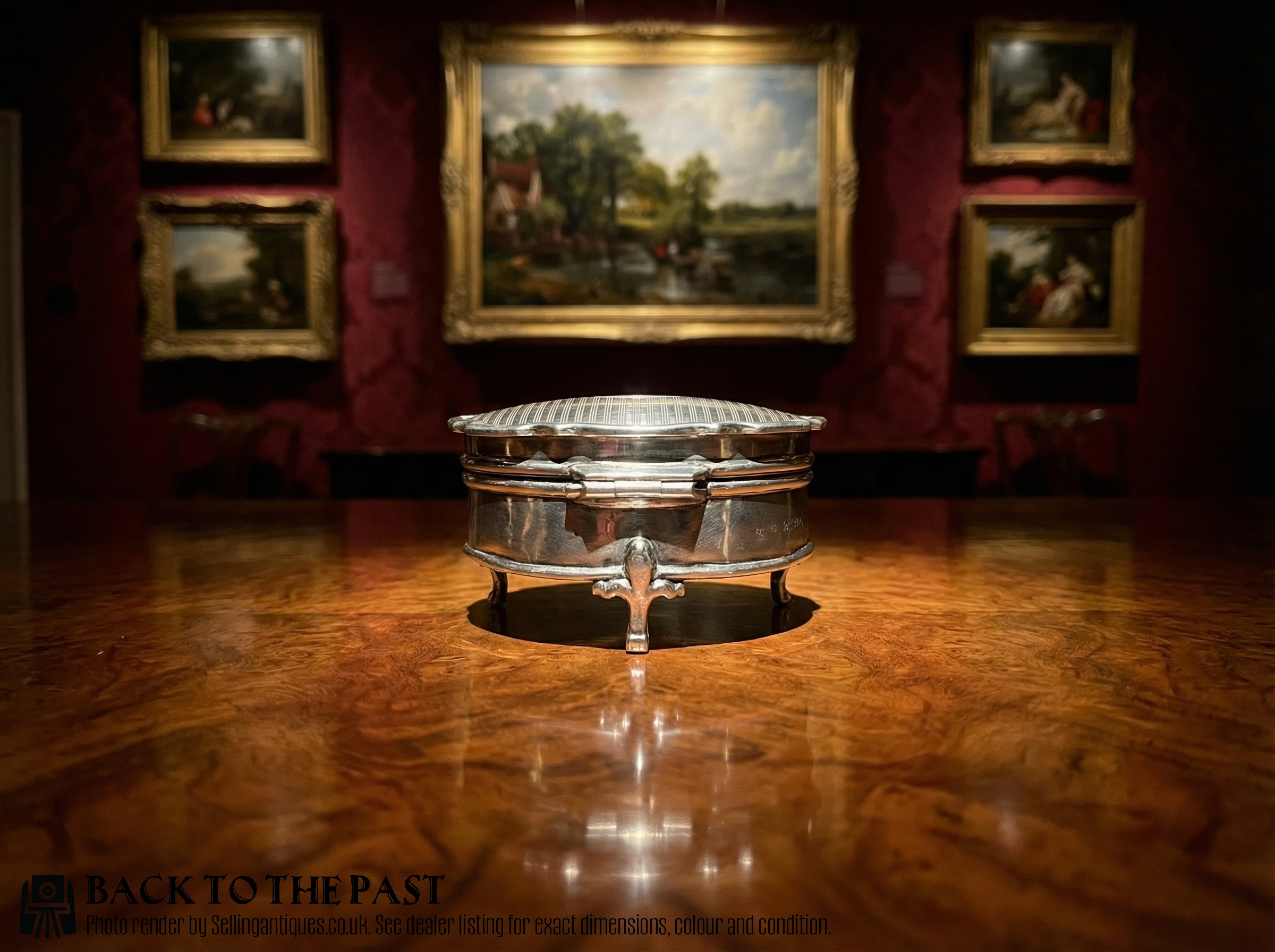
A hinged silver trinket box serves as a small receptacle for personal valuables, rings, and snuff. These pieces appear across several decades, spanning the nineteenth century into the twentieth.
Most examples take compact forms like rectangular, round, oval, heart, or coffin shapes. Makers designed them for dressing tables, desks, and pockets, utilising sterling silver alongside agate, cut glass, and niello.
Victorian and Edwardian versions form the bulk of the selection here, alongside later twentieth-century Danish and English items. Buyers encounter regional English hallmarks from Birmingham and Chester alongside continental European workshops.
Materials and construction
Silversmiths constructed these boxes using solid sterling silver or silver plate, frequently incorporating hinged lids mounted with tight pins. Many feature interior linings of velvet to protect delicate jewellery and contents.
Decoration techniques include engine-turned patterns, floral repoussé work, and smooth polished surfaces. Certain continental variants combine silver mounts with cut glass bodies or inlaid agate panels.
Hinged Silver Trinket Box Retail Price Guide 2026
Typical asking prices for hinged silver trinket box among the pieces listed under this phrase on Sellingantiques today, from the lower quarter to the upper quarter. They describe what is for sale here now, not the wider market.
English provincial assay offices in Birmingham and Chester dominate the historical marks on these small containers.
Judging the work
Quality rests upon the crispness of the chasing, the alignment of the hinge, and the legibility of the hallmarks. Superior boxes maintain a sturdy structure without looseness in the lid movement.
The choice of secondary materials, such as genuine inset agate or heavy cut glass, separates standard production from finer luxury items. Maker marks from established firms indicate higher standards of silversmithing.
Hilliard & Thomason·Posen of Frankfurt and Berlin·Henry Williamson Ltd
The Hinged Silver Trinket Box Glossary
- Hallmark
- Official stamps struck into precious metals to guarantee purity and origin. These marks identify the assay office, maker, and year of production.
- Repoussé
- A metalworking technique where the smith hammers the design from the reverse side to form raised relief patterns on the front.
- Engine-turned
- Geometric patterns engraved into metal by a specialised machine using rotating cutting tools. This creates repetitive symmetrical lines across the surface.
- Niello
- A black metallic alloy used as an inlay on engraved silver surfaces. It highlights intricate linear designs against the bright metal.
- Sterling silver
- An alloy of silver containing parts of other metals for strength. It standardises the metal composition for silverware and jewellery boxes.
Hinged Silver Trinket Box: Frequently Asked Questions
How do I date a silver trinket box?
Examine the stamped hallmarks inside the lid or base, which indicate the assay office and date letter.
Style indicators like Victorian Gothic or Edwardian floral repoussé also help narrow down the manufacturing decade.
Can I clean tarnished silver boxes?
Use a soft cloth and a gentle silver cleaner formulated specifically for precious metals.
Avoid abrasive pastes that might wear away fine surface engraving or damage inset velvet linings.
What were small silver boxes used for?
People historically kept snuff, pills, rings, and small personal tokens inside these lidded containers.
Dressing table versions held daily jewellery pieces while smaller pocket variants carried tobacco.
Are all silver boxes solid sterling?
Items vary between solid silver, silver plate, and mixed materials like cut glass with silver mounts.
Hallmarks will confirm if the metal standard is sterling rather than plated or continental alloy.