


Highland Cattle Landscape Art
Highland cattle landscape art brings the rugged atmosphere of Scottish lochs and mountains directly into interior spaces through traditional painting.
Highland Cattle Landscape Art
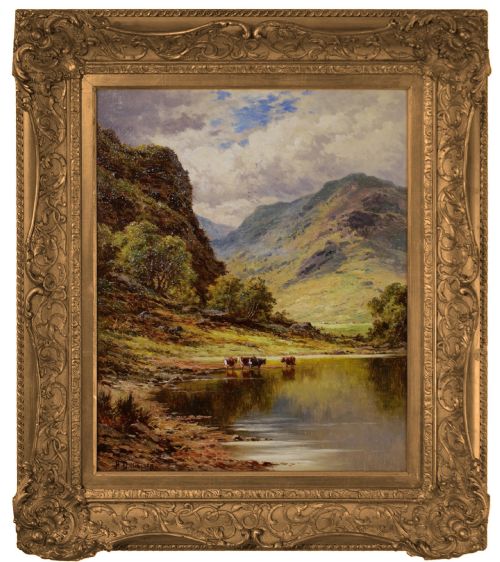
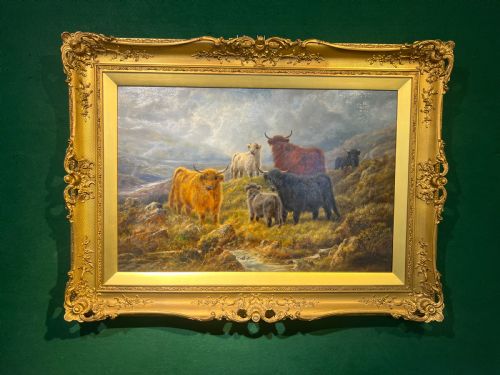
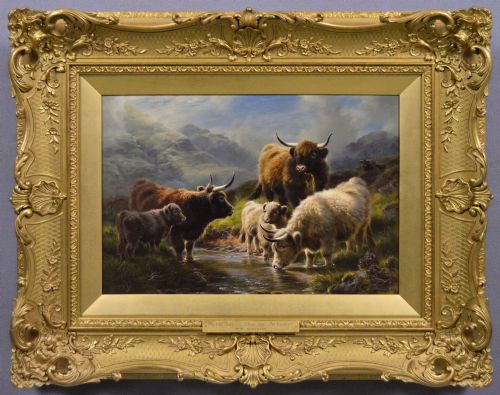
Highland cattle landscape art captures the pastoral scenery of Scotland through traditional oil paintings and gouache works. These pieces depict herds grazing near lochs, streams, and mountainous terrain under varied daylight conditions.
Most examples found here date from the nineteenth century into the early twentieth century. Common subjects include misty morning views, sunset scenes over water, and winter landscapes featuring cattle and sheep.
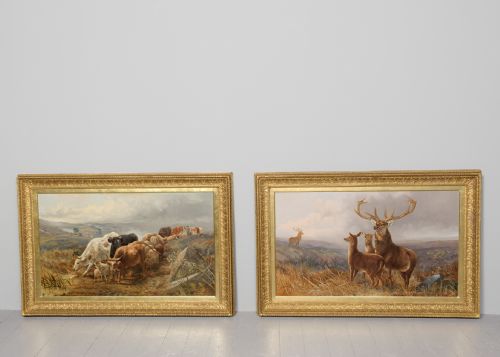
Works appear as individual canvases or matched pairs, frequently housed in decorative giltwood frames. The focus centres on British realism and pastoral traditions recorded by regional artists.
Assessing Quality
Quality rests in the handling of light, atmosphere, and anatomical proportion within the painted scene. Superior works capture the palpable humidity of a Scottish glen and the specific texture of the cattle coat with assured brushwork.
The integration of the original frame alters the overall character of the piece. Elaborate gesso and giltwood surrounds that complement the canvas enhance the visual impact of the composition.
Several canvases include hardy sheep sharing the mountainous Scottish snow with the cattle.
Henry H. Parker·Robert Watson·William Watson Jnr·Robert Cleminson·Henry Robinson Hall·Henry Hillier Parker·Sidney Yates Johnson·Sidney Pike·Charles Jones·George Turner·John W Morris·Daniel Sherrin·Alfred de Breanski Snr·Gustave De Brianski·Henry Birtles·Milton Drinkwater·Louis Bosworth Hurt·Aster Richard Chilton Corbould·Sidney Richard Percy·James Kay
The Highland Cattle Landscape Art Glossary
- Oil on Canvas
- A traditional painting medium where pigments suspended in drying oil are applied to stretched fabric. This combination allows for rich colour blending and lasting durability.
- Giltwood
- Wood carved and coated with gold leaf or metallic powder. This material provides the ornate decorative framing common to nineteenth-century fine art.
- Gesso
- A paint mixture consisting of a binder mixed with chalk, gypsum, or pigment. It serves as a smooth base for gilding and frame decoration.
- Gouache
- An opaque water-based paint medium. It uses similar pigments to watercolour but includes a white filler to create heavier, solid colour areas.
- Highland School
- A regional artistic movement focusing on Scottish scenery and pastoral life. Artists within this group specialised in mountainous topographies and rural livestock.
Highland Cattle Landscape Art: Frequently Asked Questions
What periods do these paintings come from?
The pieces span the nineteenth and early twentieth centuries, capturing the height of British landscape realism.
Victorian and Edwardian eras dominate the selection, reflecting a strong period interest in rural Scottish pastoral life.
How should I clean a giltwood frame?
Dust giltwood frames gently with a soft, dry brush to prevent damage to the delicate gold leaf surface.
Avoid liquid cleaners and moisture, which can strip the gesso and underlying wooden structure.
Are these works signed by the artists?
Many of the canvases bear artist signatures, often recorded in the accompanying titles and archival notes.
Signatures help attribute works to specific painters active within nineteenth-century British art circles.
Where were these scenes typically painted?
Artists travelled to specific Scottish locations such as Glen Tay, Loch Etive, and Loch Lubnaig to capture authentic views.
Mountainous terrain and lochside pastures formed the primary backdrops for herds of cattle and sheep.