

Framed Victorian Pastoral Paintings
Framed Victorian pastoral paintings bring the quiet atmosphere of the nineteenth-century countryside into a room.
Framed Victorian Pastoral Paintings
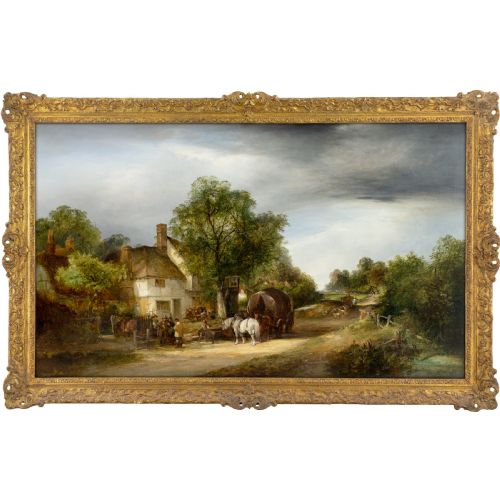
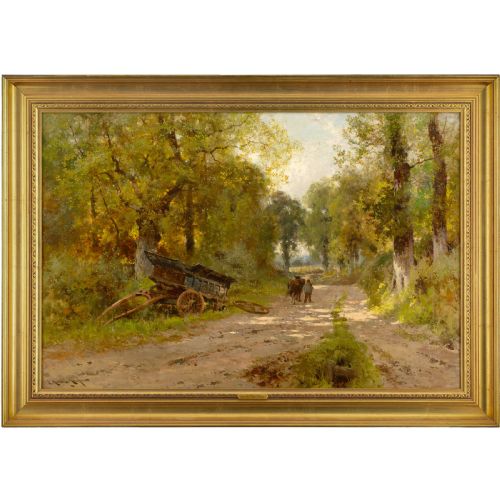
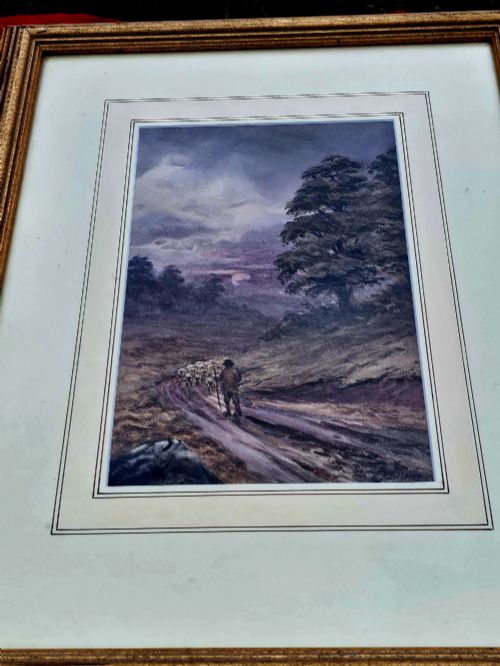
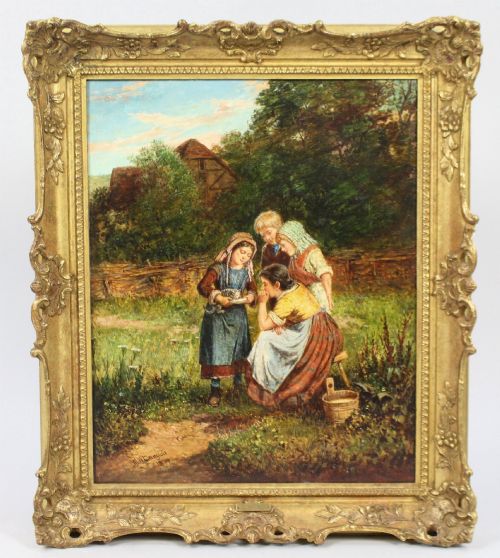
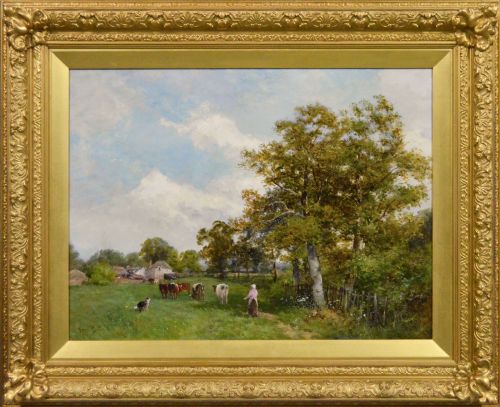
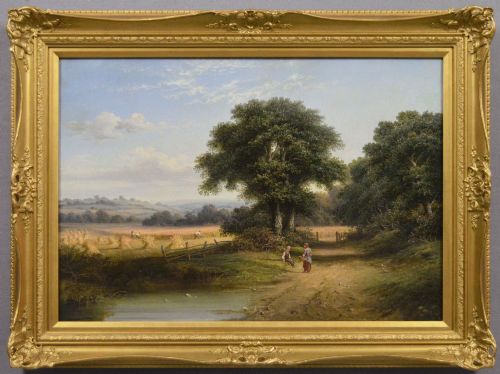
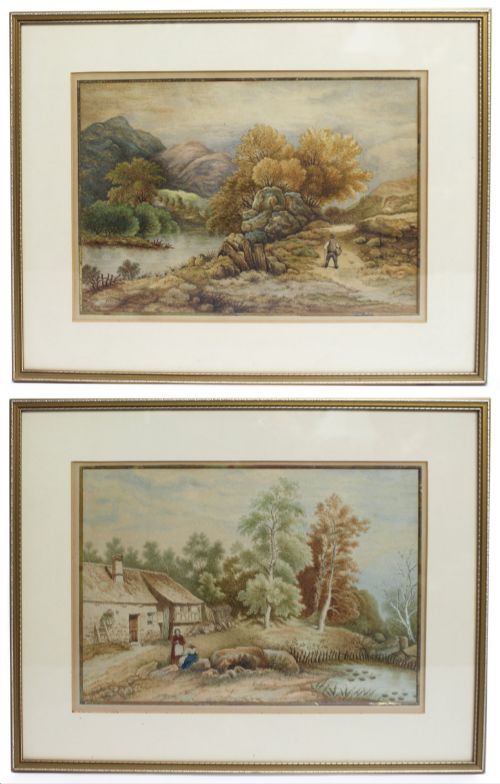
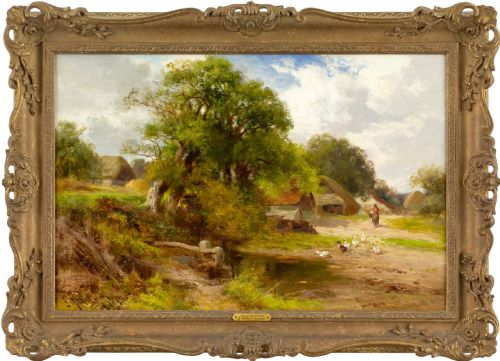
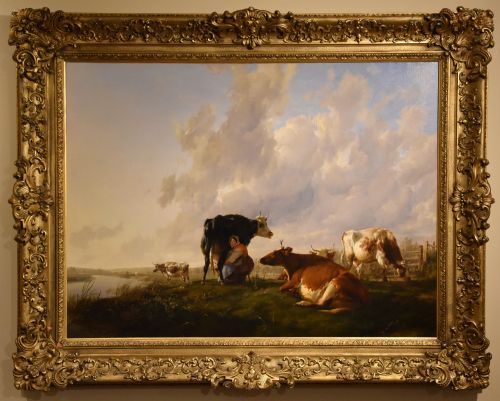
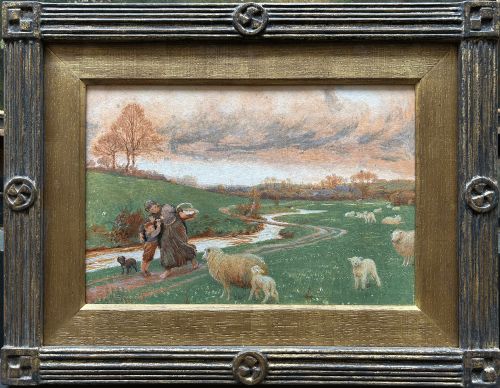
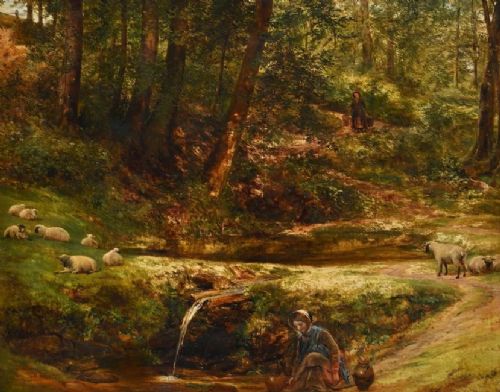
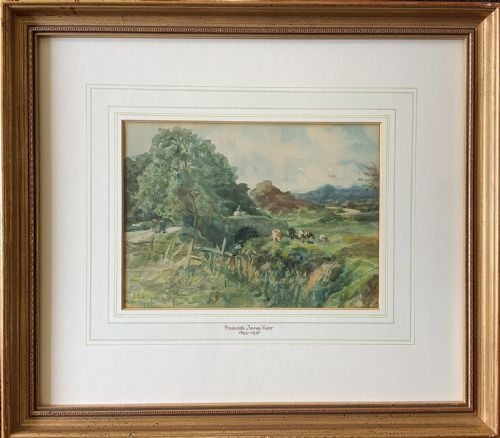
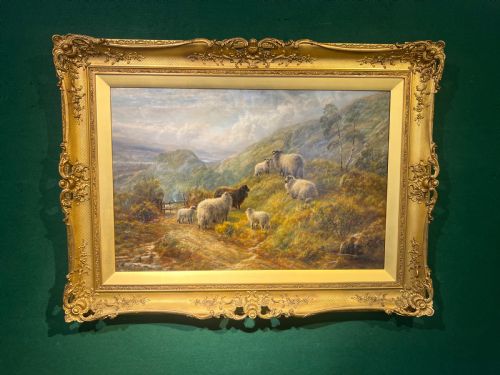
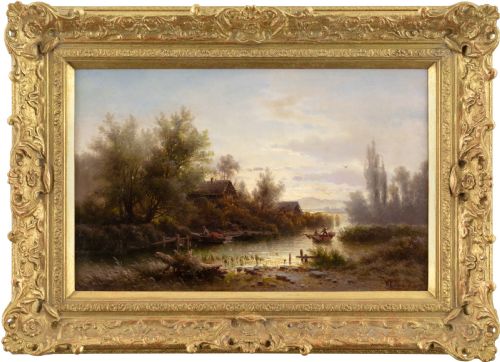
Framed Victorian pastoral paintings encompass oil on canvas works and watercolours depicting rural life, agricultural workers, and livestock in British and European landscapes. The pieces on this page emerge primarily from the nineteenth century, ranging from the eighteen-fifties through to nineteen-ten.
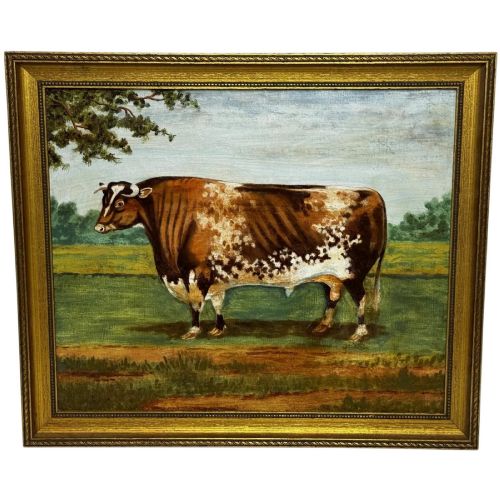
Subjects commonly feature shepherds with flocks, cattle near rivers, milkmaids, and harvest scenes set against open fields or highland terrain. Oil paintings dominate the selection, frequently housed in original giltwood and gesso frames.
Materials and technique
Artists painted primarily with oil paint on stretched canvas or oil on board, alongside watercolours executed on paper. Canvases were secured within wooden stretcher frames and mounted inside decorative moulded gesso and giltwood surrounds.
The application involves nineteenth-century realist and romantic techniques, capturing natural light across rural scenery through layered brushwork and transparent watercolour washes.
Prized shorthorn bulls and pampered kittens share the pastures with traditional flocks, proving that Victorian artists painted whatever farmyard resident held still.
Quality variations
The strength of a composition rests on the anatomical accuracy of the animals and figures, alongside the artist's handling of atmospheric light in the landscape. Works by listed academic painters demonstrate superior brush control and depth compared to lesser-known contemporary copies.
The condition of the original gesso and giltwood frame contributes substantially to the overall integrity of the piece, as original surrounds match the period of the artwork.
Eugène Verboeckhoven·John Horace Hooper·Thomas Sidney Cooper·William Watson Jnr·Franz van Severdonck
The Framed Victorian Pastoral Paintings Glossary
- Pastoral painting
- A genre of artwork depicting rural scenes, agriculture, shepherds, and livestock in natural landscapes. These compositions celebrate traditional country life and scenery.
- Giltwood
- Wood carved and coated with a layer of gold leaf, commonly utilised for nineteenth-century picture frames. This finish provides a reflective border around the canvas.
- Gesso
- A plaster mixture applied to wooden frames as a base for moulding ornamental details before gilding. It allows for intricate relief patterns along the frame edges.
- British School
- A term denoting artists trained or working within Britain during a specific period. It groups painters sharing stylistic influences without implying a formal academy.
- Watercolour
- A painting method where coloured pigments are suspended in a water-soluble vehicle on paper. These works require glass protection within the frame.
Framed Victorian Pastoral Paintings: Frequently Asked Questions
How do I date these paintings?
Dating relies on costume details, recorded artist lifespans, and stylistic markers such as nineteenth-century realism or romanticism. Canvas stamps and frame construction also provide chronological clues.
Many works bear signatures or dates directly on the front, while others are attributed through gallery records and historical exhibition catalogues.
Were these always framed?
Most nineteenth-century oil paintings and watercolours were framed upon completion to protect the edges of the canvas and paper. Original frames often remain paired with the artwork.
Giltwood and gesso frames were constructed specifically to complement the tones and scale of the individual rural composition.
Where should I hang a pastoral painting?
These works suit dining rooms, studies, or living spaces where traditional interiors provide a sympathetic backdrop. Natural light enhances the earth tones and pastoral subjects.
Placement should avoid direct sunlight to protect oil pigments and delicate watercolours on paper from fading over time.
What subjects are most common?
Sheep, cattle, and horses accompanied by shepherds, milkmaids, or farm labourers dominate the rural scenes. River landscapes and harvest fields appear frequently across the collection.
Artists focused on domestic agricultural animals within British and European countryside settings during the Victorian era.