


Highback Wing Chair
A highback wing chair provides draught-excluding comfort with deep upholstery, drawing buyers who want historic seating with traditional presence.
Highback Wing Chair
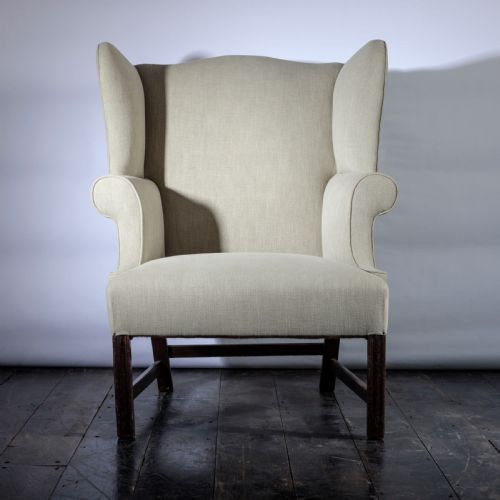
A highback wing chair is a traditional armchair featuring protective side panels designed to shield the sitter from draughts near open fires. These pieces span periods from the eighteenth century through to the twentieth century, encompassing Georgian, Regency, and Victorian iterations alongside later revivals.
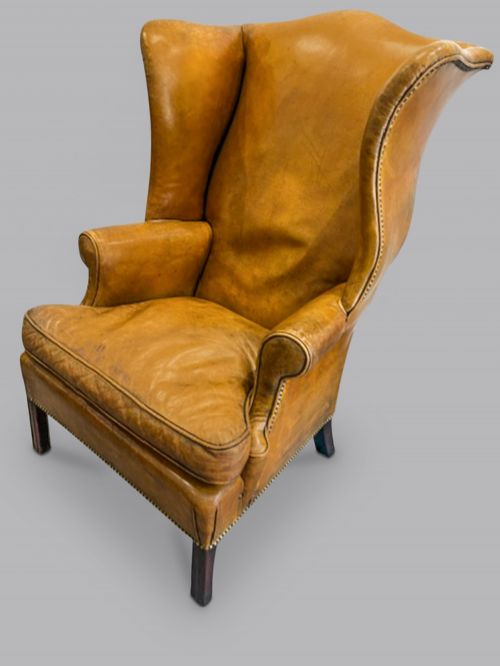
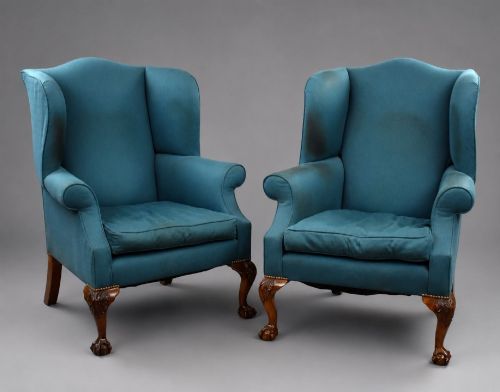
The form primarily appears as a singular armchair or in matched pairs, with occasional variations including box seat sofas and porters armchairs. Examples range from early eighteenth-century foundational forms to nineteenth-century interpretations dressed in leather, velvet, calico, or modern woven twills.
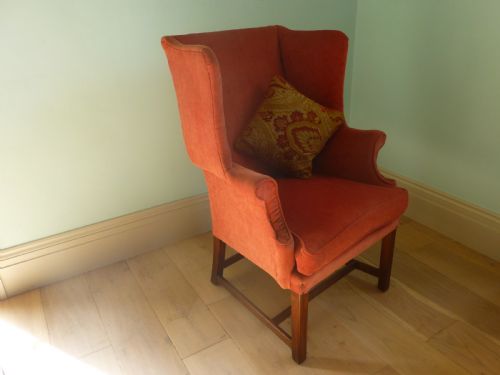
Buyers encountering this selection will find an array of stylistic expressions rooted in English country and formal Georgian aesthetics. The high back and pronounced wings define the silhouette, serving both a functional domestic purpose and an architectural role within historic interiors.
How they were made
Makers constructed the foundational framework using timber such as mahogany, relying on traditional joinery to support the substantial upright proportions. Frames were subsequently webbed and stuffed with natural fillings before being secured with outer coverings of leather, hessian, or fabric.
Details such as brass castors or decorative studs frequently accented the structural framework and upholstery borders, particularly on Regency and Victorian iterations. Exposed woodwork on legs and stretchers showcased period-specific turning and carving techniques appropriate to each century of manufacture.
Current listings span the eighteenth, nineteenth, and twentieth centuries, incorporating materials such as mahogany, leather, velvet, calico, and brass.
What varies in quality
The integrity of the original timber frame and the retention of proportional balance separate superior examples from more heavily altered pieces. Structural soundness in the wings, arms, and stretchers dictates the baseline durability of each armchair.
The execution of the upholstery work, whether retained in historic leather or renewed in contemporary fabric, influences the tactile and visual presentation. Authenticity of period materials and the subtlety of woodwork carving distinguish early eighteenth-century examples from later revivals.
The Highback Wing Chair Glossary
- Wing back
- The upholstered side panels attached to the arms of a highback wing chair designed to trap heat and block room draughts. These projections evolved from functional hearth accessories into defining decorative characteristics.
- Chesterfield
- A deep-tufted upholstery style frequently applied to large armchairs and sofas. The technique utilises buttoning to secure internal padding and create a distinct geometric pattern.
- Giltwood
- Timber treated with a thin layer of gold leaf or metallic gilt pigment. This decorative finish appears on select nineteenth-century imported frames.
- Chenille twill
- A textured woven fabric utilising fuzzy pile yarns that introduce tactile depth to the outer covering. This material appears on nineteenth-century upholstered examples.
Highback Wing Chair: Frequently Asked Questions
What is a highback wing chair?
A highback wing chair is a traditional upholstered armchair featuring protective side panels beside the headrest. These architectural extensions were originally designed to shield sitters from draughts near open fireplaces.
Today, these seating pieces are sought after for their historic character and substantial proportions. They serve as both functional reading chairs and prominent decorative furnishings within traditional rooms.
How do I date a wing chair?
Dating a highback wing chair involves examining the woodwork of the legs, stretchers, and exposed frame components. Characteristic turning, timber choice, and joinery methods align with specific periods from the eighteenth century onward.
Upholstery materials and tacking styles also offer chronological clues, though many pieces have been recovered or restored over time. Comparing the underlying frame construction to documented period examples remains the most reliable method for determining age.
Where were wing chairs used?
These armchairs were historically positioned close to hearths in living areas, parlours, and libraries to maximise the draught-excluding benefits of the wings. Their enclosed silhouette created a micro-climate around the sitter in large, uninsulated rooms.
In contemporary settings, they function effectively as reading seats in studies or as statement armchairs in drawing rooms. Their vertical presence helps anchor furniture arrangements in spaces with high ceilings.
How do I care for leather upholstery?
Historic and antique leather upholstery requires protection from direct sunlight and excessive heat sources to prevent drying and cracking. Maintaining stable indoor humidity levels helps preserve the suppleness of the hide.
Gentle dusting with a dry cloth keeps the surface clear of particles. Specialised leather conditioners can be applied sparingly, provided the finish and age of the specific hide tolerate treatment.