
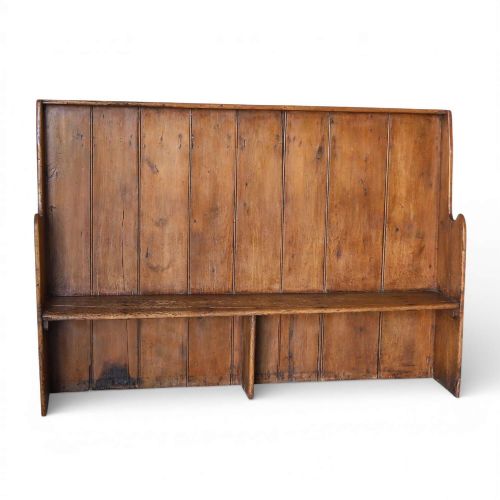


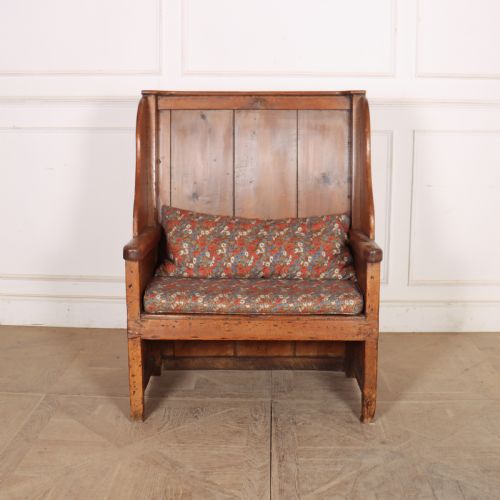


High Back Timber Bench
These high back timber bench pieces offer solid vernacular seating designed to block draughts and anchor a room.
High Back Timber Bench
A high back timber bench provides deep seating with a tall protective back, often taking the form of a traditional settle or hallway seat. You encounter examples originating from English, Welsh, and European provincial traditions, spanning the eighteenth and nineteenth centuries.
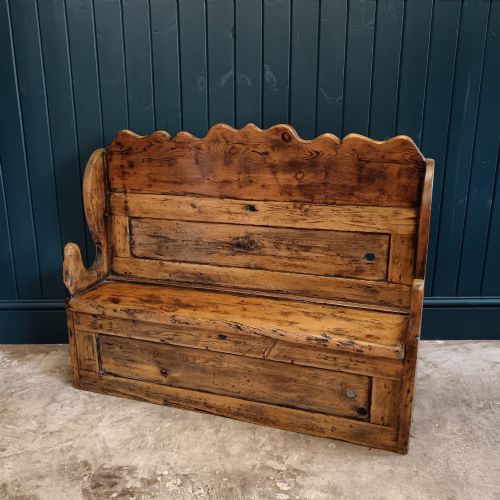
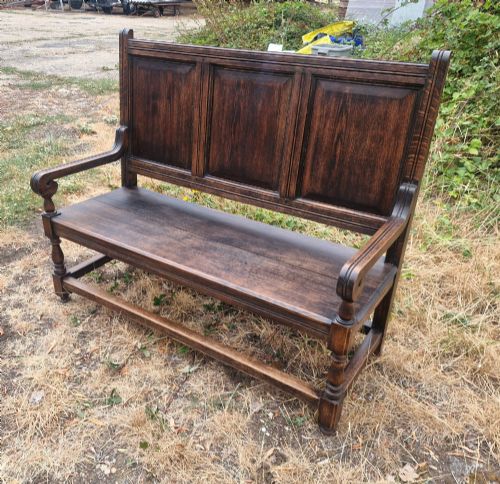
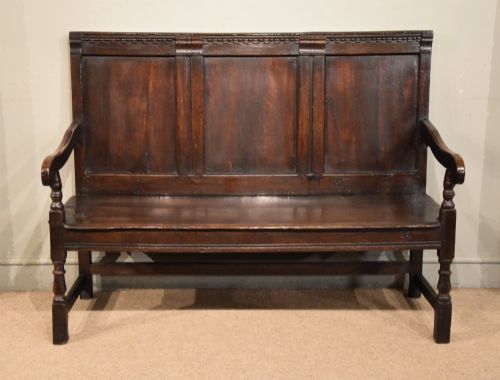
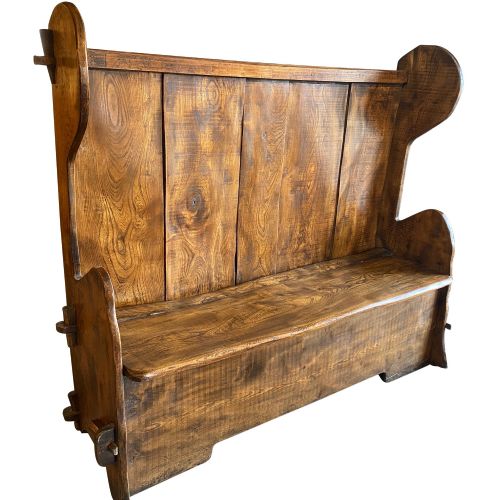
The pieces on this page include standard settle benches, box settles with storage, canopied designs, and barrel back forms. These items served practical domestic and tavern roles before becoming sought-after decorative furniture.
How they were made
Maker joinery relies on solid regional woods including oak, elm, pine, and chestnut, often panelled or built with box bases for storage. Surfaces display plain timber, honey brown patinas, bleached finishes, or original paint layers.
Structural designs incorporate high backs to deflect cold air, sometimes featuring canopies or curved barrel backs tailored for fireside placement.
Catalan shepherds once trusted these heavy timber seats to withstand fierce mountain winds inside stone shelters.
What varies in quality
Quality rests in the integrity of the timber framing, the depth of the patination, and the survival of original paint or surface finishes. Pieces retaining their structural elements without excessive timber replacement hold greater authority.
Proportion and regional vernacular detail dictate distinction, distinguishing standard provincial workshop output from rarer canopied or barrel back forms.
The High Back Timber Bench Glossary
- Settle
- A wooden bench with a high back, solid arms, and often a enclosed box base beneath the seat. This form was traditionally placed near the hearth to keep out draughts.
- Patina
- The surface sheen and colour developed through years of handling, polishing, and natural ageing. A good patina shows depth rather than a flat modern finish.
- Vernacular
- Furniture made by local tradesmen or country joiners using regional materials for everyday use, rather than following high London fashion. These pieces prioritize utility and local tradition.
- Box Settle
- A variant featuring a hinged seat opening to a storage compartment below. It combines seating with chest storage for household goods.
- Barrel Back
- A seating design where the high back curves forward in a semi-circle to enclose the sitter. This construction offers maximum protection against cold room air.
High Back Timber Bench: Frequently Asked Questions
What is a high back timber bench?
A high back timber bench is a traditional wooden seat featuring a tall backrest designed to block room draughts. These pieces often include enclosed lower storage boxes or shaped armrests.
Historically used in farmhouses, halls, and public taverns, they function today as substantial architectural seating for modern hallways and kitchens.
Where were these benches placed?
These benches were primarily positioned near the main hearth in domestic homes or against walls in communal tavern rooms. Their high panelled backs kept seated occupants warm by trapping heat and blocking cold air.
In contemporary spaces, they work well as anchor pieces in entrance halls, dining rooms, or large country kitchens.
How do I date a timber settle?
Dating relies on examining construction methods, tool marks, timber shrinkage, and joinery styles. Eighteenth-century examples often display pegged mortise and tenon joints with hand-planed boards.
Later nineteenth-century iterations frequently incorporate factory-sawn timber, machine-turned components, or revival detailing influenced by earlier periods.
Are these benches comfortable?
These benches offer firm, upright wooden seating rather than upholstered softness. Many historical examples feature contoured wooden seats and high angled backs for posture support.
Owners frequently add loose squab cushions or sheepskins to soften the seat for daily lounging use.