

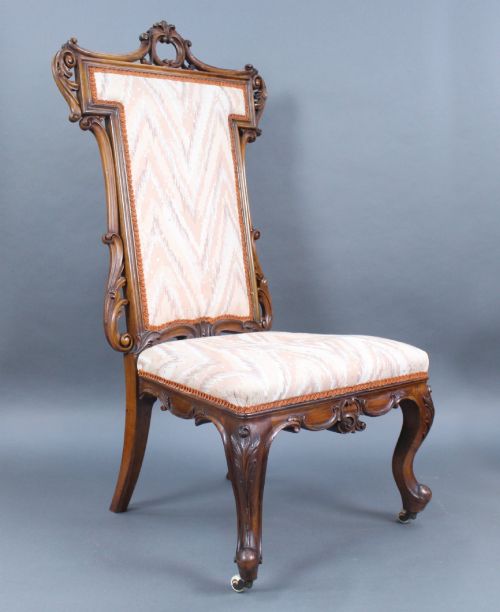


High Back Occasional Chair
These high back occasional chair examples offer striking height and period character, providing a stately seating option for any room.
High Back Occasional Chair
A high back occasional chair is a decorative seating form found across multiple periods, from the eighteenth century to the Edwardian era. These pieces combine structural height with practical function, serving as distinct accents in a room.
Makers utilised various woods and textiles to shape these forms, yielding tall silhouettes that draw the eye upward. Walnut, mahogany, and fruitwood appear frequently alongside upholstered textiles and velvet.
Materials and construction
Carpenters shaped these frames from solid timbers such as walnut, mahogany, oak, and fruitwood, sometimes incorporating wood inlay or simulated rosewood finishes. Structural integrity relied on traditional joinery techniques suited to supporting tall backrests.
Upholstery forms a significant part of the construction, utilising fabrics, velvet, and hand-stitched tapestry supported by materials like brass and ceramic elements. These textiles complement the carved wooden frames seen across Victorian and Edwardian examples.
High Back Occasional Chair Retail Price Guide 2026
Typical asking prices for high back occasional chair among the pieces listed under this phrase on Sellingantiques today, from the lower quarter to the upper quarter. They describe what is for sale here now, not the wider market.
Listings feature woods including mahogany, walnut, fruitwood, and oak, alongside brass, ceramic, and textile elements spanning the eighteenth to early twentieth centuries.
Assessing quality and craftsmanship
Quality in a high back occasional chair rests upon the crispness of the wood carving and the balance of the proportions. Finer examples display deep, deliberate hand-carving on walnut or mahogany frames rather than shallow, mechanical tooling.
The integrity of the frame construction and the quality of the textile upholstery define the upper tier of pieces. Original details, such as intact wood inlay and hand-stitched tapestry work, elevate a piece above simpler variants.
The High Back Occasional Chair Glossary
- Occasional chair
- A movable seat designed for occasional use in a room rather than as primary seating. These pieces often serve decorative functions alongside their practical utility.
- Wingback
- An armchair with side panels or wings attached to the backrest. This design historically shielded the sitter from drafts near fireplaces.
- Nursing chair
- A low-seated chair with a high back, traditionally used for feeding infants. The compact height allowed the sitter to hold a child comfortably.
- Hall chair
- A rigid wooden seat placed in an entrance hall or corridor. These pieces frequently feature carved crests and lack upholstered padding.
- Inlay
- A decorative technique where contrasting materials are inserted into recesses within the wood surface. This method creates patterns and highlights the primary timber.
High Back Occasional Chair: Frequently Asked Questions
What is a high back occasional chair?
A high back occasional chair is a decorative seating piece featuring an elevated backrest. These chairs were designed to provide both vertical visual interest and comfortable support.
They appear in various period styles, utilising woods like mahogany and walnut alongside diverse textile upholstery.
How were these chairs used historically?
These seats served multiple functions throughout the home depending on their specific form. Library and wingback variants provided comfort for reading, while hall chairs sat in entryways for guests.
Shorter nursing chairs accommodated domestic tasks, and salon chairs provided flexible seating for entertaining visitors.
Where should I place an occasional chair?
An occasional chair functions well in corners, bedrooms, or studies where a secondary seat is required. Their height makes them effective tools for breaking up flat wall spaces and framing room layouts.
Pairing a tall chair with a small table creates a distinct reading or relaxation nook.
How do I identify the period of a chair?
Period identification relies on observing stylistic motifs, construction methods, and materials. Victorian pieces often display heavy carved walnut, while Edwardian examples frequently feature inlaid mahogany.
Earlier eighteenth-century pieces reveal simpler, heavier proportions associated with Georgian design principles.