

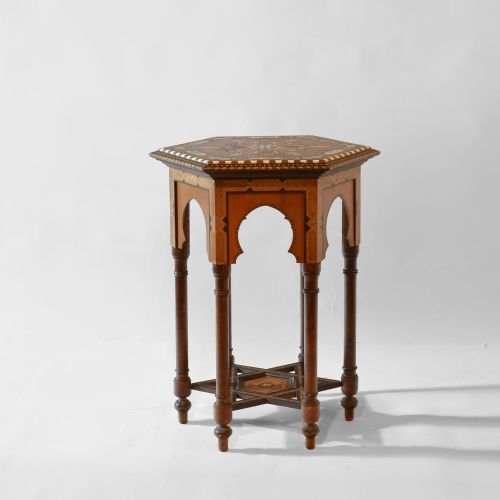


Hexagonal Inlaid Side Tables
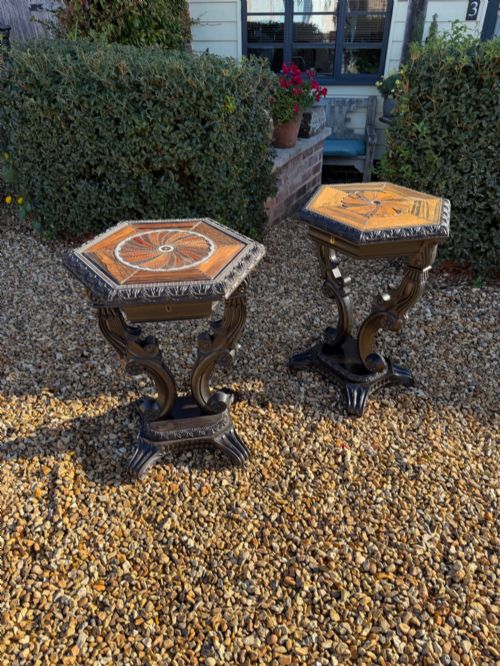
These hexagonal inlaid side tables bring together complex geometric woodworking and contrasting metallic or organic inlays from diverse global revivals.
Hexagonal Inlaid Side Tables
When you search for hexagonal inlaid side tables, you encounter compact occasional furniture defined by six-sided tops and intricate surface decoration. These pieces frequently emerge from nineteenth-century revival movements and colonial workshops.
You are most likely to meet examples drawing on Moorish, Mamluk, and Anglo-Indian design traditions. The selection spans low kursi tables to tiered French pieces and specimen wood creations.
The form functions primarily as an occasional or side table, easily positioned beside seating. Their distinctive geometry relies on fitted panels and folding or fixed support structures.
How they were made
Carpenters utilised dense foundational timbers such as walnut and ebony alongside exotic specimen woods. These structural bases provide the solid framework necessary for intricate surface ornamentation.
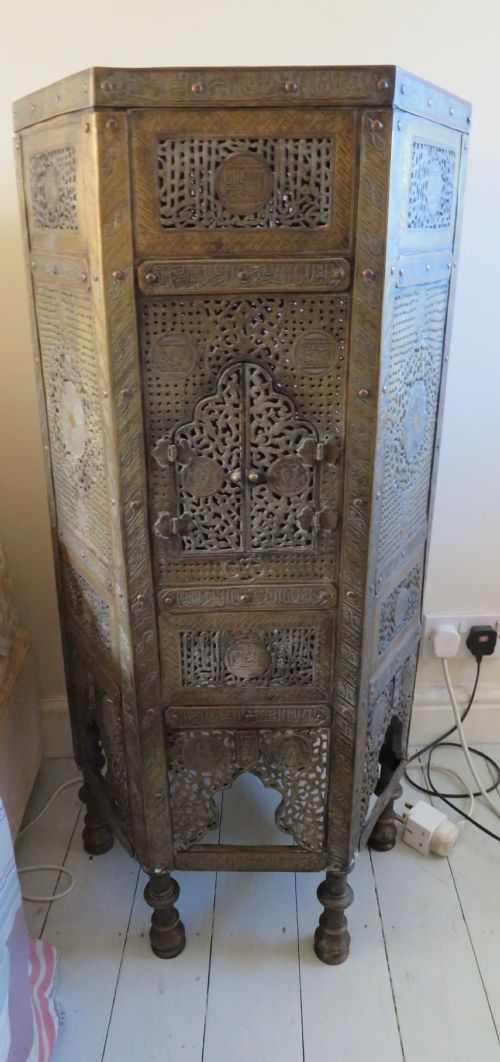
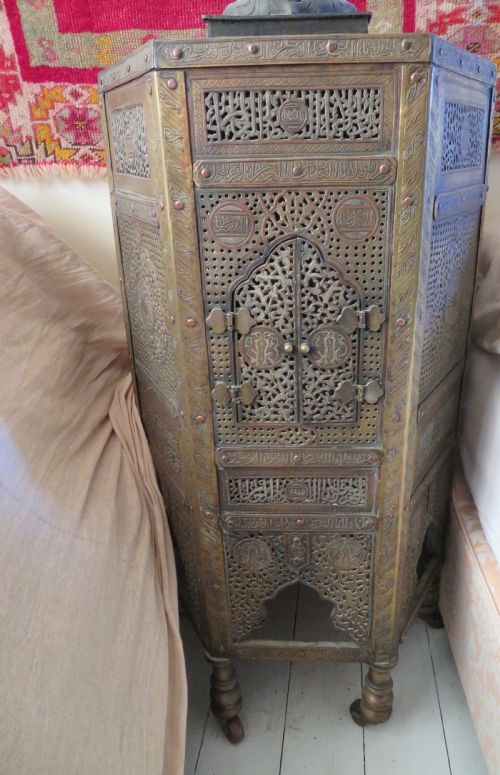
Craftsmen embedded contrasting materials including mother-of-pearl, bone, brass, copper, and white metal into precise channels carved within the wood. Openwork brass and copper elements frequently complement inlaid geometric lattices.
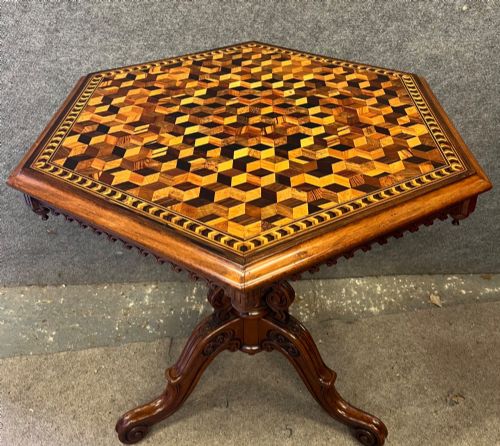
Marquetry techniques permitted the assembly of complex mosaic patterns across tabletops. Artisans combined pale satinwoods with darker woods to create striking tonal contrasts.
Hexagonal Inlaid Side Tables Retail Price Guide 2026
Typical asking prices for hexagonal inlaid side tables among the pieces listed under this phrase on Sellingantiques today, from the lower quarter to the upper quarter. They describe what is for sale here now, not the wider market.
Listings feature periods spanning from the late nineteenth century through to nineteen thirty, incorporating walnut, ebony, brass, and bone.
What varies in quality
The distinction between tiers of quality rests upon the precision of the joinery and the density of the inlay work. Finer examples display tightly secured tesserae without excessive filler in the interstices.
Material selection dictates much of the inherent value, with genuine mother-of-pearl, bone, and fine ebony or specimen woods representing superior execution. Simpler constructions rely on broader wood marquetry or cast metallic elements.
The coherence of the design within the Moorish, colonial, or European revival style governs the overall visual impact. Superior pieces maintain crisp geometric lines across all six sides of the table.
Ralph Turnbull·Liberty & Co
The Hexagonal Inlaid Side Tables Glossary
- Kursi
- A low hexagonal table or stool originating in Islamic design traditions. These pieces often feature openwork brass and copper inlay.
- Mamluk Revival
- A nineteenth-century design movement emulating the decorative arts of the Mamluk Sultanate. It prioritises geometric brass wire inlay and intricate metalwork.
- Marquetry
- The art of applying pieces of veneer to a structure to form decorative patterns. Craftsmen utilise diverse wood species to achieve pictorial or geometric effects.
- Specimen Wood
- Furniture constructed from a multitude of different decorative timbers. Jamaican and Ceylonese examples often showcase this technique.
- Mother-of-Pearl
- The iridescent internal layer of mollusc shells used extensively for surface inlay. It creates luminous points of contrast against dark ebony or walnut.
Hexagonal Inlaid Side Tables: Frequently Asked Questions
Where should I place these tables?
Hexagonal inlaid side tables suit placement beside low seating or as standalone display surfaces in a room. Their six-sided footprint allows them to fit comfortably into awkward corners or beside armchairs.
Avoid positioning them in areas of direct, harsh sunlight or extreme humidity to protect the delicate bone and mother-of-pearl inlays.
Are these tables sturdy enough for daily use?
Most occasional tables function well for holding books, lamps, or small decorative objects. Their lightweight construction, particularly in folding kursi forms, means they are designed for mobility rather than heavy weight-bearing tasks.
Take care when moving them to lift rather than drag the piece across uneven floor surfaces.
How do I distinguish regional styles?
Moorish and Cairo-style tables typically combine geometric turned woodwork with dense metallic wire and bone inlay. Colonial pieces from Ceylon or Jamaica frequently highlight distinct native cabinet timbers and specimen wood arrangements.
European revival variants incorporate traditional French or Victorian carcass forms alongside exotic marquetry motifs.