




Parquetry Specimen Wood Tables
Parquetry specimen wood tables bring together intricate timber geometry and polished domestic surfaces across centuries of global cabinet-making.
Parquetry Specimen Wood Tables
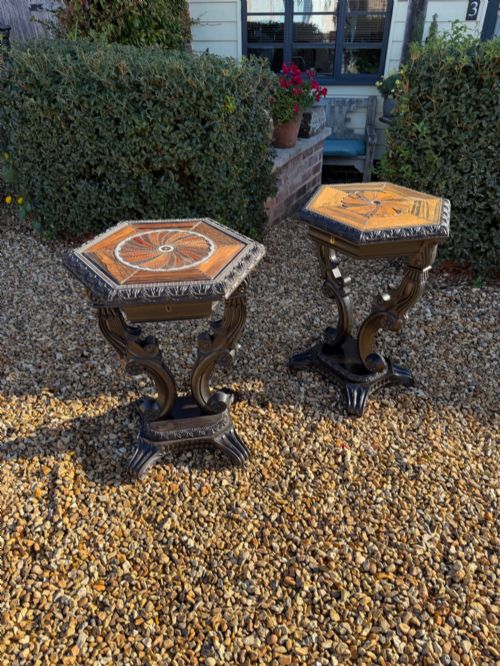
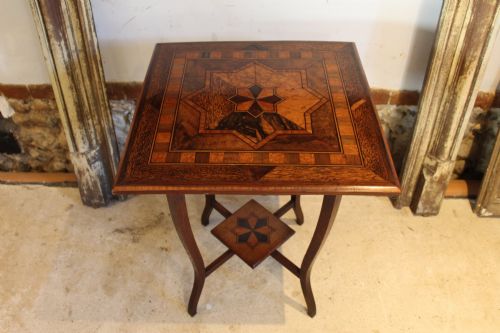
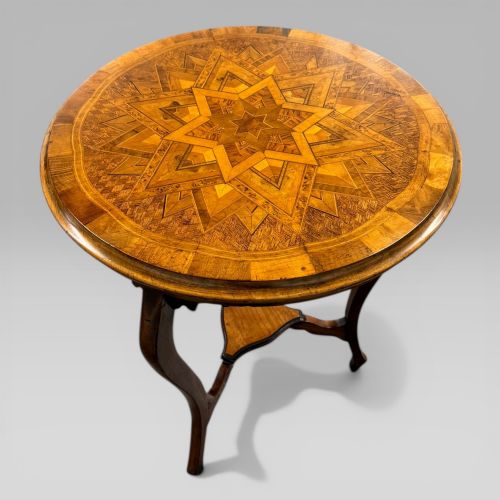
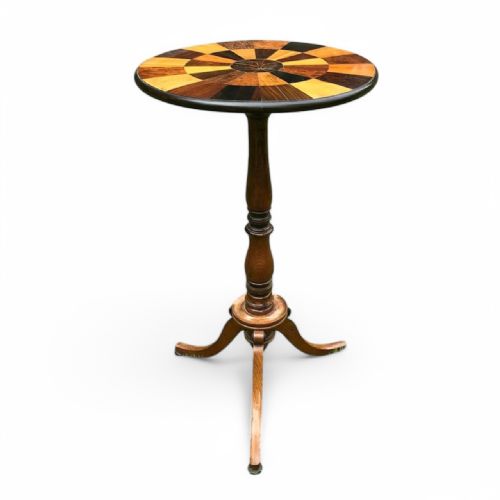
The pieces appearing here span Georgian, Regency, and Victorian periods, alongside colonial origins including Ceylonese, Jamaican, and New Zealand examples. Occasional tables and side tables with inlaid tops dominate the selection, often featuring circular or rectangular geometries.
Makers and workshops from diverse global regions utilised native and exotic timbers to construct these functional surfaces. The resulting forms serve as both utilitarian furniture and displays of botanical variety.
Materials and Construction
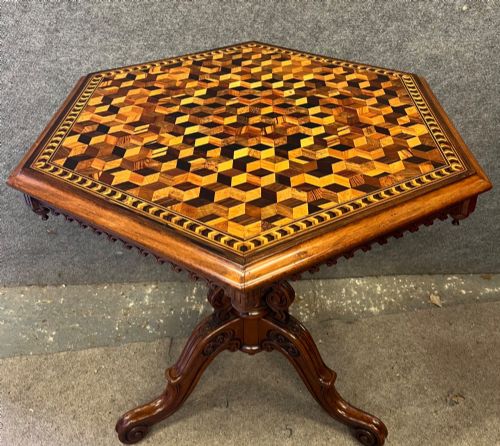
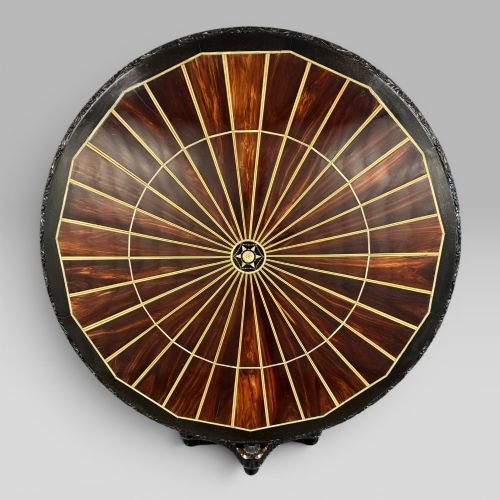
Cabinet-makers constructed these tables using solid structural frames of mahogany, walnut, rosewood, or oak to support intricate upper surfaces. Specimen wood veneers and solid geometric tiles of ebony, calamander, satinwood, and various native timbers were meticulously cut and fitted together.
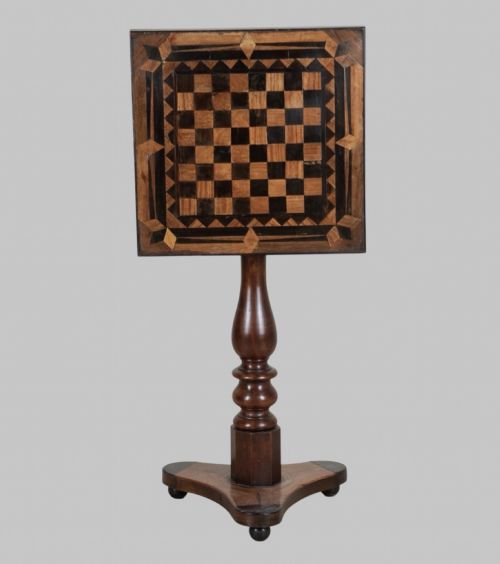
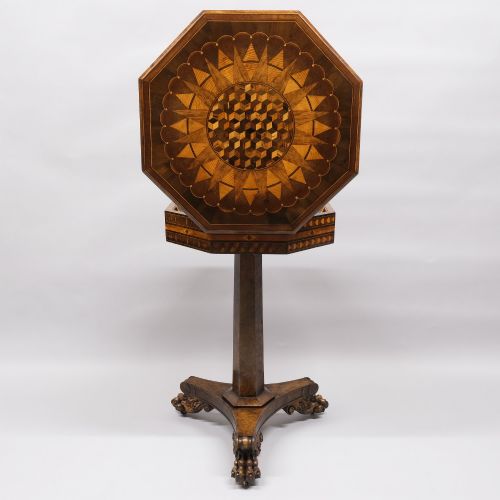
Artisans employed precise parquetry and marquetry techniques to form geometric patterns, sunbursts, and pictorial or tiled arrangements across the table tops. Brass fittings, tilt-top mechanisms, and turned or pedestal bases provided structural support to the veneered surfaces.
Parquetry Specimen Wood Tables Retail Price Guide 2026
Typical asking prices for parquetry specimen wood tables among the pieces listed under this phrase on Sellingantiques today, from the lower quarter to the upper quarter. They describe what is for sale here now, not the wider market.
One tiny table was designed specifically as an elephant table, bringing exotic timber geometry to miniature proportions.
Distinctions in Quality
Quality separates examples through the precision of the timber matching and the complexity of the geometric arrangement across the top. Finer pieces demonstrate tight joints in the parquetry work and the use of dense, stable secondary timbers in the underlying construction.
Attribution to known makers or specific regional workshops elevates the standing of individual tables. The variety and rarity of the botanical specimens utilised in the geometric patterns further define the distinction between standard production and masterwork execution.
Ralph Turnbull·Anton Seuffert·William Norrie·Emile Galle
The Parquetry Specimen Wood Tables Glossary
- Parquetry
- A geometric mosaic of wood pieces used for decorative floors or table tops. It relies on precise angles and straight-edged timber segments to create repeatable patterns.
- Specimen Wood
- Timbers selected for their distinct colours, grain patterns, or botanical origins. Makers gathered these regional woods to display natural variety within a single surface.
- Work Table
- A specialised domestic table equipped with compartments or a basket for sewing and needlework. These often feature hinged lids and intricate veneer work on the primary surfaces.
- Centre Table
- A freestanding table designed to be viewed from all sides in the middle of a room. They frequently utilise circular or shaped tops supported by a central pillar or pedestal base.
- Calamander
- A heavy, durable timber featuring dark brown and light brown contrasting stripes. Originating from regions such as Ceylon, it was prized for high-status colonial furniture.
Parquetry Specimen Wood Tables: Frequently Asked Questions
What are parquetry specimen wood tables?
These are decorative tables featuring geometric wood inlay work designed to showcase various timber grains and colours.
They appear in forms such as occasional tables, work tables, and centre tables dating from the Georgian and Victorian eras.
How were these tables used originally?
Owners utilised them in reception rooms as display surfaces for lamps, ornaments, or tea wares.
Specific forms like work tables accommodated sewing equipment, while games tables folded out for card play.
How do I care for a specimen wood table?
Maintain the timber surfaces by keeping them away from direct sunlight and excessive temperature fluctuations.
Apply traditional wax polish sparingly to nourish the wood and protect the historical veneer.
How can I tell the period of a table?
Examine the underlying construction timbers, base turning styles, and assembly methods used in the frame.
Georgian and Regency pieces typically show different structural joinery compared to later Victorian or colonial productions.