


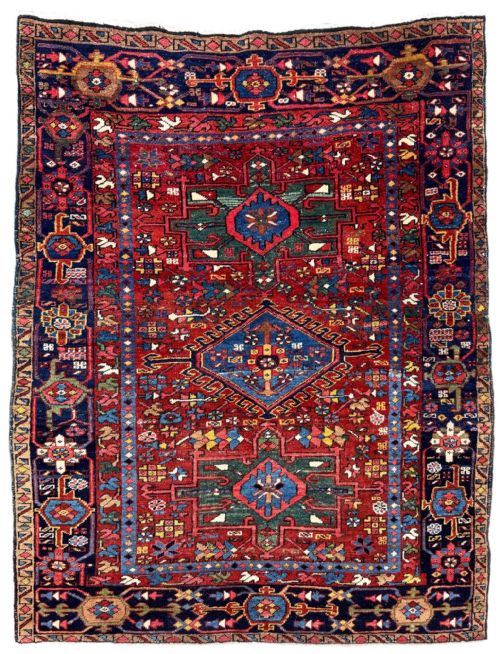


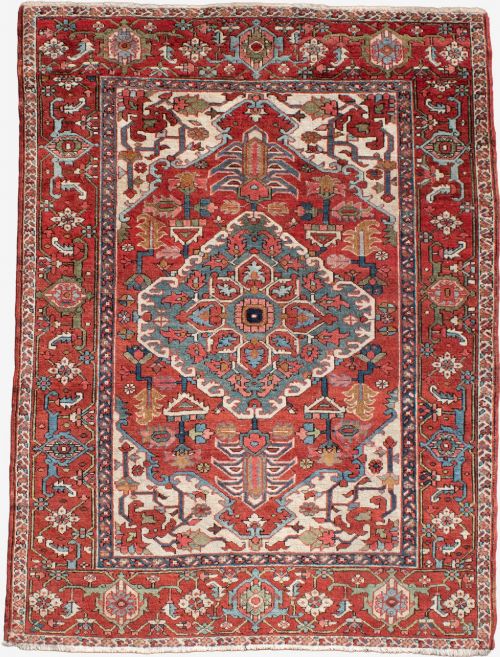


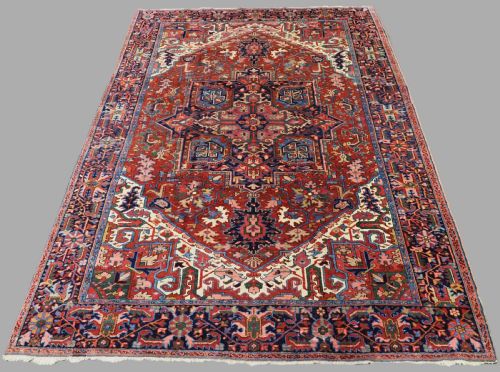


Heriz Serapi Rug
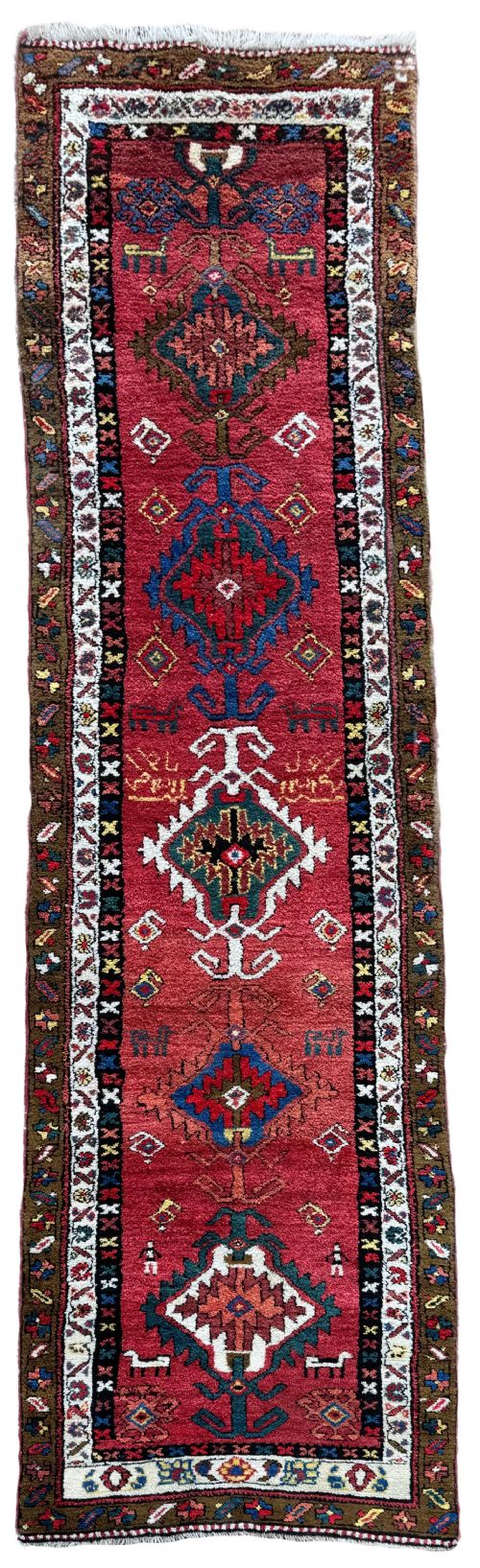
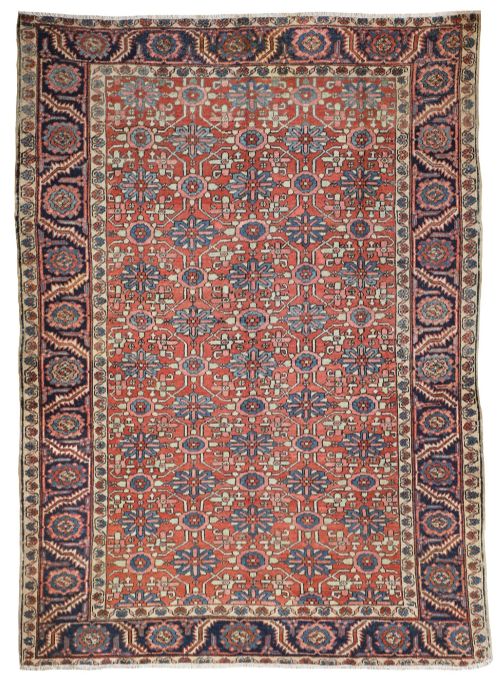
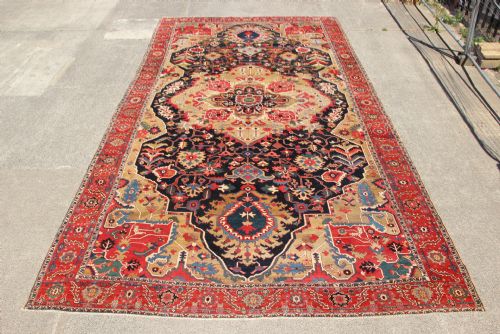
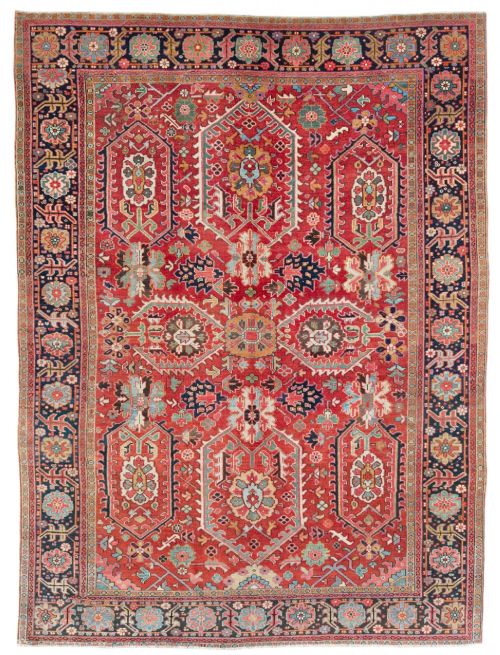
These large format room carpets and scatter rugs bring bold geometric design and floor presence into a period interior.

Heriz Serapi Rug
When you search for a heriz serapi rug, you are looking at hand-knotted room carpets and gallery runners originating from the Northwest Persian region. These floor coverings date predominantly from the late nineteenth century through to the early decades of the twentieth century, encompassing the Victorian era.
You are most likely to meet larger formats on this page, including expansive room carpets alongside narrower runner rugs and smaller area pieces. The regional weaving tradition merges robust village construction with monumental geometric medallion layouts.
How they were made
Weavers constructed these pieces using durable wool pile knotted onto sturdy cotton foundations. This pairing provided the structural stability required for large room carpets that endured heavy domestic use over generations.
The regional technique relies on geometric abstraction rather than curving floral forms, using saturated natural dyes to create high-contrast fields and prominent central medallions.
Listings span production dates from eighteen-sixty through to nineteen-thirty, using wool and cotton throughout.
What varies in quality
Knot density and the precision of the geometric drawing distinguish exceptional examples from standard production. Finer wool handling allows for sharper outlines within the characteristic large-scale medallion and corner spandrel designs.
Colour saturation and the survival of the original wool pile across the field determine the visual impact of an individual carpet. Pieces retaining deep, vibrant tones without heavy restoration sit at the higher end of the scale.
The Heriz Serapi Rug Glossary
- Heriz
- A town and carpet-weaving district in Northwest Persia known for producing durable, large-scale geometric rugs. Pieces from this area are often associated with bold central medallions.
- Serapi
- A sub-category or trade term for older Heriz carpets typically characterised by more open, balanced designs and a particular palette. They date mostly to the late nineteenth century.
- Medallion
- The central ornamental motif dominating the field of the rug. In these Northwest Persian carpets, this feature is usually geometric and polygonal in form.
- Runner
- A long, narrow carpet format designed specifically for hallways and corridors. These pieces measure significantly longer than they are wide.
- Spandrels
- The triangular corner ornaments situated in the upper and lower corners of the field surrounding the main central medallion.
Heriz Serapi Rug: Frequently Asked Questions
How do I date a serapi rug?
Dating relies on stylistic markers such as the structure of the central medallion, the openness of the field design, and the overall handle of the wool. Pieces attributed to the nineteenth century often display more expansive, archaic proportions.
Comparison with documented examples from the region helps narrow down the decade of production. Examining the construction of the cotton foundation provides further context for the period of manufacture.
Where were these rugs made?
These floor coverings originate from the Heriz region located in Northwest Persia. Village weavers working in local workshops produced them for both domestic use and export.
The regional style developed independently from urban court workshops, favouring sturdy materials and monumental geometric compositions suited to larger interior spaces.
Are these carpets suitable for hallways?
Narrow formats including runner rugs are well-suited for hallways and corridors. Their durable wool pile and cotton foundations withstand frequent foot traffic while providing warmth underfoot.
Placing a suitable underlay beneath the runner helps prevent slipping and protects the antique foundation from premature wear against hard flooring.
What is the difference between heriz and serapi?
Serapi rugs represent an earlier, finer subset of Heriz production usually dating to the nineteenth century. They typically feature more spacious geometric layouts and a muted palette.
Standard Heriz carpets from the early twentieth century often display denser patterning and stronger colour contrasts within the field and border.