



Heriz Oriental Rug
A heriz oriental rug brings durable wool and distinct Persian weaving traditions into a room.
Heriz Oriental Rug
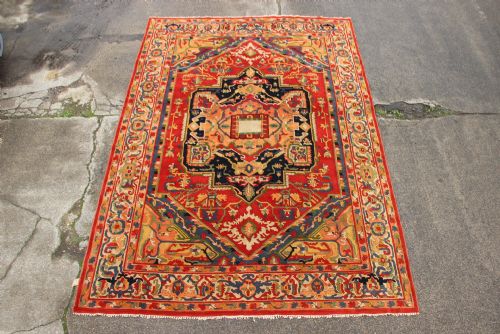
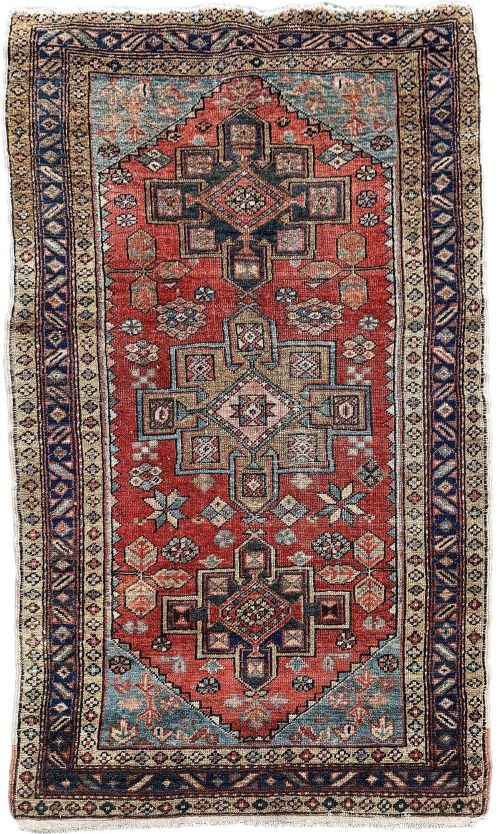
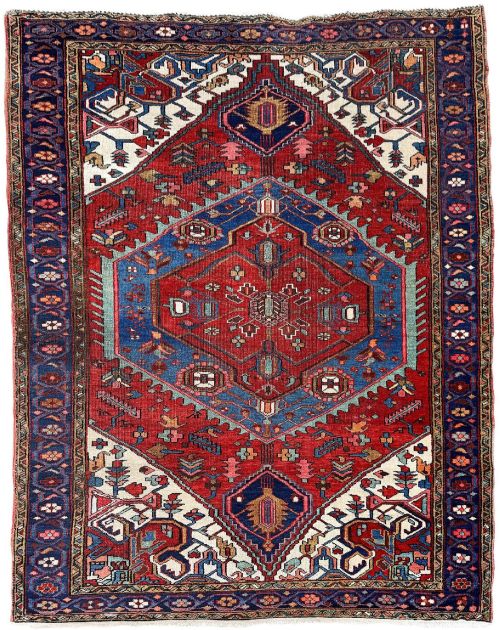
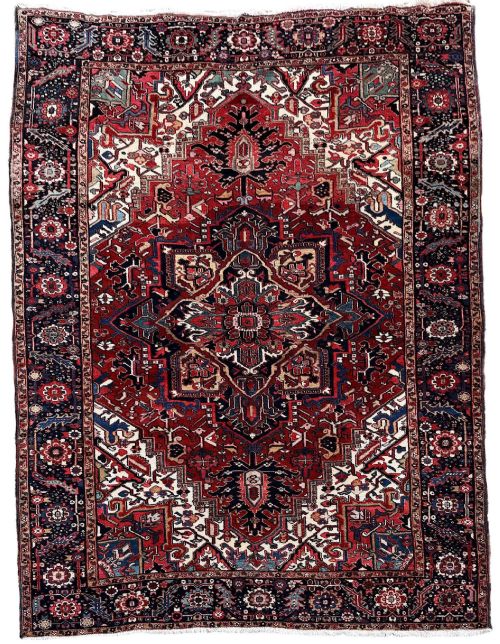
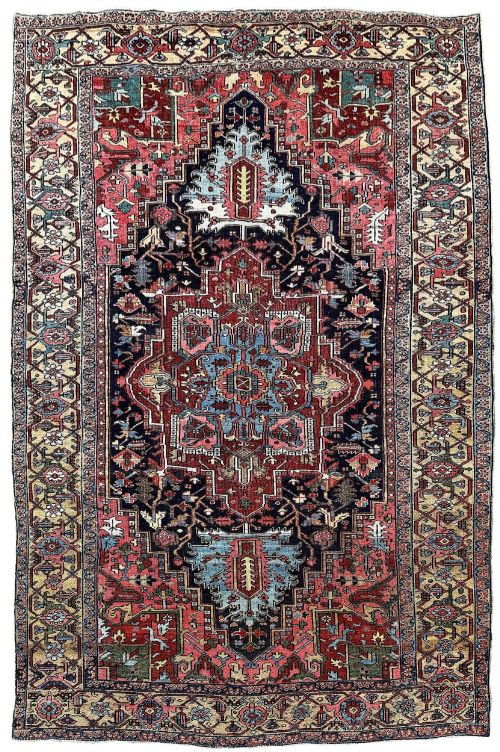
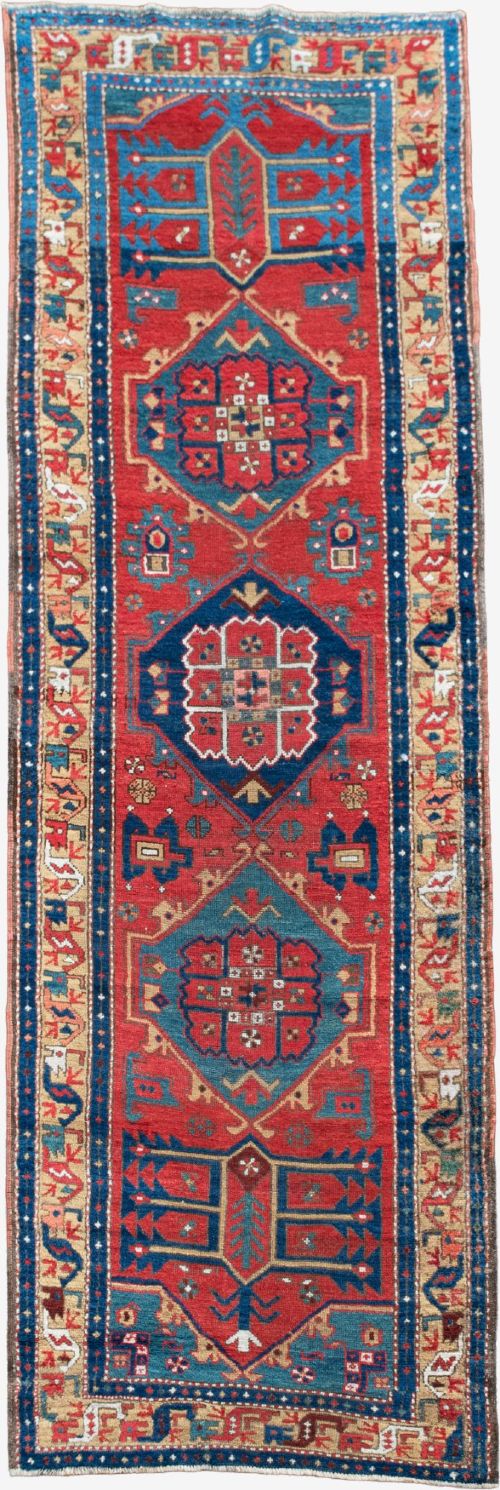
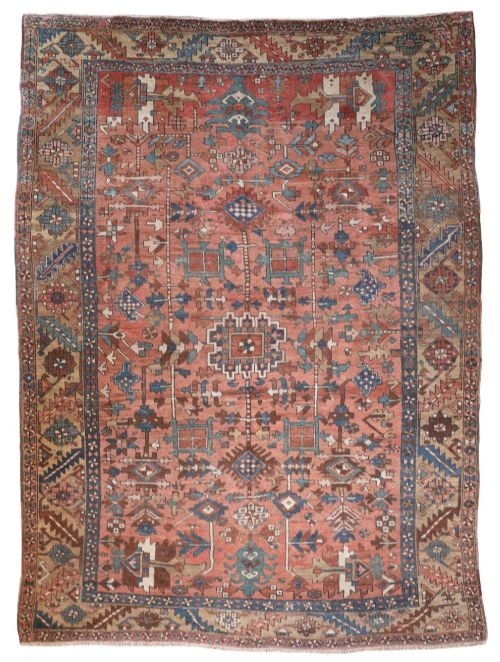
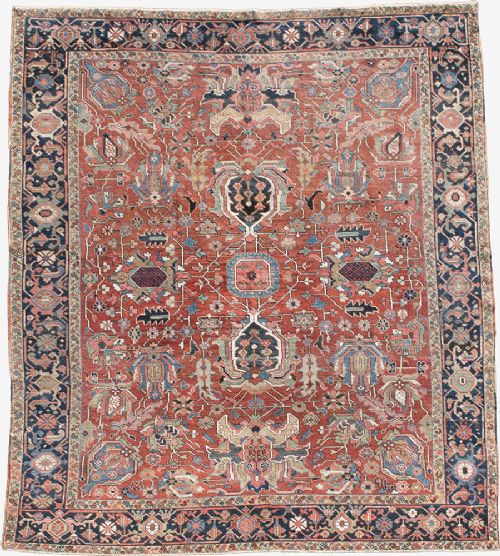
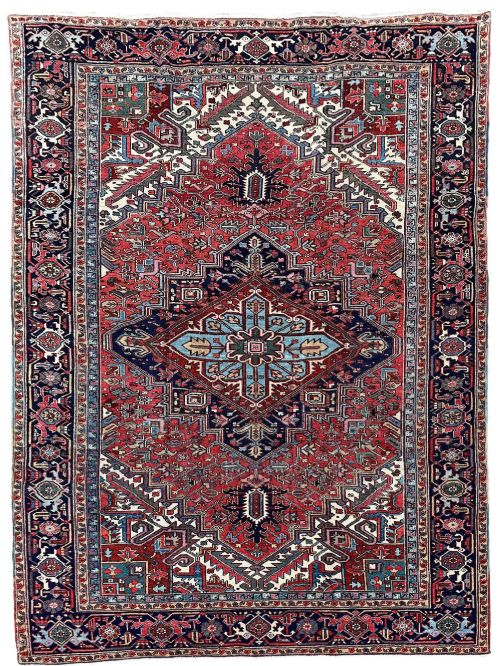
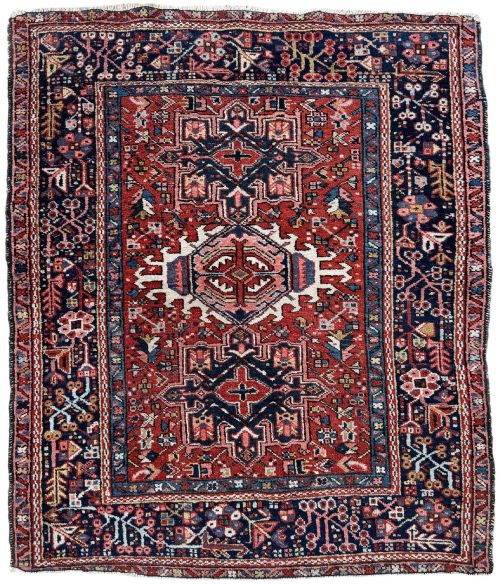
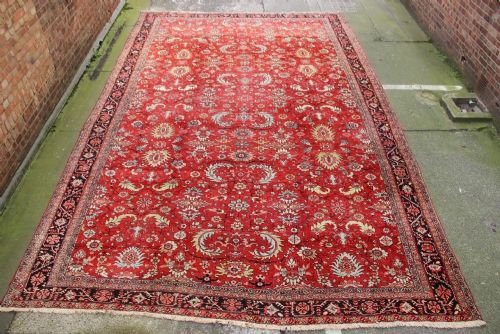
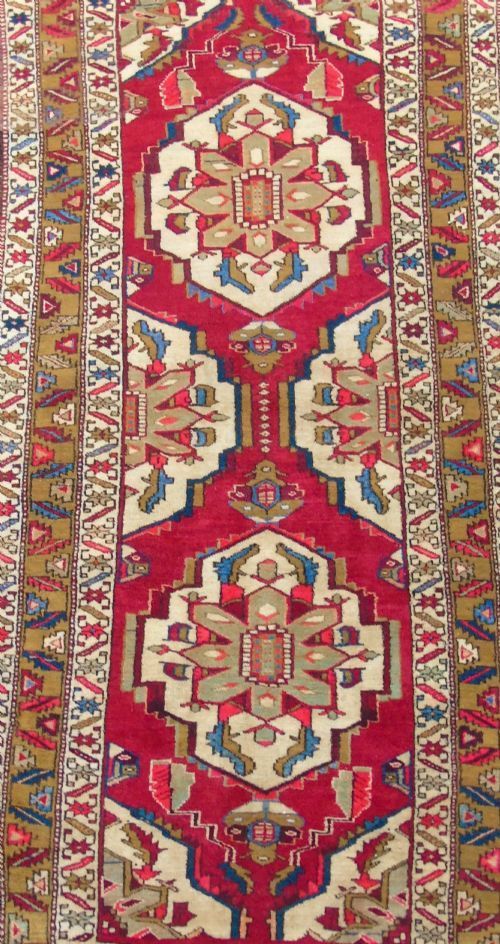
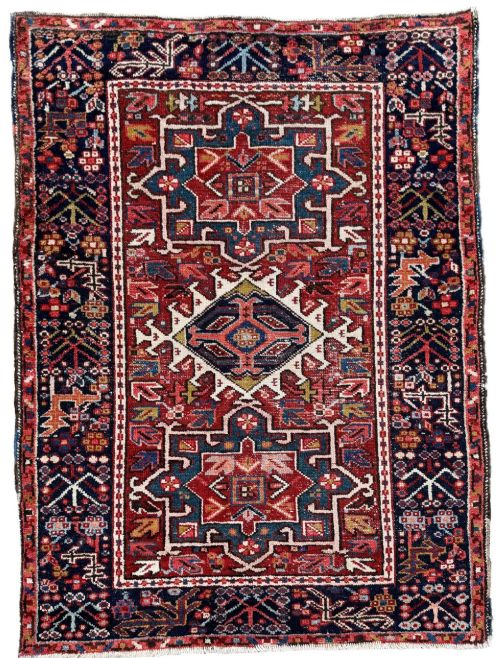
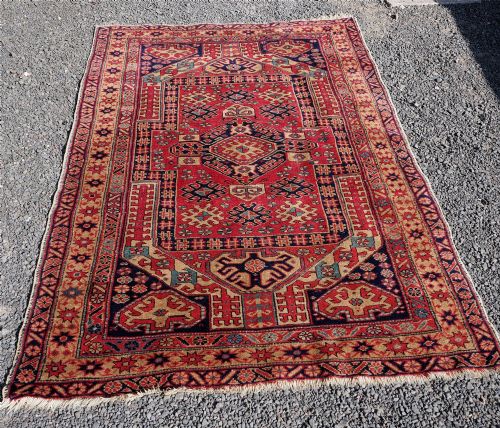
A heriz oriental rug is a woven floor covering originating from North-West Persia, produced in various dimensions from small hearth rugs to large room-sized carpets and long hallway runners. Buyers searching for a heriz oriental rug encounter pieces spanning from the late nineteenth century through to the early decades of the twentieth century, with styles including Persian Heriz, Serapi, Karaja, Ahar, and Bakshaish variants.
The inventory demonstrates substantial variation in format, ranging from square area carpets measuring over five metres in length to compact scatter rugs and narrow runners. Many examples display traditional Persian geometric motifs, central medallions, or all-over designs executed in colour palettes featuring sky blue, ivory, and richer saturated tones.
Materials and Construction
These carpets are constructed predominantly from wool pile knotted onto cotton foundations, a combination providing structural stability and resilience for heavy foot traffic. The natural wool fibres take dye effectively, yielding the deep colours and distinct ground shades observed in traditional North-West Persian weaving.
Weavers utilised sturdy knotting techniques suited to large format carpets and long runners, creating dense surfaces that maintain their integrity over generations of domestic use.
Heriz Oriental Rug Retail Price Guide 2026
Typical asking prices for heriz oriental rug among the pieces listed under this phrase on Sellingantiques today, from the lower quarter to the upper quarter. They describe what is for sale here now, not the wider market.
Some runners are narrow enough for the skinniest Victorian hallway, proving that past homes had awkward corridors too.
Quality Variations
Quality in these rugs relates to knot density, the fineness of the geometric drawing, and the harmony of the natural dye palette. Earlier Serapi productions often exhibit particularly bold, spacious medallion compositions executed with fine detail.
Condition plays a role in assessment, where even wear across the wool pile and intact original borders distinguish better-preserved examples from heavily distressed or extensively restored pieces.
The Heriz Oriental Rug Glossary
- Heriz
- A carpet-weaving region in North-West Persia known for durable room-sized floor coverings with strong geometric designs. These pieces often feature prominent central medallions and robust wool construction.
- Serapi
- A sub-style associated with older Heriz carpets, typically characterised by a more open, spacious design and softer, muted colour palettes. Collectors value these for their distinct artistic proportions.
- Karaja
- A village in the Heriz district producing smaller rugs and runners with distinct geometric tribal patterns. They share material characteristics with larger Heriz carpets but scale down the motifs.
- Runner
- A long, narrow carpet format designed specifically for hallways and corridors. These pieces maintain the same wool pile and regional patterns as larger area rugs.
- Medallion
- A large central ornamental motif set into the field of the rug. In Heriz weaving, this shape is frequently geometric and anchors the surrounding corner spandrels and border designs.
Heriz Oriental Rug: Frequently Asked Questions
How do I place a Heriz rug in a room?
Room-sized Heriz carpets anchor living spaces and dining areas, providing a durable wool surface that handles heavy daily use. Their strong geometric patterns suit both traditional interiors and modern minimalist rooms.
Smaller formats and runners work well in hallways, entryways, or beside hearths, where narrow dimensions fit high-traffic circulation spaces.
What is the difference between Heriz and Serapi carpets?
Serapi carpets represent an earlier, finer group associated with the Heriz region, typically dating to the nineteenth century. They generally display more open field compositions and softer colour schemes.
Standard Heriz carpets from later decades tend to feature denser geometric patterns and more robust, saturated colour combinations.
How should I clean and maintain an antique wool rug?
Regular gentle vacuuming without a beater bar removes surface dust and prevents grit from settling into the wool pile. Professional rug cleaning is recommended for deep washing.
Keep the carpet out of direct, continuous sunlight to protect the natural dyes from fading over time.
How can I tell the age of these Persian rugs?
Age is assessed through structural analysis, observing the materials of the foundation, the type of wool, and the characteristics of the natural dyes. Subtle variations in colour shading, known as abrash, often point to older vegetable dye batches.
Design styles, border motifs, and construction techniques also help place a rug within late nineteenth- or early twentieth-century production periods.