
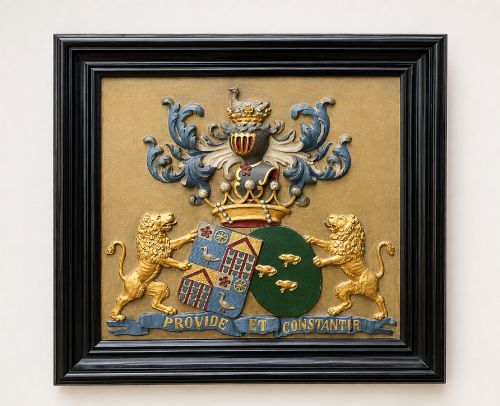
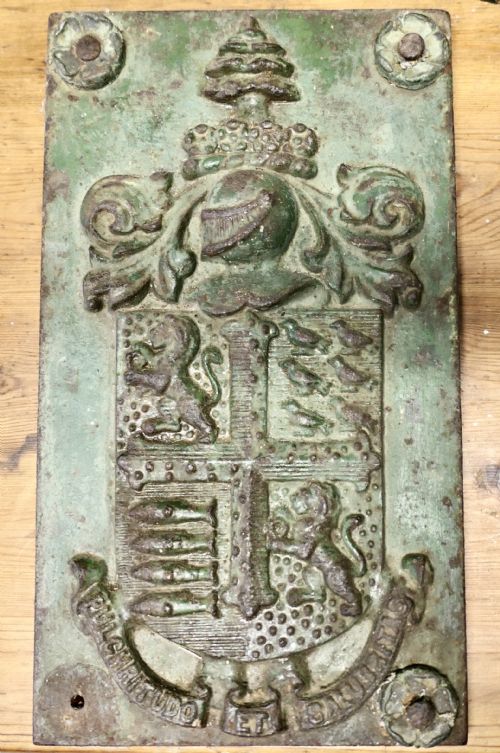
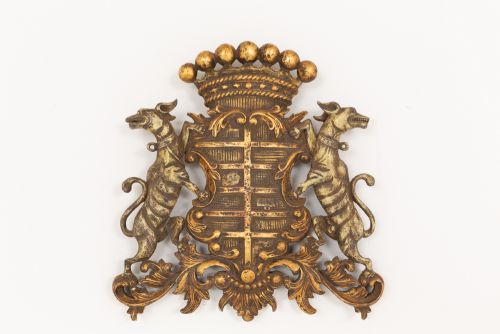
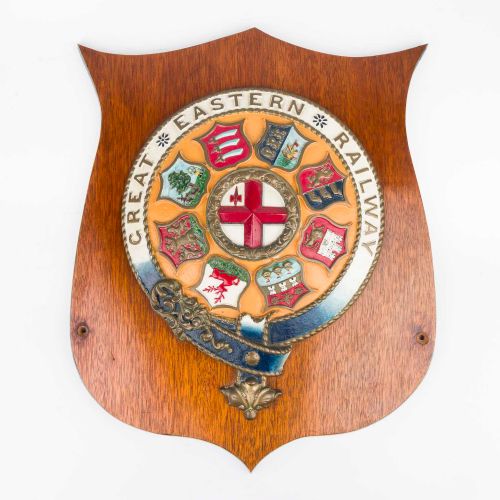


Heraldic Shield Plaque
These heraldic shield plaque pieces bear centuries of heraldry and crest work, offering an immediate touch of historic lineage to any interior wall.
Heraldic Shield Plaque
A heraldic shield plaque represents coats of arms, civic crests, and family lineages rendered in solid form for wall display. These pieces range from civic railway emblems and royal coats of arms to marriage plaques and automobile club cartouches.
The version most commonly met on this page is the nineteenth century wall plaque, often cast in iron or carved from oak and hardwood. Such examples show the enduring Victorian appetite for heraldic design and Gothic revival motifs.
Originating from domestic interiors, official ministry offices, and railway terminals, these wall reliefs and sculptures served as symbols of identity, authority, and allegiance. They translate monumental stone or architectural carving into portable wall displays.
Materials and methods
Carved wood provides the foundation for many pieces, utilising tiger oak, hard woods, and gesso to build deep relief. Artisans shaped these timbers with hand chisels before applying polychrome paint, gilt, and gold leaf highlights.
Metalwork forms the other principal medium, spanning cast iron, bronze, and brass. Iron plaques were cast from moulds to capture sharp relief lettering and intricate armorial details, whilst repousse shields relied on hammering metal sheets from behind.
Periods documented range from the late seventeenth century through to the mid twentieth century.
Markers of quality
The distinction between ordinary and superior pieces lies in the crispness of the carving or casting and the fidelity of the heraldic detail. Master carvers and pattern makers achieved depth and anatomical accuracy in lions, crowns, and mantling that lesser hands missed.
Surface finish also determines the tier of a piece, separating factory-produced utilitarian castings from meticulously hand-painted polychrome coats of arms finished in genuine gold leaf. Preservation of the original nineteenth century or earlier paint layers elevates the integrity of the object.
Van Rijckevorsel and Verheijen·Great Eastern Railway
The Heraldic Shield Plaque Glossary
- Armorial
- Relating to heraldry or coats of arms. It describes any design displaying authentic or symbolic familial and institutional bearings.
- Repousse
- A metalworking technique where the metal is hammered from the reverse side to form a raised design in relief. This method creates lightweight yet highly detailed shields.
- Gesso
- A plaster-like mixture applied to wood surfaces to provide a smooth base for painting and gilding. It allows for sharp, crisp edges on heraldic mouldings.
- Polychrome
- Painted or printed in several colours. In these pieces, it refers to the application of authentic heraldic tinctures to wood or plaster panels.
- Cartouche
- An oval or oblong shield-like frame used to hold an emblem or inscription. They frequently appear on automotive and institutional plaques from the nineteenth century onward.
Heraldic Shield Plaque: Frequently Asked Questions
Where were these plaques originally displayed?
Many hung in institutional boardrooms, railway offices, civic buildings, and grand private residences to declare official authority or lineage.
Domestic examples also adorned the libraries and halls of nineteenth century country houses inspired by Gothic and Renaissance revivals.
How do I hang a heavy iron shield?
Cast iron and large bronze plaques require direct anchoring into wall studs or solid masonry using rated masonry fixings.
Weight distribution must be calculated carefully before mounting, as these metal pieces are substantially heavier than their wooden counterparts.
How do I date a wooden armorial panel?
Dating relies on examining the timber species, tool marks on the reverse, and the style of the gesso and paint layers.
Nineteenth century Pugin designs and seventeenth century Italian marble fragments each carry distinct stylistic fingerprints of their respective eras.
Should I clean the original paint on a crest?
Original polychrome paint and gold leaf should be left untouched aside from very gentle dusting with a soft brush.
Harsh cleaning agents will strip the historic pigment and diminish the character and value of the antique surface.