


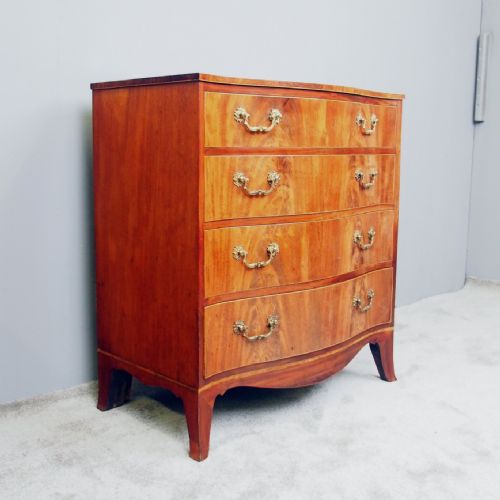

Hepplewhite Style Chest
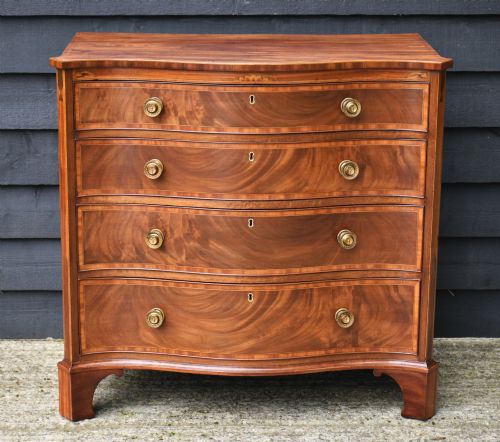
Hepplewhite style chests are elegant mahogany storage pieces defined by graceful serpentine or bow fronts, bringing refined Georgian proportion to any room.
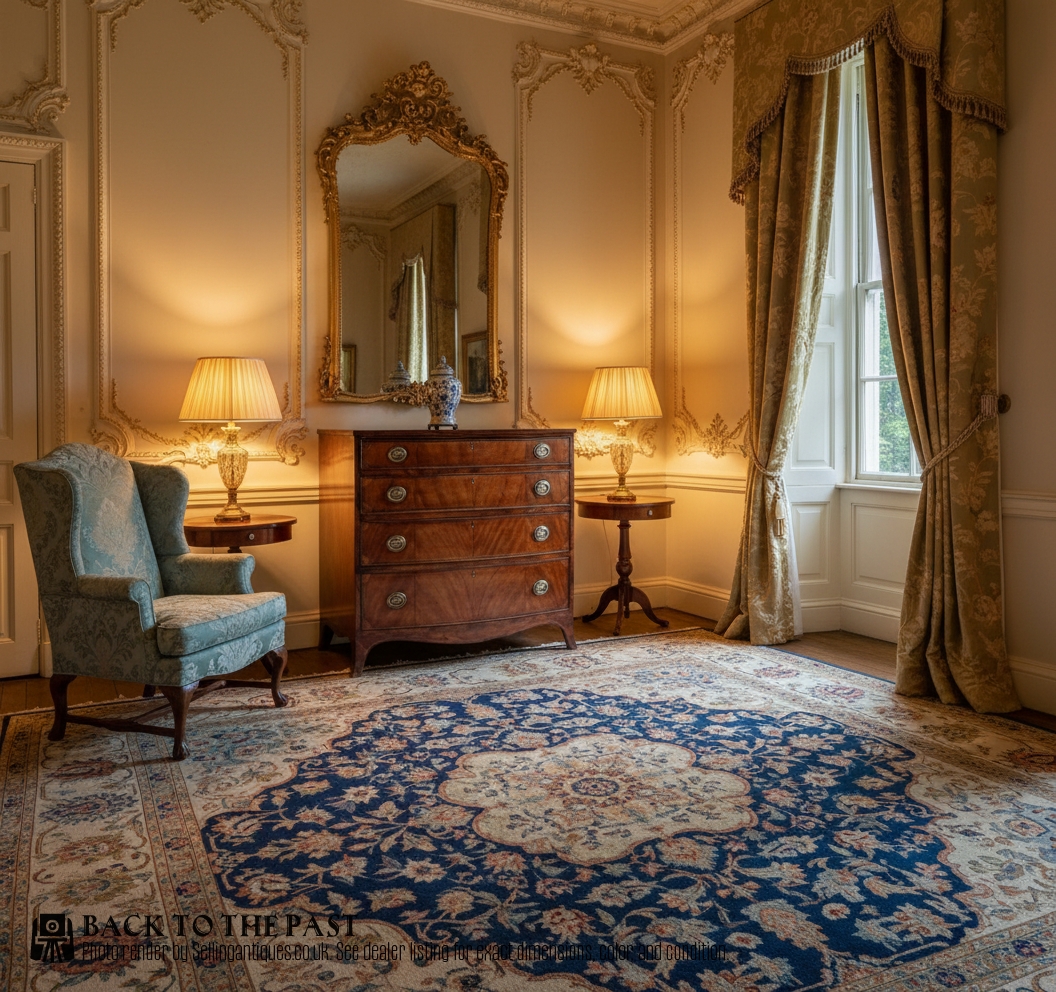
Hepplewhite Style Chest
A hepplewhite style chest provides the classic silhouette associated with late eighteenth century cabinet making, featuring refined proportions and clean lines. Buyers seeking this form will encounter eighteenth century originals alongside later nineteenth century revival pieces.
The pieces on this page span several distinct periods including Georgian, Victorian, and later nineteenth century reproductions. These chests vary from authentic late eighteenth century examples to revival pieces made around nineteen hundred.
Most entries showcase mahogany timber, frequently enhanced with contrasting boxwood inlay or satinwood details. The predominant forms include serpentine fronts and bow fronts, each offering a distinct profile.
How they were made
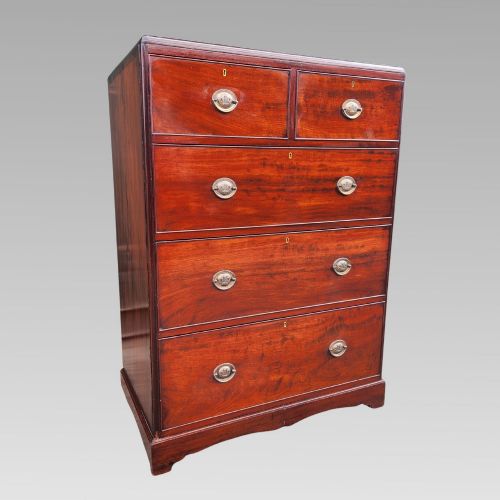
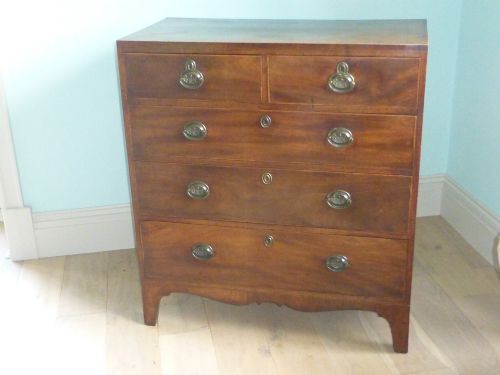
Cabinet makers utilised solid mahogany and flame mahogany veneer applied to secondary timbers to construct the carcase and drawer fronts. Flame mahogany veneer creates striking grain patterns across the main surfaces.
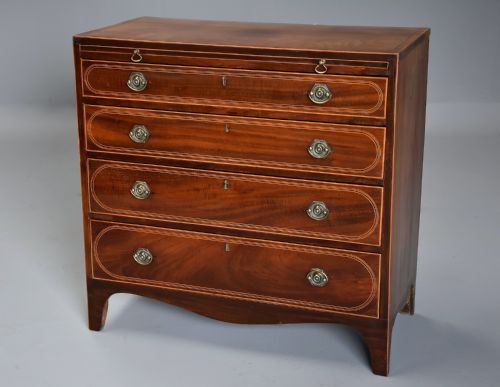
Detailed decoration often includes boxwood inlay and satinwood banding, which define the edges and borders of the drawers. Brass handles provide the traditional hardware, complementing the warm tones of the wood.
Listings span the Georgian and Victorian periods, with pieces dated from the eighteenth century through to nineteen ten in mahogany and painted wood.
What varies in quality
Quality rests in the precision of the serpentine or bow front shaping and the warmth of the mahogany timber. Superior examples display carefully selected flame mahogany veneer and crisp boxwood inlay.
The finesse of the drawer construction and the integrity of the brass handles distinguish finer pieces. Revival pieces from the Victorian era or nineteen hundred vary in the depth of carving and the richness of the polished finish.
Druce & Co
The Hepplewhite Style Chest Glossary
- Serpentine front
- A curved drawer front that undulates outward in the centre and inward at the sides. This shape demands considerable skill from the cabinet maker.
- Bow front
- A convex curved front that projects outward in a smooth arc. It offers a softer alternative to the serpentine profile.
- Flame mahogany veneer
- A thin slice of mahogany timber cut from the fork of the tree where branches meet. This produces a fiery, mottled grain pattern prized for drawer fronts.
- Boxwood inlay
- Narrow strips of pale boxwood inserted into grooves in the mahogany surface. It creates sharp linear contrast and decorative borders.
Hepplewhite Style Chest: Frequently Asked Questions
What is a hepplewhite style chest?
A hepplewhite style chest is a traditional storage drawer unit inspired by the eighteenth century designs associated with George Hepplewhite. These pieces are celebrated for their graceful curves and refined inlay work.
They appear in both original eighteenth century forms and later nineteenth century revival editions, all constructed primarily in mahogany.
How do I tell an original from a revival chest?
Telling periods apart involves examining the construction methods, timber ageing, and secondary woods used inside the drawers. Eighteenth century pieces show specific hand tool marks and period-appropriate joinery.
Revival examples from the Victorian period or around nineteen hundred often exhibit machine-sawn elements and slightly different interior timber characteristics while maintaining the classic silhouette.
Where should I place a serpentine chest?
A serpentine chest works well in a bedroom, hallway, or living room where its curved profile can be appreciated from multiple angles. The undulating front adds visual movement to a traditional interior scheme.
Ensure adequate clearance around the piece so the distinctive shape is not obscured by surrounding furniture.
What woods are typical for these chests?
Mahogany is the primary timber found across these listings, often utilised in both solid form and as a decorative veneer. Flame mahogany veneer provides dramatic grain patterns on the drawer fronts.
Contrasting details are typically achieved through the use of satinwood and boxwood inlay along the borders.